By Harut Sassounian
TheCaliforniaCourier.com
No foreign country should meddle in the internal affairs of Armenia — a sovereign and independent country. Its people are the only ones entitled to choose their government leaders and determine their policies.
Ironically, those Armenians who have been screaming day and night about Russian intervention remain completely silent when Western countries (the European Union and the United States) blatantly intervene in Armenia’s domestic affairs. Those who think that Western interference, as opposed to Russia’s, is harmless and acceptable, are either ignorant of, or naïve about, international affairs.
Foreign leaders (whether from the East, West, North or South) do not offer anything to Armenia out of the goodness of their hearts. They are simply pursuing their self-interests.
The problem is that Armenia’s leaders, throughout history, have not distinguished themselves by their knowledge of international relations. Armenians ignore, to their detriment, developments around the world that may affect their lives or their very survival. When you are a small and weak country, you cannot afford to be oblivious to events taking place around you. Otherwise, you become vulnerable to external threats. What you need to do is strengthen yourself as much as possible and then, using skillful diplomacy, seek to minimize those threats.
Armenians, justifiably, have a very negative view of Turkey and its leaders. However, we must admit that Turkish leaders, like their Ottoman predecessors, are very skillful in international politics. For centuries, Ottoman sultans were able to pit major foreign powers against each other and repeatedly switched sides to protect their empire’s interests. Pres. Recep Tayyip Erdogan’s actions are a continuation of that traditional tightrope walk. Erdogan has exceptional skills in maneuvering in troubled international waters. Armenia does not have now, and rarely had in the past, a leader with similar skills.
The second problem is that Armenians approach foreign relations emotionally — based on who they like and who they dislike. International relations cannot be compared to personal relationships. You can interact even with your enemies if doing so benefits your country.
The third problem is that Armenians, throughout their history, have always expected a foreign power to come and rescue them from their enemies. Armenians may have had such unrealistic expectations at the beginning of their history. However, after thousands of years of being subjected to invasions, mass killings, and even genocide, one would think that they would finally wake up and, having seen that no foreign power has ever come to their rescue, conclude that no one is going to help them.
Regrettably, Armenians have never learned the necessary lessons from their tragic history. Even today, they are expecting some foreign country to defend them. In recent decades, Armenians vainly hoped that Russia would protect them, as if it were obligated to do so. All countries only protect their own interests, not those of others. Being utterly disappointed by Russia’s lack of action during the 2020 Artsakh War, and even more so during Azerbaijan’s invasion and occupation of parts of the Republic of Armenia’s territory in 2021 and 2022, most Armenians started looking elsewhere in vain for their country’s protection. Their disappointment was based on the fact that Armenia and Russia, along with several other former Soviet republics, had signed a mutual defense treaty — the CSTO (Collective Security Treaty Organization). That treaty was supposed to protect the Republic of Armenia. However, Armenians forget that treaties are often considered just pieces of paper. All countries place their national interests ahead of any treaty obligations they may have.
After being understandably disappointed by Russia, one would have thought that Armenians would conclude that no one is going to come to Armenia’s rescue, and stop searching for a new savior. Instead, they continued their eternal search. They are now hoping that France, the European Union, or the United States will be their new saviors. However, if Armenia comes under attack, neither the EU nor the United States will come to its rescue. It is naïve to expect that these foreign countries would risk their soldiers’ lives to defend Armenia’s borders. That is the obligation of Armenia’s leaders.
Rather than vacillating between East and West, it is in Armenia’s interest to establish mutually beneficial relations with all countries in the world, without expecting any of them to come to its rescue. However, to accomplish such an important task, Armenia needs competent leadership.
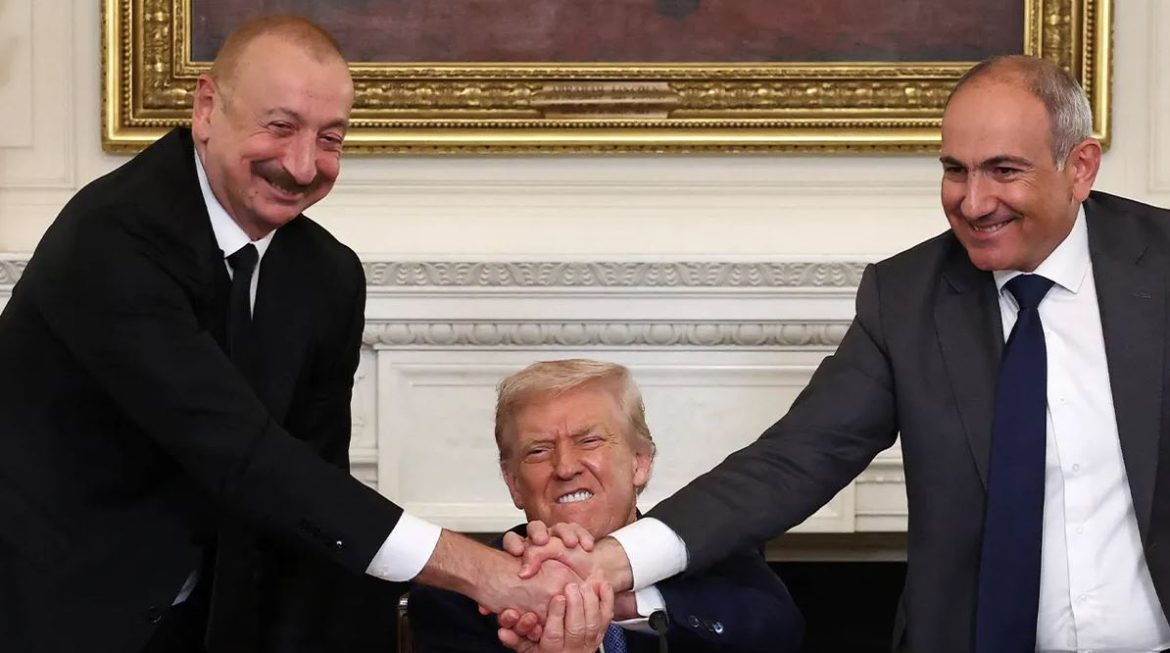
I suggest that Armenians ignore the frivolous endorsements of Prime Minister Nikol Pashinyan by President Donald Trump, Vice President JD Vance, and Secretary of State Marco Rubio — a blatant example of foreign interference in Armenia’s domestic elections. I hope their endorsements meet the same fate as Vance’s personal visit to Budapest, Hungary, on the eve of the elections in April to support Prime Minister Viktor Orban, who suffered an overwhelming defeat.
What Armenians need is action, not empty words. Trump, Vance, and Rubio did not lift a finger to obtain the release of Artsakh leaders illegally detained in Baku since 2023. Nor did they condemn Pashinyan’s persecution of the Armenian Apostolic Church. This shows that their multiple declarations about protecting Christians around the world are nothing but hot air.