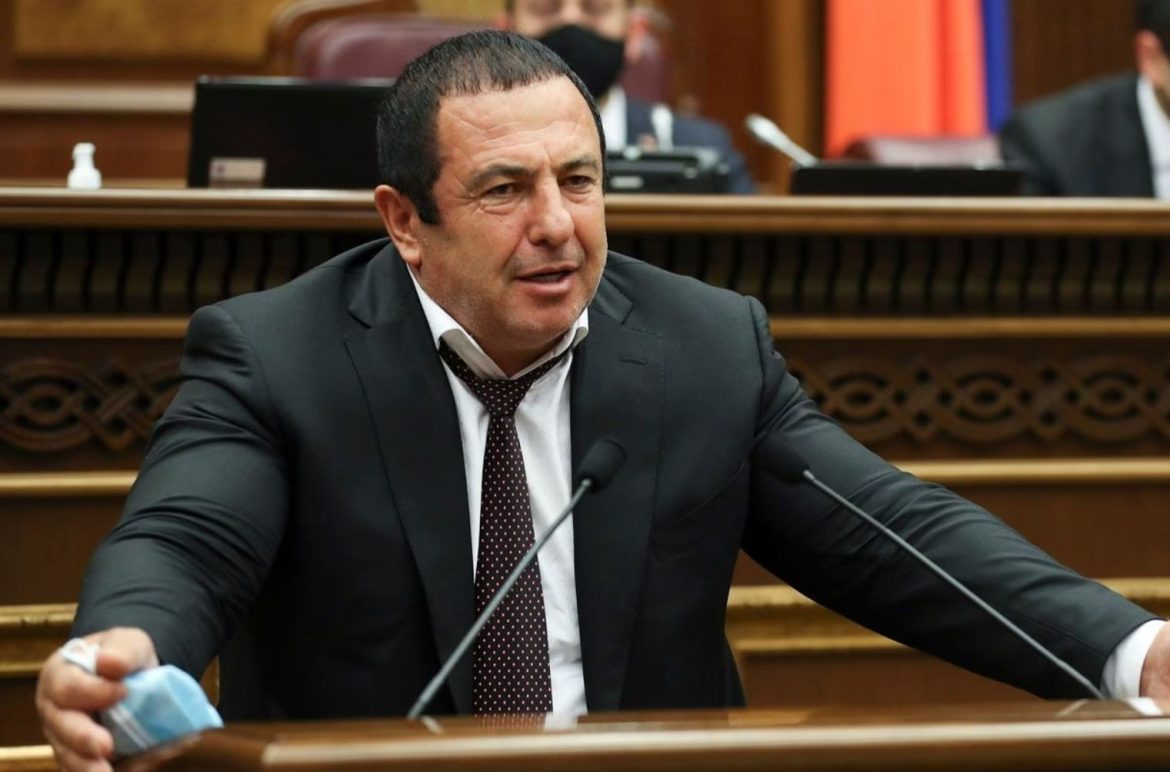
The Armenian government has taken control of two prominent properties associated with jailed opposition leader Gagik Tsarukian, escalating a campaign against his businesses that has already left thousands of employees unable to work.
A Yerevan court has placed the Ararat Cement plant, Armenia’s largest cement producer, under government “management and maintenance” while prosecutors pursue the confiscation of assets belonging to Tsarukian. At the same time, the Yerevan municipality has taken control of the Multi Wellness fitness center after unilaterally terminating the company’s long-term lease on the land.
The seizures follow the July 6 arrest of Tsarukian, the leader of the Prosperous Armenia Party, and coordinated searches of dozens of businesses belonging to his Multi Group conglomerate.
Law enforcement officers sealed company offices and disrupted operations across the business group. Only Ararat Cement has since been allowed to resume production, while employees of numerous other companies remain locked out of their workplaces.
The authorities have provided no comprehensive legal explanation for shutting down companies that are not directly connected to the criminal charges filed against Tsarukian.
Tsarukian is accused of defrauding Iranian business partners between 2022 and 2024. He denies the allegations and maintains that the case is politically motivated.
From prison, Tsarukian condemned the closure of his businesses and said the greatest harm was being inflicted on employees deprived of their livelihoods.
“The most painful thing for me these days is that people in all the companies affiliated with me have been deprived of the opportunity to go to work and earn their daily bread,” he said in a statement.
Tsarukian argued that the enterprises were deliberately closed to punish him personally and expressed hope that the government would stop obstructing their operations.
Employees Demand the Right to Work
Workers from several Multi Group companies have held protests demanding that the authorities reopen their workplaces.
Employees say they have been given no clear information about when they may return to work or why their companies were closed. For many families, employment at the affected businesses represents their only source of income.
Workers at the Multi Wellness center and the Multi Stone processing plant have publicly appealed to the authorities, warning that continued closures could lead to broader protests involving employees and their families.
Despite the serious economic consequences, Armenia’s Investigative Committee has not provided a timetable for reopening the companies. It has also declined to explain how the criminal accusations against Tsarukian justify the interruption of operations at dozens of separate enterprises.
Tsarukian’s representatives are preparing to challenge the government’s actions in Armenian and international courts.
They argue that the closures, seizures and criminal proceedings must be viewed in the context of Prime Minister Nikol Pashinyan’s repeated public threats against Tsarukian and other opposition leaders.
During the June 7 parliamentary election campaign, Pashinyan pledged to nationalize Ararat Cement. He later promised to imprison and “dispossess” the leaders of Armenia’s principal opposition forces.
Following the election, Pashinyan predicted that Ararat Cement would soon become state property. The subsequent court order transferring the plant to government management has reinforced accusations that state institutions are now implementing the prime minister’s political declarations.
Prosecutors claim that the cement plant was illegally privatized in 2002 and are seeking the confiscation of Tsarukian’s assets, reportedly worth hundreds of millions of dollars.
Tsarukian’s attorneys dispute those claims and accuse the judiciary of acting under government direction. One of his lawyers said the court imposed the injunction without even notifying Tsarukian’s legal team.
Olympic Committee Operations Disrupted
The government campaign has extended beyond Tsarukian’s commercial holdings.
Law enforcement officers also searched and sealed the headquarters of the Armenian National Olympic Committee, which Tsarukian has led since 2004. The intervention disrupted the committee’s work and prompted concern from the International Olympic Committee.
The IOC said it is in contact with the Armenian committee and is examining possible steps to protect it as an institution, as well as to safeguard Armenian athletes and the Olympic movement in the country.
The international body has not yet announced whether the Armenian government’s actions could lead to formal consequences. However, the IOC has historically opposed state interference in national Olympic committees and has sanctioned countries where governments violated their institutional independence.
The Pashinyan government had already moved against Tsarukian’s leadership of the Olympic Committee after his Prosperous Armenia Party joined the opposition challenge to the ruling Civil Contract party.
The Armenian Weightlifting Federation, headed by the chief of Pashinyan’s staff, filed a lawsuit seeking Tsarukian’s removal and accused him of unlawfully leading the committee.
His representatives warned at the time that government interference in the Olympic body could provoke an international scandal.
The sealing of the committee’s headquarters now risks transforming a domestic political campaign into a dispute involving the international Olympic movement and Armenia’s participation in global sports institutions.
Political Threats Become State Action
The sequence of events has strengthened concerns that Pashinyan’s public threats against political opponents are being converted into actions by prosecutors, investigators, courts and municipal authorities.
Tsarukian was one of the main opposition leaders contesting the June 7 parliamentary election. His party, along with other opposition forces, rejected the official results and accused the government of using administrative resources to preserve its hold on power.
His arrest was followed immediately by the paralysis of his companies, the seizure of major properties and the disruption of the Olympic Committee he leads.
The consequences extend well beyond Tsarukian himself. Thousands of workers are being deprived of employment, private companies are unable to operate, and an institution representing Armenian athletes has been drawn into the government’s political confrontation with the opposition.
No criminal conviction has been issued against Tsarukian. Nevertheless, the authorities have already imposed measures carrying sweeping economic and institutional consequences.
The government must now explain whether the shutdown of dozens of companies serves a legitimate investigative purpose or is intended to economically destroy an opposition leader whom the prime minister publicly promised to dispossess.
Until that explanation is provided, the treatment of Tsarukian’s companies will remain a striking example of political rhetoric being followed by the coercive power of the state.