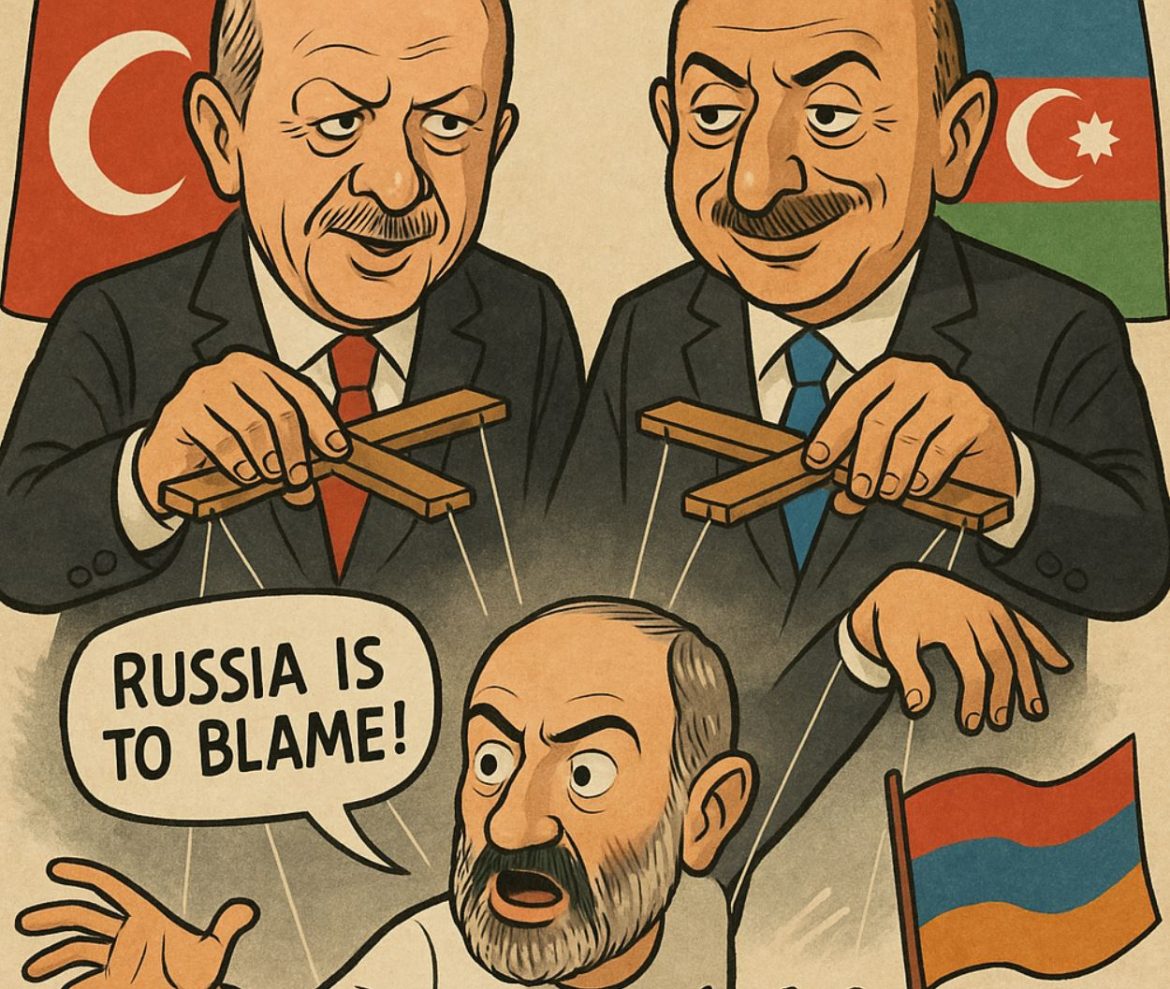
As Armenia approaches its June 7 parliamentary elections, the central question is no longer whether Nikol Pashinyan’s Civil Contract party can get more votes than any other single party or alliance. The real question is whether Pashinyan can retain power after the votes are translated into parliamentary seats.
That is where his position looks far weaker than the Western narrative suggests.
In recent weeks, Western media and pro-Pashinyan polling have tried to create an impression of inevitability. Civil Contract is presented as the clear frontrunner, while the opposition is described as fragmented, “pro-Russian,” or tied to the past. This framing serves Pashinyan well, because it shifts attention away from his record and turns the election into a simplified choice between the West and Russia.
But Armenians are not voting in a Western think tank seminar. They are voting after the loss of Artsakh, the ethnic cleansing of its Armenian population, repeated concessions to Azerbaijan, pressure on border communities, attacks on national institutions, and the growing use of state power against political opponents.
That is why the polling narrative should be treated with caution.
Even favorable polls do not show a national mandate for Pashinyan. They show Civil Contract somewhere around the low 30s, relying on opposition fragmentation, undecided voters, threshold math, administrative power, and foreign support. A party with roughly one-third of the vote is not broadly popular. It is vulnerable if the main anti-Pashinyan forces cross the threshold and unite after the election.
This is the point most Western coverage misses.
Pashinyan does not need to lose first place in order to lose power. Civil Contract can get more votes than any single party or bloc and still fail to form a government. If the main opposition blocs and parties receive enough combined votes to control a parliamentary majority, Pashinyan’s time as prime minister can end even if his party remains the largest single force.
That is exactly why the pro-Pashinyan narrative is so focused on polls showing Civil Contract in first place. First place is not the same as power.
Georgia offers an important warning. Before Georgia’s recent parliamentary elections, much of the Western narrative framed the vote as Europe versus Russia. Georgian Dream was portrayed as moving toward Moscow, while the opposition was presented as the pro-Western alternative. Some polling and exit-poll narratives suggested the opposition had momentum. But Georgian Dream won, and Western reaction quickly shifted toward claims of fraud, irregularities, and Russian interference.
Armenians should expect a similar script.
If Pashinyan loses power, the result will likely not be accepted by Western media as a national rejection of his disastrous rule. It will be blamed on Russia, disinformation, oligarchs, or “revanchist” forces. The voters themselves will be treated as if they were manipulated, rather than as citizens judging a failed government.
But the anti-Pashinyan vote is not simply a pro-Russian vote. That is the lie at the center of the narrative.
The opposition to Pashinyan is, above all, opposition to defeat, surrender, and the Turkish-Azerbaijani agenda being imposed on Armenia under the label of “peace.” Many Armenians opposing Pashinyan are not voting for Moscow. They are voting against Baku’s demands, Ankara’s regional project, and a government that has functioned as the executor of those pressures.
Pashinyan promised peace and delivered war, defeat, displacement, and humiliation. He promised sovereignty and delivered dependence on hostile neighbors. He promised democracy and delivered intimidation, arrests, and attacks on national institutions. He promised a “real Armenia” while shrinking Armenia’s actual security and dignity.
That is why he can lose.
The West may still prefer him. Turkey and Azerbaijan may still benefit from him. International media may still portray him as a reformer resisting Russia. But Armenian voters are not obligated to accept a foreign script.
The election will not be decided by how Western outlets describe Pashinyan. It will be decided by whether enough Armenians who reject his rule can translate that rejection into parliamentary power.
Civil Contract may come first. But Pashinyan can still lose.
And if he does, it will not be because Armenia chose Russia.
It will be because Armenia rejected defeat.