By Levon Baronian
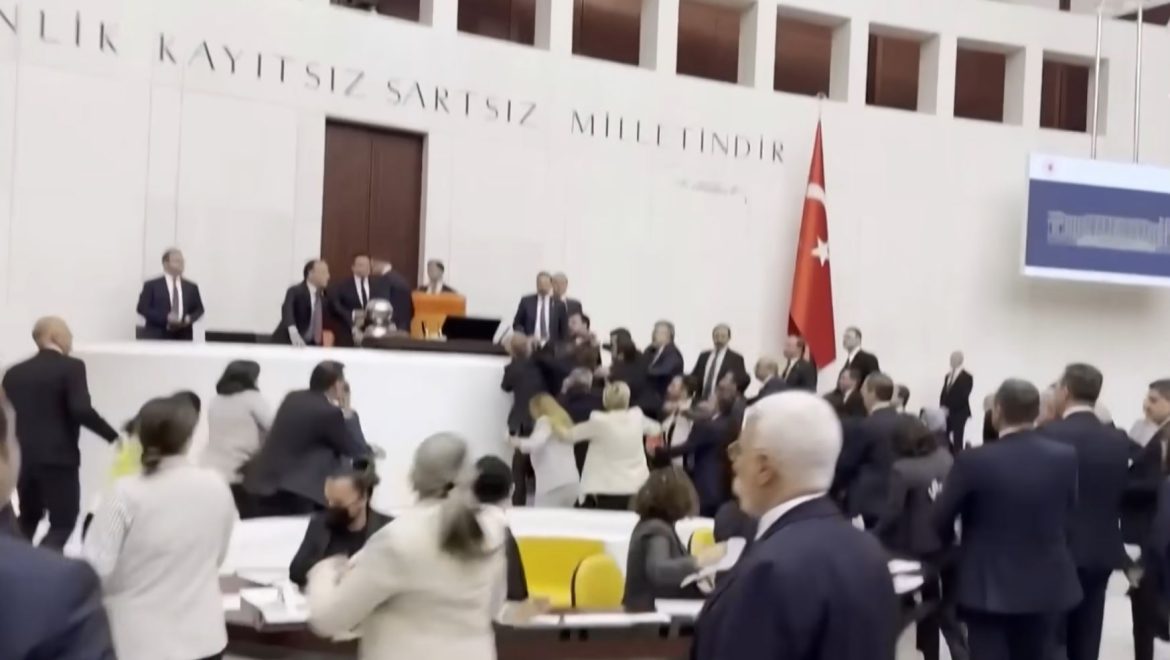
The disgraceful scenes witnessed in Armenia’s National Assembly on October 29, when lawmakers exchanged punches, an opposition deputy was left bleeding, and a deputy speaker hurled a chair across the chamber, should alarm every Armenian concerned about the direction of the Republic.
But beyond the immediate spectacle lies a more disturbing question: Why has the Armenian parliament increasingly begun to resemble the parliament of Turkey?
For decades, fistfights, flying objects, and physical assaults have punctuated political proceedings in Turkey’s Grand National Assembly. In Armenia, such scenes were once exceptional. Since Nikol Pashinyan’s rise to power in 2018, however, parliamentary brawls have become an increasingly familiar feature of political life.
Consider the historical record.
In 1989, Turkish parliamentarian Abdurrezzak Ceylan was fatally shot while intervening in a confrontation between fellow deputies. In January 2001, lawmaker Fevzi Sihanlioglu suffered a fatal heart attack after being struck during a parliamentary brawl. In 2014, legislators exchanged blows during heated debates over judicial reforms, leaving an opposition member hospitalized. In 2016, ruling-party and opposition lawmakers traded punches and kicks during disputes over parliamentary immunity. Similar violence erupted during Turkey’s constitutional debates in 2017.
The pattern continued. In August 2024, Turkish legislators attacked an opposition deputy during a debate concerning an imprisoned colleague, leaving blood on the parliamentary floor. Further confrontations occurred in 2025 and 2026.
These incidents, spanning decades and different Turkish governments, illustrate a longstanding problem in Turkey’s parliamentary political culture: the replacement of reasoned debate with physical intimidation.
Now consider Armenia.
For all the shortcomings, corruption allegations, political confrontations, and bitter rivalries that characterized Armenia’s earlier governments, large-scale fistfights on the floor of the National Assembly were rare.
That distinction began to erode following Pashinyan’s so-called Velvet Revolution.
In May 2020, ruling-party lawmaker Sasun Mikaelyan punched opposition leader Edmon Marukyan during a parliamentary session, triggering a broader confrontation. In August 2021, Armenia’s parliament witnessed three brawls in just two days, including an incident in which a Civil Contract deputy kicked toward an opposition lawmaker.
By October 2026, the pattern had become unmistakable. Physical confrontations erupted earlier in the month, followed by the October 29 melee between Civil Contract and Strong Armenia lawmakers.
Perhaps most revealing was Pashinyan’s response.
Rather than unequivocally condemning the conduct of his own parliamentary majority, the prime minister defended his lawmakers and even justified the throwing of a chair as a proportionate response to what he characterized as opposition insolence.
This is not merely a matter of parliamentary etiquette. It raises a fundamental question about the political standards being established by Armenia’s leadership.
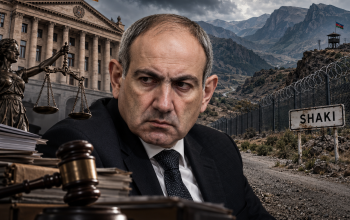
For years, critics of Pashinyan have warned about what they describe as the gradual Turkification of Armenia. The term does not refer to the Turkish people, but to an alleged political transformation: the weakening of Armenian national institutions and the adoption of governing practices associated with authoritarianism, intimidation, and the marginalization of dissent.
The erosion of parliamentary restraint belongs within that broader debate.
When Armenia’s political leadership increasingly treats dissent as an offense to be punished rather than an argument to be answered, and when physical confrontation is defended from the highest levels of government, the resemblance to troubling episodes in Turkey’s parliamentary history becomes difficult to ignore.
The irony is striking. Pashinyan came to power promising a democratic transformation, an end to the abuses of previous governments, and a new culture of political tolerance. Eight years later, Armenian citizens are watching their elected representatives exchange blows in the very institution entrusted with governing their country.
Democracy is not measured simply by holding elections or declaring a revolution victorious. It is measured by the conduct of those entrusted with power, particularly in their treatment of political opponents.
Armenia’s National Assembly should be a place where ideas confront ideas, not where fists confront faces.
The real danger is not simply that Armenian parliamentarians have begun behaving like their counterparts in some of Turkey’s most notorious parliamentary confrontations. It is that such conduct risks becoming normalized, excused, and ultimately accepted as part of Armenia’s political culture.
Armenia has survived centuries of foreign domination while preserving its national identity and institutions. It should not now surrender its political dignity through the normalization of conduct that its own democratic aspirations were supposed to overcome.
The Armenian people deserve a parliament worthy of their history, their sacrifices, and their aspirations for national sovereignty.
Not another spectacle of flying chairs and clenched fists.