A UCLA Law presentation, school assemblies, a meeting with the Western Prelate, and a “Bring Them Home” fundraiser close a week of advocacy organized at the invitation of the ARF Western United States Central Committee
LOS ANGELES. Human rights attorney Siranush Sahakyan concluded her visit to the Los Angeles area this week after seven days of legal briefings, civic meetings, and community programs dedicated to the Armenian hostages held in Baku and the rights of the forcibly displaced people of Artsakh.
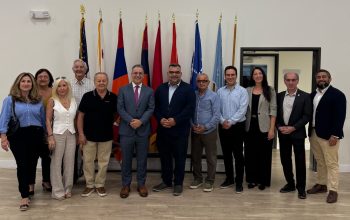
The visit, undertaken at the invitation of the Armenian Revolutionary Federation Western United States Central Committee and coordinated with the Armenian Legal Center for Justice and Human Rights (ALC), opened with a public town hall in Burbank and meetings with U.S. Representative Laura Friedman, Glendale Mayor Ardy Kassakhian and the Glendale City Council, and the Armenian American Museum. Its second half carried the same message into a leading American law school, the classrooms of Armenian schools, the Western Prelacy, and a community fundraiser for the legal defense of the hostages.
An insider’s view at UCLA Law
On Thursday evening, September 24, Sahakyan presented “An Insider’s View: Unpacking Azerbaijan’s Cases Against Armenian Civilian Leadership in Nagorno-Karabakh/Artsakh” at UCLA School of Law. The program was hosted by the Promise Institute for Human Rights at UCLA Law and co-sponsored by the UCLA Promise Armenian Institute, the Armenian Bar Association, the ALC, UCLA Law’s Armenian Law Students’ Association, and the ANCA Western Region. Some 70 to 80 people attended, with a strong turnout of students.
Hadar Harris, Executive Director of the Promise Institute for Human Rights in Los Angeles, opened the program with welcoming remarks.
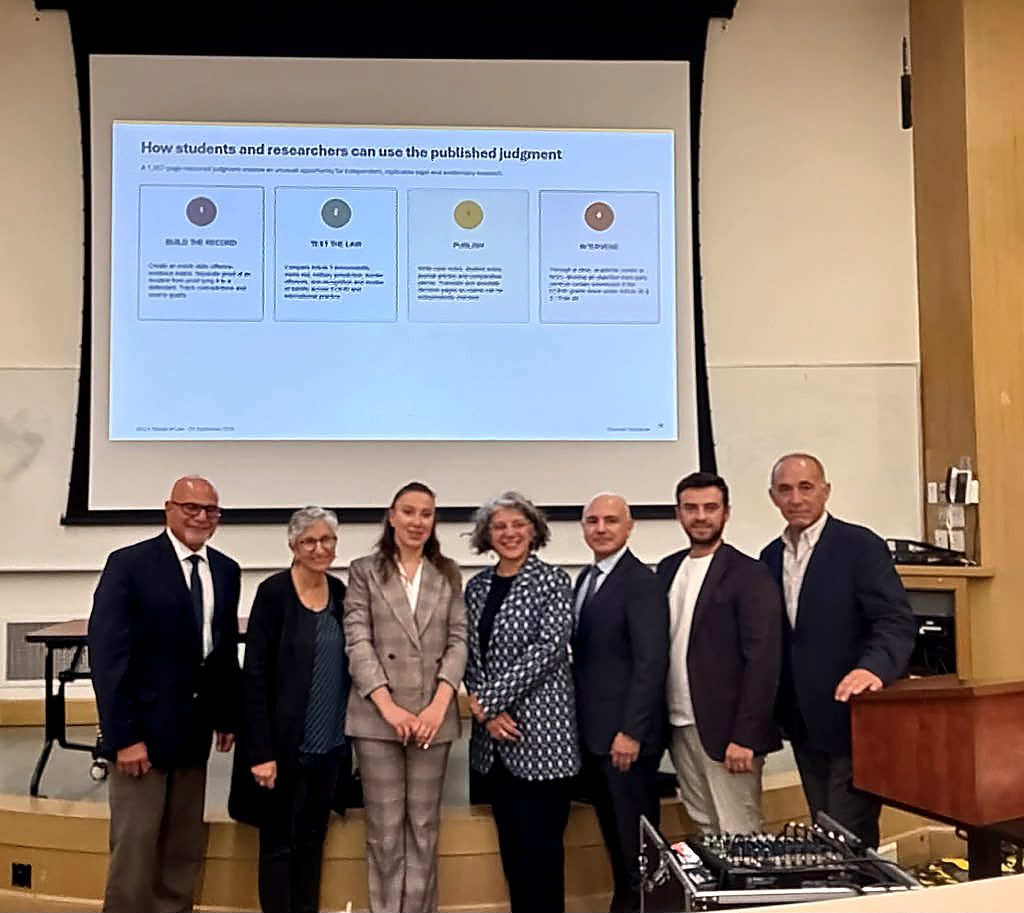
Sahakyan, who represents Armenian detainees before the European Court of Human Rights, offered a detailed legal and evidentiary analysis of the cases brought in Baku against the civilian leadership of Artsakh. She addressed questions of jurisdiction, non-recognition, and individual criminal responsibility, and examined whether participation in the civilian, political, or administrative institutions of an unrecognized entity can, without proof of specific individual criminal conduct, be treated as a crime in itself. She stressed the distinction between Artsakh, which neither the United Nations nor the international community ever designated as unlawful or terrorist, and situations in which the Security Council has expressly called for non-recognition.
She also outlined how students, researchers, academic institutions, and human rights organizations can help build the record: independently evaluating the proceedings, publishing legal research, and pursuing avenues for intervention and accountability. The ALC expressed its appreciation to Harris and the Promise Institute, and to Professor Ann R. Karagozian, Inaugural Director of the UCLA Promise Armenian Institute, for their leadership in making the program possible.
Keeping Artsakh present in our schools
A central part of the week, arranged through Central Committee coordination with the Prelacy Schools Board of Regents and AGBU, was bringing the Artsakh cause directly to students.
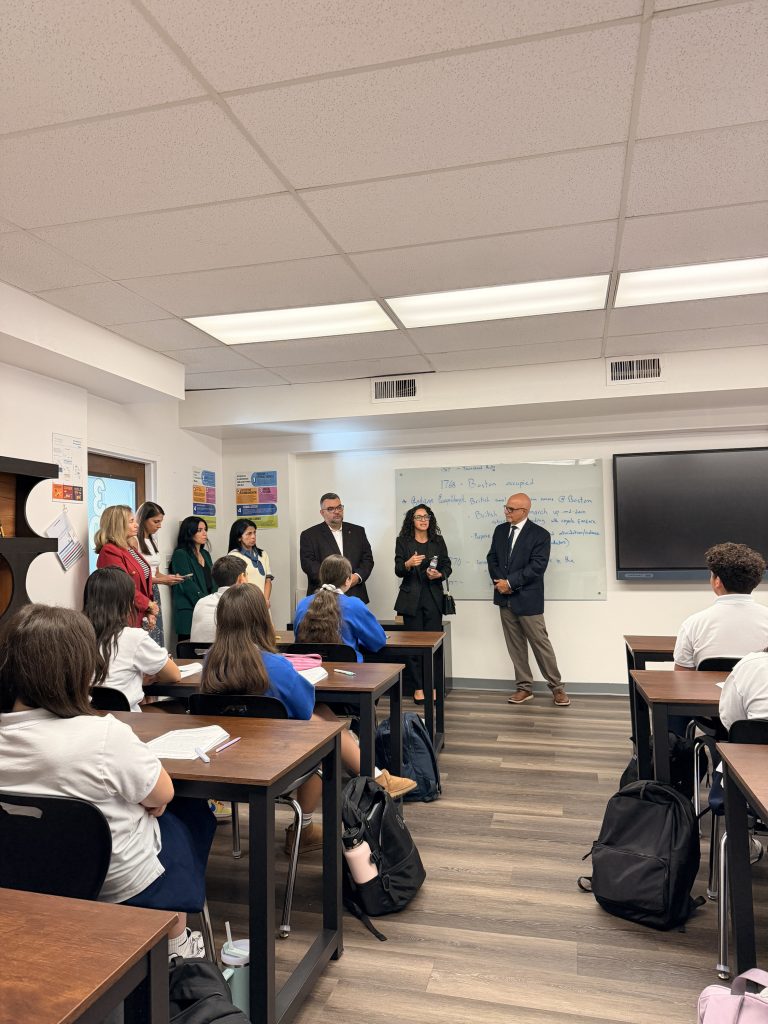
Following Wednesday’s visit to Chamlian, ALC Board members Steven Dadaian, Esq., and Sarig Armenian visited Rose and Alex Pilibos Armenian School on Thursday morning, September 24, joined by Levon Baronian, Representative of the ARF Western United States Central Committee, and Prelacy Schools Board of Regents member Shakeh Avakian. Sahakyan was unable to attend the Thursday school visits. Student Council Scholars led the guests on a tour of the campus and its classrooms, where the delegation spoke with students about the ALC’s mission and the Armenian hostages and answered their questions. The guests also joined the sixth-grade music class in singing songs devoted to Hayastan.
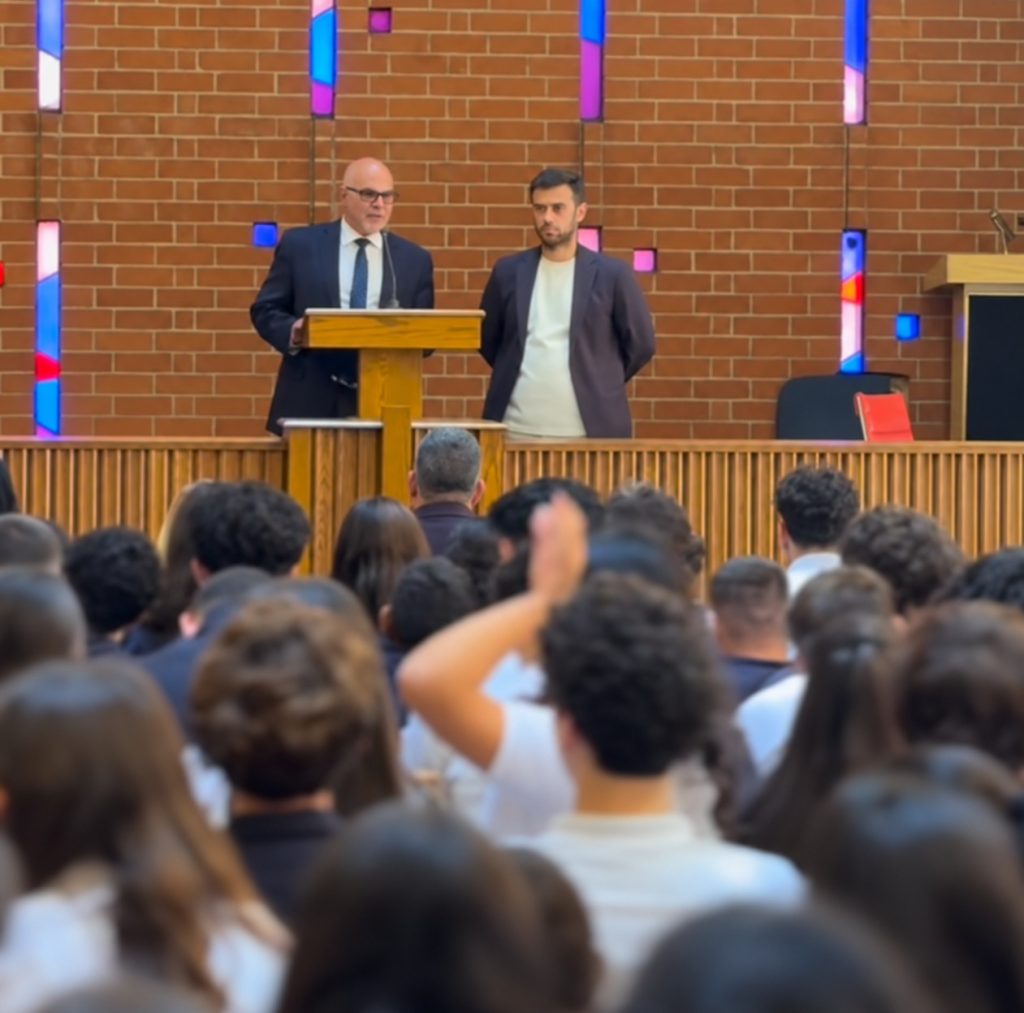
At midday, the delegation continued to Holy Martyrs Ferrahian High School, where Dadaian addressed a student assembly on the legal fight for the hostages and the rights of the people of Artsakh. He was accompanied by Baronian and ALC media coordinator Kevork Hagopjian.
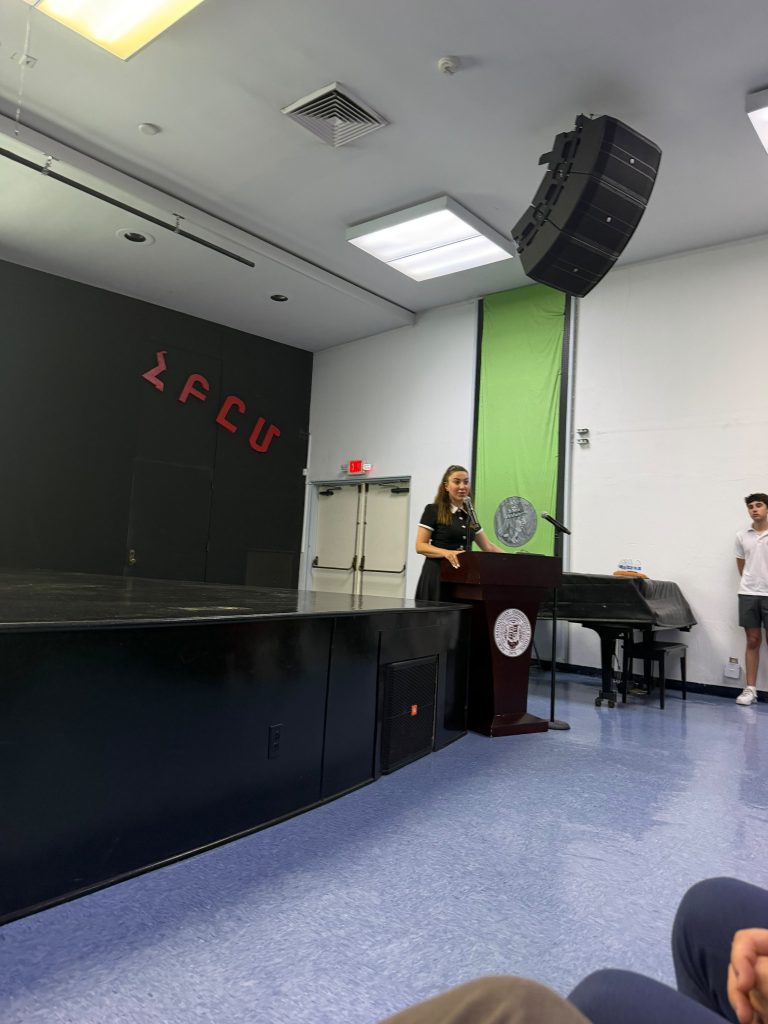
On Friday morning, September 25, Sahakyan visited AGBU Manoogian-Demirdjian School, where she was welcomed by Hratch Sepetjian, Director of Armenian Studies and Programs. Students introduced her at a school assembly, and the school screened a short video from its student vigil for Armenian prisoners of war held last year. Sahakyan spoke to the students about her work on behalf of the hostages and their families, and students engaged her with a stream of questions long after her remarks. She was accompanied by Hagopjian, Dadaian, and Andranik Aboyan.
Meeting with the Western Prelate
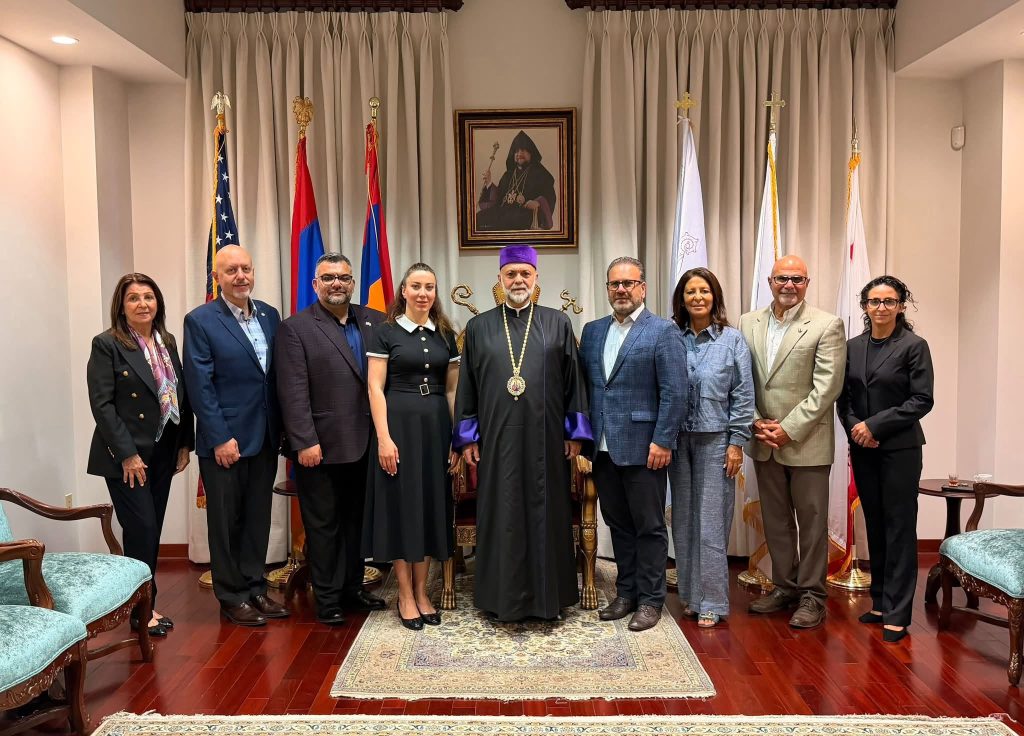
On Friday afternoon, His Eminence Archbishop Kegham Khacherian, Prelate of the Western Prelacy, received Sahakyan at the Prelacy headquarters in La Crescenta. She was accompanied by Levon Baronian, Representative, and Mike Keleshian, Co-chair, of the ARF Western United States Central Committee, together with ALC Board members Dadaian and Armenian. Sahakyan briefed the Prelate on the status of the cases before the European Court of Human Rights, the conditions in which the Armenian prisoners are held in Baku, and the continuing struggle for the rights of Artsakh’s displaced population.
“Bring Them Home”
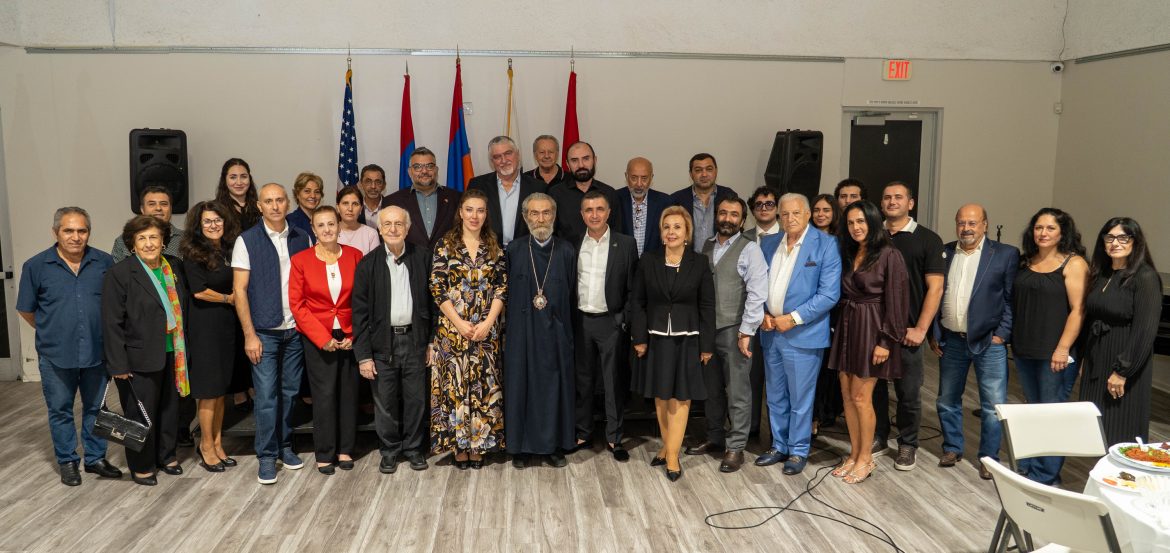
The visit culminated on Sunday evening, September 27, in “Bring Them Home,” a fundraising dinner at the Glendale Youth Center that raised $40,000 for the legal fund defending the Armenian hostages imprisoned in Baku. Held with the support of the Artsakh Preservation Committee, the evening brought together community members, longtime supporters of the cause, and Artsakh Armenians who have rebuilt their lives in Southern California since the 2023 displacement.
The purpose of the evening was concrete. International litigation on behalf of the hostages is slow, painstaking, and costly work: each application before the European Court of Human Rights must be built on documentation, testimony, and sustained legal representation, often over years. The funds raised in Glendale go directly toward sustaining that effort.
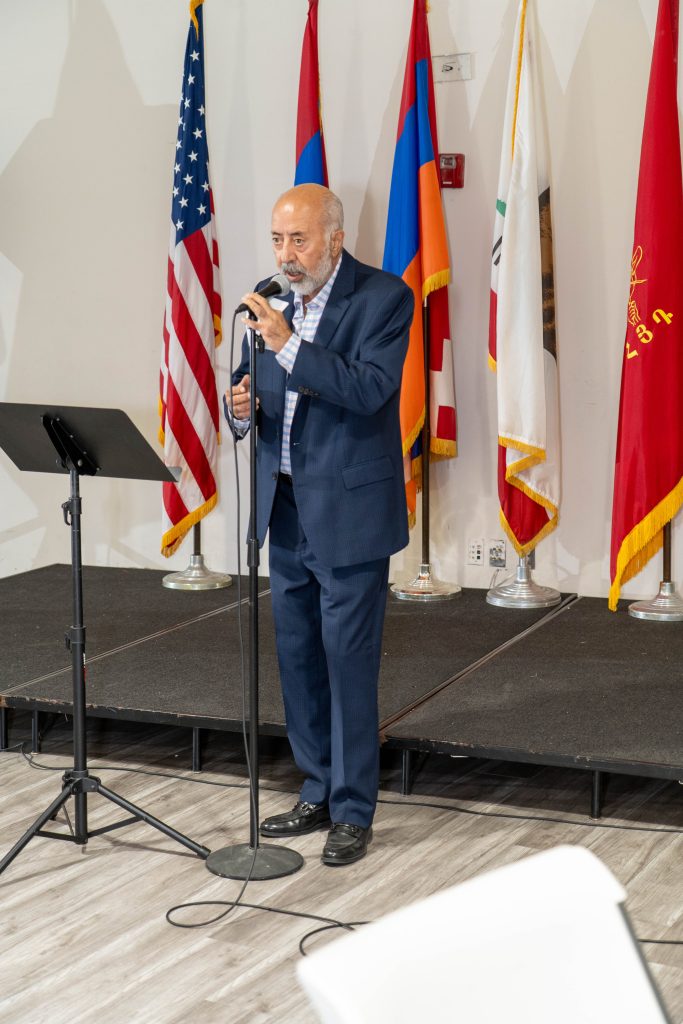
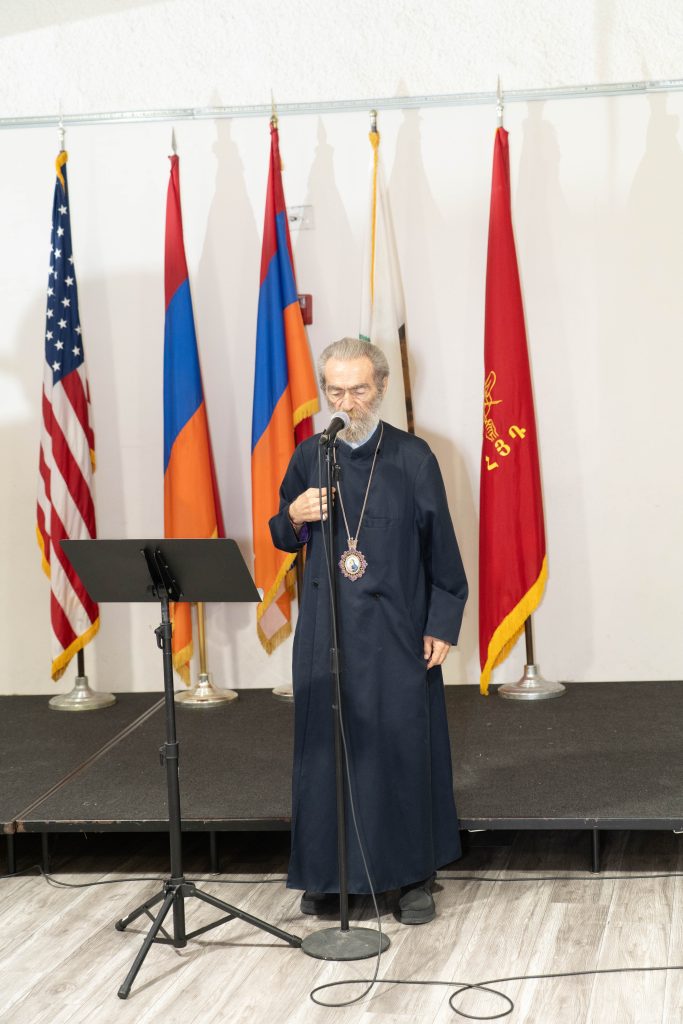
Hovig Saliba served as master of ceremonies. His Eminence Archbishop Barkev Martirosyan, the longtime former Primate of the Artsakh Diocese, offered his blessing and remarks, a presence that carried particular meaning for the Artsakh families in the hall.
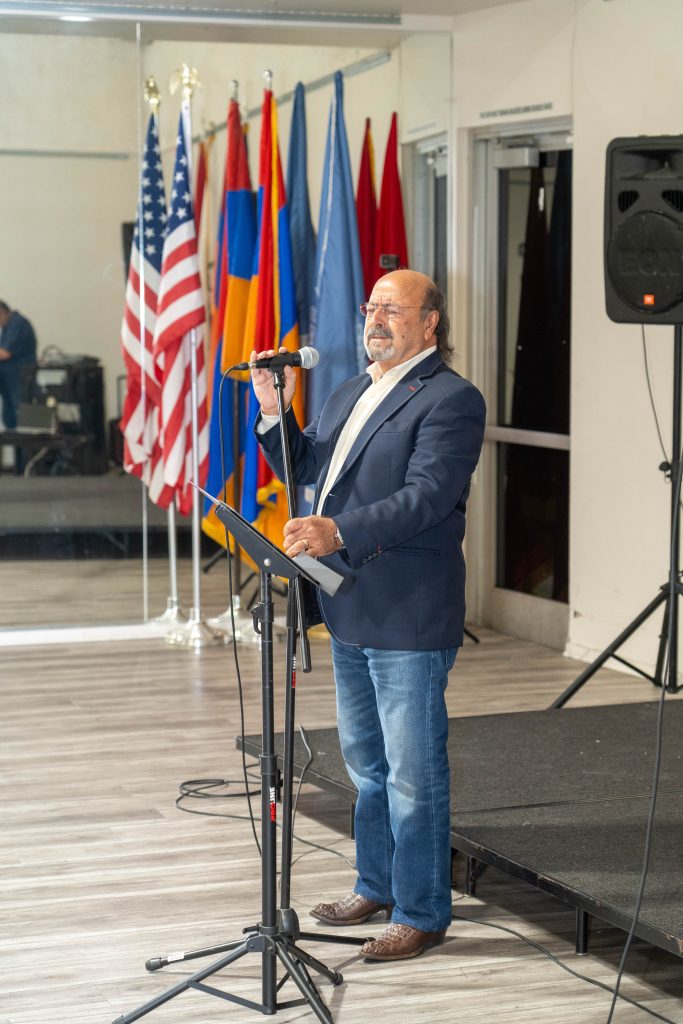
Alyosha Petrosyan of the Artsakh Preservation Committee spoke on behalf of the Artsakh community in Southern California, and Steven Dadaian spoke on behalf of the ALC Board about the Center’s work in defense of the hostages.
Sahakyan then updated guests on the status of the cases and the conditions in which the prisoners are held, followed by a question-and-answer session that gave attendees the opportunity to engage with her directly on the legal battle ahead and on how the community can help.
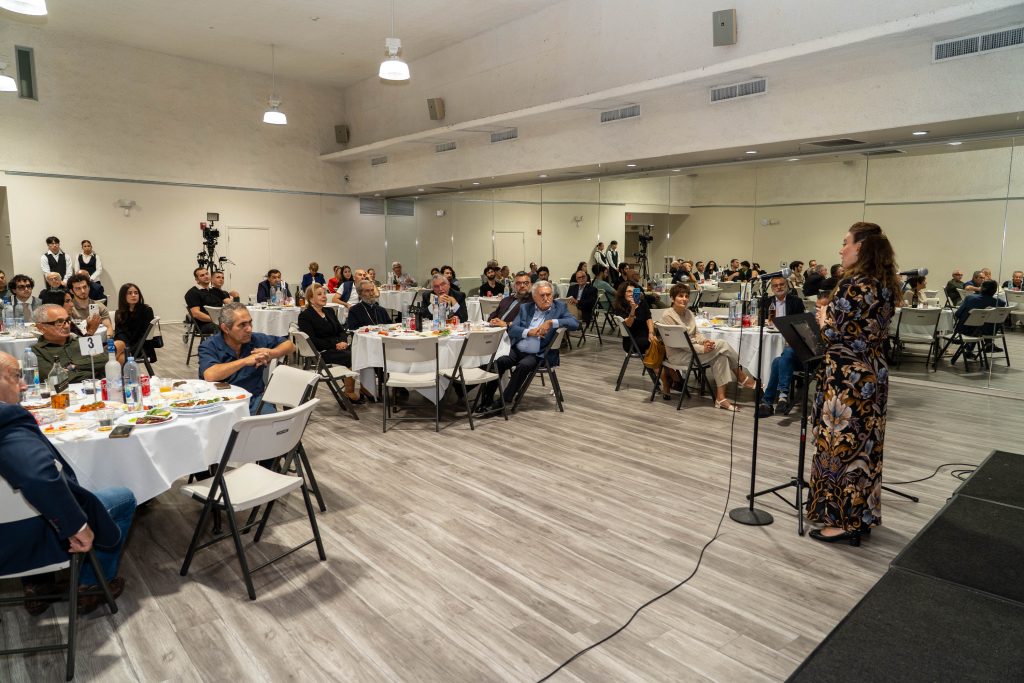
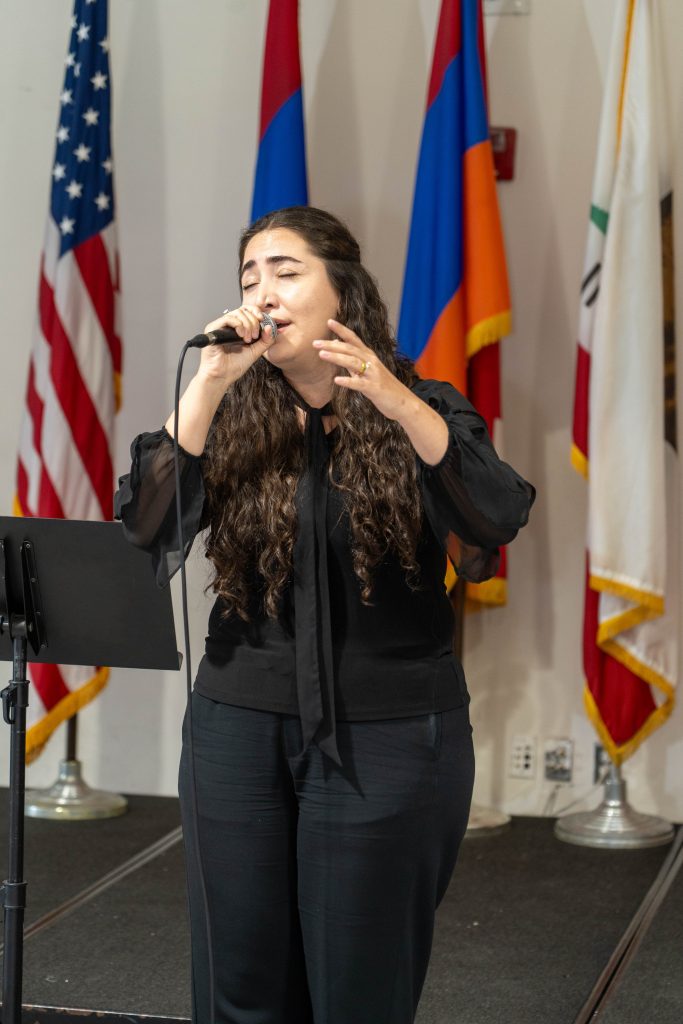
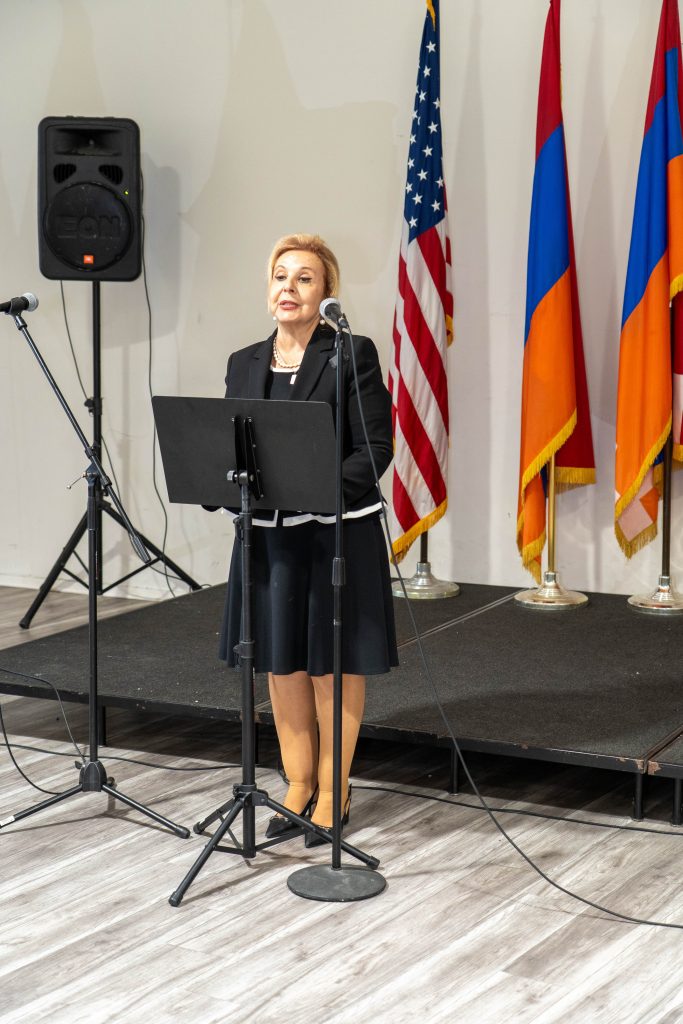
The program was woven through with Armenian music and literature. Karnig Sarkissian sang Armenian traditional folk songs a cappella, followed by Christine Hovhan, who also performed traditional folk songs. Margaret Derants, an Armenian-American novelist and prose writer and a member of the Writers’ Union of Armenia and Artsakh, offered recitations. Guests shared dinner over the course of the evening.
The work continues
Sahakyan’s Los Angeles program followed her keynote at the Armenian National Committee of America’s Capitol Hill program marking three years since Azerbaijan’s ethnic cleansing of Artsakh. Last month she filed a collective application with the European Court of Human Rights on behalf of fifteen Armenians held in Azerbaijan, including former political and military leaders of Artsakh, following a separate application in the case of former Artsakh State Minister Ruben Vardanyan. The prisoners remain in what she has described as conditions of “absolute isolation,” without access to relatives, independent doctors or attorneys, consular representatives, or the International Committee of the Red Cross.
For the ARF Western United States Central Committee, the week was one part of a sustained regional effort to keep the Artsakh question on the national agenda at a time when the government of Armenia has declared it closed. That effort continues on the evening of November 8, when the Armenian Youth Federation Western United States, together with other Armenian organizations committed to Artsakh, will lead a rally in Glendale under a clear message: the Artsakh issue is not closed. Artsakh exists.