By Harut Sassounian
TheCaliforniaCourier.com
On a daily basis, we are all inundated with so much misinformation that it is becoming almost impossible to distinguish fact from fiction. For those of us in the news business, the challenge is even greater. Whereas regular people can pass on baseless rumors to their immediate circle, the mass media bears a much greater responsibility because it risks spreading false information to thousands or even millions of people, unless it first verifies the facts.
A recent example of a story that evolved from fact into rumor was the Israeli Foreign Minister’s announcement last month that his government would recognize the Armenian Genocide. The news spread like wildfire throughout the international media. There were endless commentaries and analyses about why Israel decided to recognize the Armenian Genocide after decades of refusing to do so.
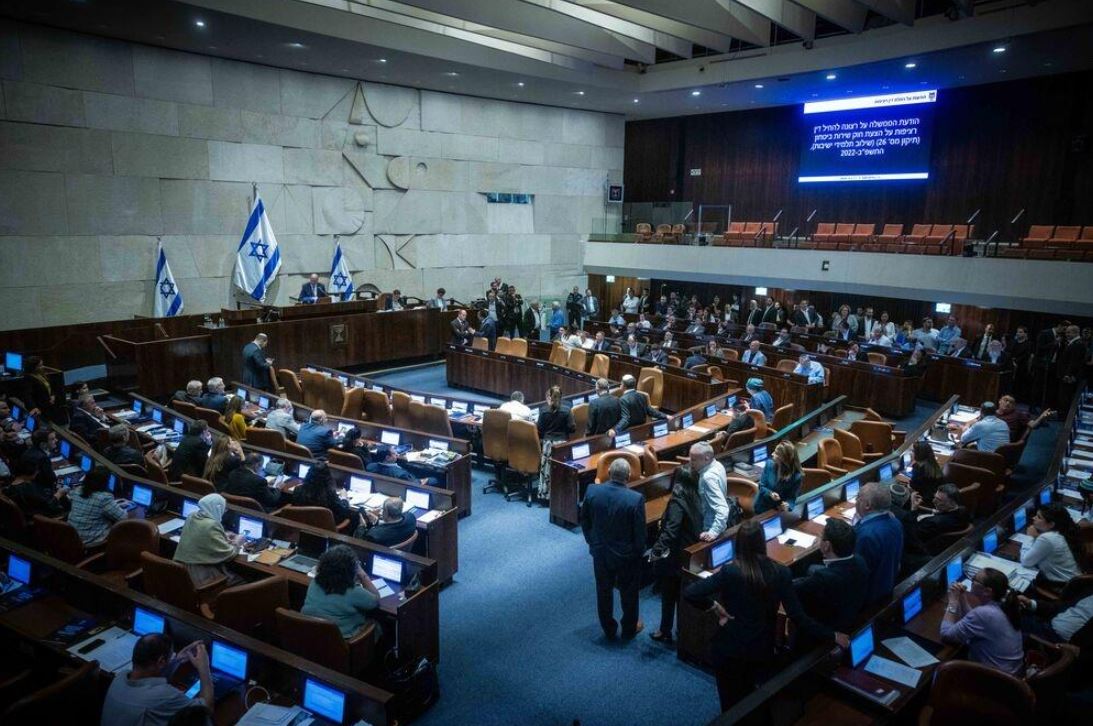
Shortly after the Israeli Foreign Minister’s announcement, the government (Cabinet) unanimously approved the recognition of the Armenian Genocide and decided to forward the measure to the Knesset (Parliament) for final approval.
Not surprisingly, the Turkish government furiously denounced the decision of Israel’s Cabinet, accusing it of trying to divert the world’s attention from the atrocities being committed in Gaza. Ironically, this accusation came from the Turkish government, which has gone to extraordinary lengths for over a century to cover up the genocides of Armenians, Assyrians, and Greeks.
Siding with Turkey’s denial of the Armenian Genocide was the government of Azerbaijan which has itself committed several mass murders against Armenians. As the saying goes, “birds of a feather flock together.” Azerbaijani officials expressed their objection by reminding Israel’s leaders of the billions of dollars’ worth of Israeli weapons they had purchased and that, in return, had sold to Israel a large share of its imported oil. Neither Azerbaijan nor its ally Turkey, which serves as the conduit for the Azeri oil exports to Israel, mentions its own role in supplying the fuel for Israel’s war machine.
The objections from Azerbaijan and Turkey triggered the false rumor that the Israeli government had abandoned the Knesset’s consideration of the Armenian Genocide, even though there was absolutely no official confirmation from Israel.
The fact is that the Knesset’s agenda was packed with several major issues during the last few days of its session, leaving no time to consider the Armenian Genocide. The Knesset went into recess last Friday until October, when new elections are scheduled to take place. It remains to be seen whether the next Knesset will take up this issue.
Even though Israel’s decision to recognize the Armenian Genocide was not intended to please the Armenian government, it must have been disappointing to hear the lackadaisical reaction of Prime Minister Nikol Pashinyan.
Those who have followed Pashinyan’s previous shameful statements in recent years questioning the facts of the Armenian Genocide should not have been surprised to see him disregard Israel’s Cabinet decision. “We see no need to respond because we believe that refraining from entering into the issue of the weaponization of the Armenian Genocide is in the interests of the Republic of Armenia,” Pashinyan stated.
However, when the US government recognized the Armenian Genocide, Pashinyan did not consider it to be “weaponization.” On the contrary, he was highly enthusiastic about the US Senate’s acknowledgement of the Armenian Genocide in 2019. He wrote on X (then Twitter): “US Senate Resolution 150 is a victory of justice and truth. On behalf of the Armenian people worldwide, I express our profound appreciation to the Senate for this landmark legislation. This is a tribute to the memory of 1.5 million victims of the first Genocide of the 20th century and a bold step in promotion of the prevention agenda. #NeverAgain.”
Pashinyan then added: “On behalf of the Armenian people, I want to thank all members of the US Senate [and] … the House of Representatives…. We must address words of appreciation to the Armenians of the United States, to all those organizations and individuals who contributed to this important and historic decision.” It is noteworthy that Pashinyan expressed his gratitude to the Armenian-American community for this recognition, in stark contrast to his subsequent anti-Diaspora statements.
Later, on April 24, 2021, when U.S. Pres. Joe Biden acknowledged the Armenian Genocide, Pashinyan again reacted very enthusiastically: “It is an important day for all Armenians. Following the resolutions adopted by the US Congress in 2019, President Biden honored the memory of the victims of the Armenian Genocide. The US has once again demonstrated its unwavering commitment to protecting human rights and universal values…. Today we pay tribute to the 1.5 million martyrs, victims of the Ottoman Empire’s criminal policies during WWI. The ideologies that led to the Armenian Genocide are still alive today, as demonstrated by the atrocities committed against the Armenians of Artsakh during the recent war.”
In addition to reversing his position on the recognition of the Armenian Genocide, Pashinyan has, in recent years, contradicted himself on dozens of other issues. Most notably, in 2019, speaking in Stepanakert before thousands of cheering Artsakh Armenians, he declared: “Artsakh is Armenia. Period.” After the 2020 war, however, he took the exact opposite position by acknowledging that Artsakh is part of Azerbaijan.