On Pashinyan’s UN sentence and the Armenians still held in Baku
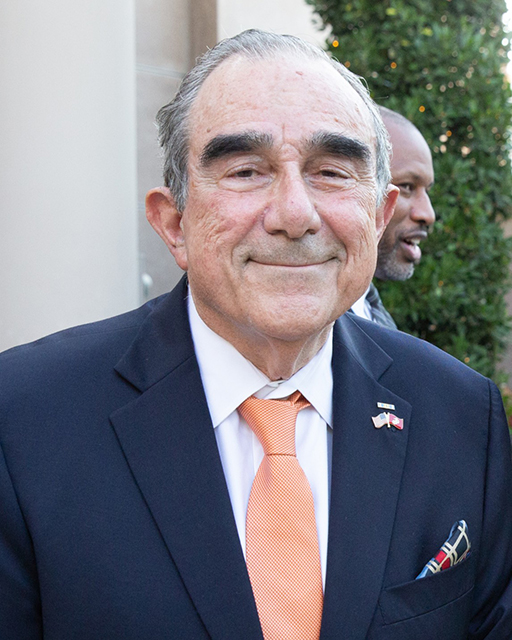
William M. Paparian
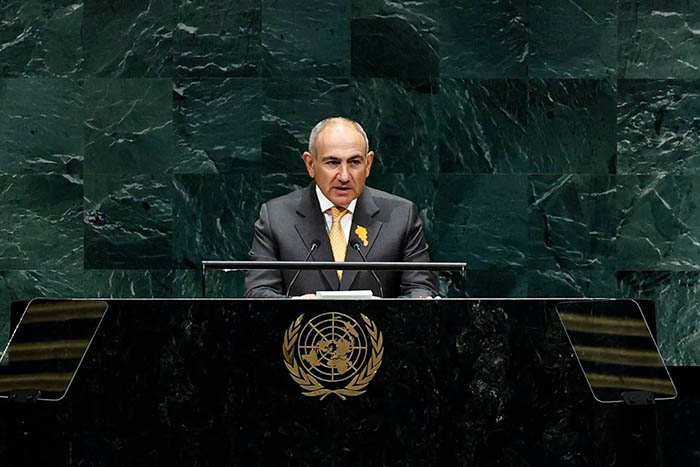
On September 24, from the podium of the 81st United Nations General Assembly, Prime Minister Nikol Pashinyan devoted one sentence to the Armenians imprisoned in Azerbaijan:
“And of course, people in the Republic of Armenia are waiting for the return of Armenians who were detained in Azerbaijan as a consequence of the conflict.”¹
At least 19 Armenians — former Artsakh officials, servicemen, and civilians — remain hostages and prisoners in Azerbaijan. Many have been held for more than a thousand days. Some have been sentenced to life or to decades in closed proceedings. That is the file behind the sentence. The sentence does not say so.
It does not say who they are. “Armenians who were detained” erases the difference between a captured soldier, a civilian taken after the fall of Artsakh, and a former president, defense commander, or foreign minister tried in Baku. Precision is not rhetoric. It is the first duty owed to the imprisoned.
It does not say what was done to them. “Detained as a consequence of the conflict” is a phrase of weather, not of law. Conflict produces casualties. It does not automatically produce life sentences handed down far from independent counsel, family visits, or the International Committee of the Red Cross. If these men are prisoners of war, the Third Geneva Convention applies. If they are civilians, the Fourth. If they are political hostages, then calling their captivity a mere consequence of war is a description that serves the captor.
It does not say what Armenia will do. “People in the Republic of Armenia are waiting” transfers agency from the state to the public. Waiting is what families do. Policy is what a government does with its voice, its partners, and its red lines. A premier may report the nation’s hope. He may not substitute that hope for the state’s duty.
A nation is a moral covenant across generations. When those who have suffered for us are treated as negotiable, we tell the living and the unborn that Armenian lives have a price. Leave no one behind is not a slogan borrowed for effect. It is the minimum content of honor for a small people among larger powers. That is why unconditional release cannot be a concession traded for silence on connectivity, monuments, or narratives. It must be a precondition. Until every Armenian captive is free, the peace remains incomplete.
The Washington declaration of August 8, 2025, and the text initialed there may have opened a diplomatic chapter. They did not close the chapter in the prisons of Baku. The UN speech declared that Armenia and Azerbaijan have already achieved “more than sufficient results,” and that those results should matter more than conflict rhetoric. Two and a half years without new graves on the line of contact is a human fact. A calm frontier does not redeem a policy that leaves former leaders of Artsakh and unnamed civilians to serve out sentences the world was not permitted to watch.
I do not claim that one sentence proves abandonment. I claim that one sentence reveals a hierarchy. Missing persons, demining, and the detained were listed together as unfinished business. Then the speech moved on. That order of emphasis tells Baku which files are urgent and which files can wait. It also tells the families which files will be spoken in full before the nations of the world, and which will be folded into a dependent clause beginning with “of course.”
Of course they are waiting. They have been waiting since 2020, and again since September 2023. Waiting is not a policy.
Name the 19. Stop describing the peace as established while they remain in cells. Do not treat ceremonial language — or applause for new routes and trade measures — as a substitute for their release.
The diaspora will continue to press that case. We will not leave our prisoners behind. We will not accept the premise that a quieter demand makes a more durable peace. Governments are temporary. The nation’s obligations do not expire when a speech must turn to the next subject.
Until they are home, honor remains engaged. Leave no one behind.
William M. Paparian is a former mayor of Pasadena, a Los Angeles County deputy district attorney, and a captain in the California State Guard’s Judge Advocate Section. A related argument appeared in The Armenian Weekly in August 2026. The views expressed are his own and not those of the District Attorney’s Office or the California Military Department.