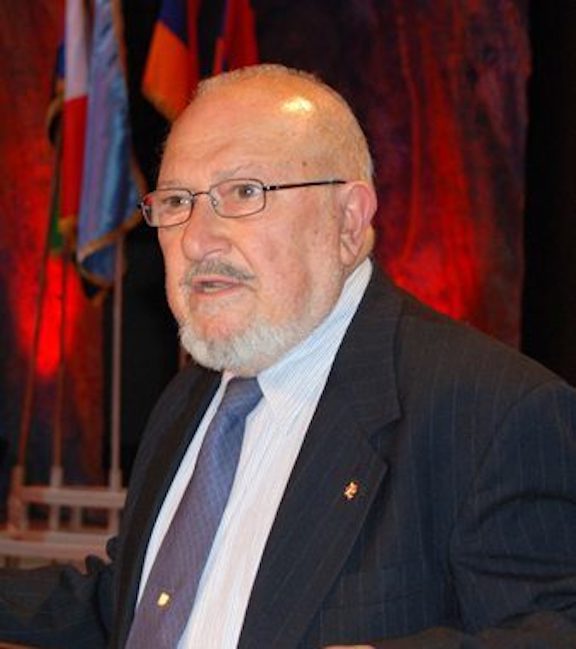
Tatul Sonentz-Papazian, veteran Armenian Revolutionary Federation leader, artist, poet, translator, editor, archivist, Armenian Relief Society servant and lifelong advocate of the Armenian Cause, passed away in early May, leaving behind a legacy that belongs not only to his family and comrades, but to the broader Armenian nation he served for nearly eight decades.
He was, in the deepest meaning of the word, an unger. To those who knew him personally, he was a mentor, teacher, fatherly presence, cultivated intellectual and compassionate friend. To the institutions he served, he was a builder, guardian of memory, disciplined servant and steady hand. To the Armenian Cause, he was one of those rare figures whose convictions did not harden into bitterness, but instead expanded into empathy, imagination and lifelong devotion.
Born in Cairo, Egypt, Tatul came of age in the Armenian Diaspora at a time when exile, cultural preservation and the pursuit of justice were inseparable parts of Armenian life. In 1946, at the age of eighteen, less than three decades after the bloody culmination of the Armenian Genocide, he took his oath to the Armenian Revolutionary Federation. From that day forward, he did not merely belong to an organization. He dedicated himself to the principles and mission embodied by the ARF: justice, national dignity, sacrifice, collective responsibility and the dream of a more humane and compassionate world.
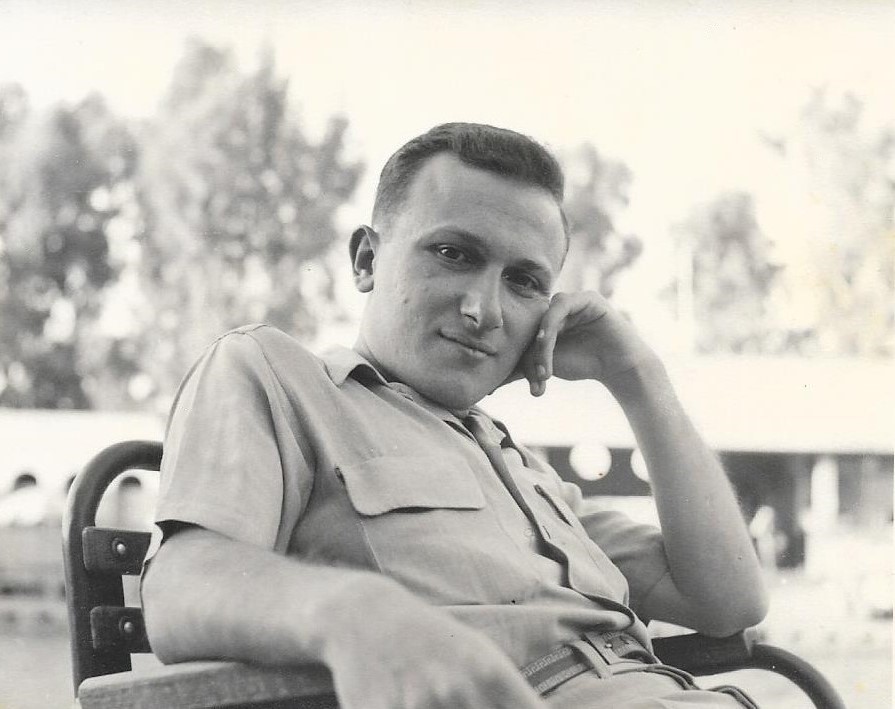
As his son, Vicken Sonentz Papazian, movingly wrote after his father’s passing, Tatul was “first and foremost, a believer.” That belief was not a youthful sentiment that faded with age. From the age of eighteen until his passing, just twenty days shy of his 98th birthday, there was, in Vicken’s words, “no self doubt nor compromise” in Tatul’s core principles and beliefs.
That moral imagination gave his life its distinctive power. Tatul understood Armenian suffering not as permission for hatred, but as a summons to moral clarity. He believed in the liberation of his own people, but also in a larger human struggle against oppression, erasure and indifference. He could be both a revolutionary and an empath because, for him, Hai Tahd was rooted not only in national justice, but in the belief that humanity could become more just.
His life’s work reflected that belief. A graphic designer, editor, poet and translator, Tatul brought professional skill and artistic sensitivity to Armenian public life. He served as editor of the Armenian Review, director of the Armenian Revolutionary Federation and First Republic of Armenia Archives in Watertown, Massachusetts, and director of the publications department of the Armenian Relief Society. He also served the ARS for three decades, including as Executive Director and as Archives and Publications Director. In 2015, the ARS Eastern USA Board of Directors honored him with the Society’s highest distinction, the Agnouni Award, recognizing his decades of devoted service to the ARS and the Armenian people.
These were not merely positions held. They were acts of national preservation. For a people repeatedly threatened by dispossession and distortion, archives are not dead paper. They are proof of existence. They preserve the voices of those who struggled, governed, sacrificed, wrote, organized and dreamed before us. Tatul understood that without memory, a nation becomes vulnerable to erasure, and without archives, the next generation inherits slogans but not substance.
His editorial, archival and literary work connected past and present. Through the archives of the ARF and the First Republic, he helped preserve the documentary inheritance of the generation that restored Armenian statehood in 1918. Through his writings, translations and publications work, he helped interpret Armenian experience for new generations. Through the ARS, he served one of the Armenian nation’s most enduring humanitarian and community institutions.
Garo Armenian, in a deeply moving Armenian tribute, called him a poet, artist, translator and unbending fighter for Hai Tahd. He wrote that Tatul possessed the unconquerable simplicity and immeasurable depth of a man of faith, a vast reservoir of confidence and energy, and an inexhaustible creative force that made him “invincible” and made those around him “infinitely rich” in belief in the Armenian people’s collective strength and mission.
Among the works remembered after his passing was Tatul’s English translation of Yeghishe Charents’ “Պատգամ” — “Testament” — the famous acrostic poem whose hidden message declares: “O Armenian people, your only salvation is in your collective strength.” Garo Armenian described Tatul’s translation as a historic act that made Charents’ powerful message accessible to Armenian-American youth and to the English-speaking literary world. The choice of that poem was fitting. Charents’ message speaks to the enduring lesson of Armenian history: that survival cannot be outsourced, national dignity cannot be begged for, and a people’s salvation lies in its organized, conscious and collective will. Tatul did not simply translate those words. He lived them.
His comrades remembered him not only for what he accomplished, but for how he made others feel. former ARF Bureau Chairman Hagop Der Khatchadourian described him as kind, compassionate, cultivated and knowledgeable, an older brother or father figure who cared deeply about his “disciples” and friends. He called him a dreamer with a sharp intellect, an artist’s heart and a revolutionary’s convictions, one who never wavered in his beliefs despite the temptations that derailed others.
Others who remembered him after his passing spoke of his warmth, smile, generosity of spirit, mentorship, intellect, artistic gifts, writings and enduring role as a pillar of the Armenian Diaspora. They remembered him as a man who could guide younger Armenians in national service, cultural identity and even professional craft. They remembered conversations with him as formative. They remembered his kindness as much as his knowledge.
That combination was rare. Many people possess conviction. Fewer possess conviction with tenderness. Many preserve memory. Fewer make memory feel alive. Many speak of the Armenian Cause. Fewer make others want to carry it forward.
Tatul did.
He embodied one of the finest traditions of the Armenian Diaspora: the intellectual activist, the cultured revolutionary, the servant-leader who understood that language, art, history, political struggle and community institutions are all part of the same national mission. He could speak about the First Republic not as a distant chapter, but as a living inheritance. Genocide, resistance, May 28, exile, Diaspora organization, Artsakh and Hai Tahd were all part of one continuing national struggle.
To his family, however, Tatul was not only the public figure, unger, editor, archivist or revolutionary. He was father, grandfather, relative and beloved presence.
Vicken’s remembrance gives the public a glimpse of the boy inside the elder. As a young Armenian boy in Egypt, Tatul was fascinated by airplanes, which at the time remained a wonder beyond the reach of most people. Near the desert, an old retired Australian pilot would, for a small fee, strap a passenger into the back seat of a World War I-era Sopwith Camel biplane and circle the desert for a few magical minutes. Tatul saved his Egyptian piastres, did not tell his parents, and arrived with goggles, scarf and jacket, ready for flight.
That ten-minute ride stayed with him for more than eighty years.
The story is beautiful because it explains something essential about him. Tatul was a dreamer, but not the idle kind. He was the kind of dreamer who saved his coins, put on his goggles, climbed into the plane and took flight. He kept his head in the clouds, as Vicken wrote, “exactly where he wanted it to be.” But his feet remained planted in service. His imagination did not detach him from responsibility. It gave responsibility wings.
That was the rare balance of his life. He belonged to the practical world of archives, publications, organizational duties and deadlines. Yet he also belonged to the world of poetry, memory, flight and faith. He knew that nations are not sustained by administration alone. They are sustained by dreams powerful enough to command sacrifice.
His passing is more than the loss of one distinguished Armenian. It marks the closing of a chapter in the life of a generation that gave the Diaspora its institutional backbone. These were the men and women who, after genocide and dispersion, built schools, churches, newspapers, youth organizations, relief societies, political committees, cultural associations and archives. They did not wait for perfect conditions. They organized. They did not confuse mourning with paralysis. They turned memory into duty.
Tatul Sonentz-Papazian was one of those builders.
For the ARF, he leaves behind the example of an unger who understood oath as covenant. For the ARS, he leaves behind the record of three decades of service and a legacy worthy of its highest recognition. For Armenian journalism and intellectual life, he leaves behind editorial and literary contributions that helped shape public understanding. For Armenian historiography, he leaves behind the sacred work of preserving archives. For the Armenian Cause, he leaves behind a model of devotion without fanaticism, conviction without cruelty, and revolutionary spirit guided by empathy.
For his family, he leaves something even greater: the memory of a man who never stopped dreaming.
Vicken imagined the old Australian pilot again taking Tatul into the back seat of the Sopwith Camel, this time carrying him toward his family and Maker in the great beyond. It is an image worthy of the man: scarf in the wind, eyes lifted, the desert below, the clouds ahead, the dream still alive.
May his memory be eternal.
May his life remain an example.
And may the generations who follow him understand the message he preserved, translated and embodied: that the Armenian people’s strength lies in faith, service, culture, sacrifice and collective will.