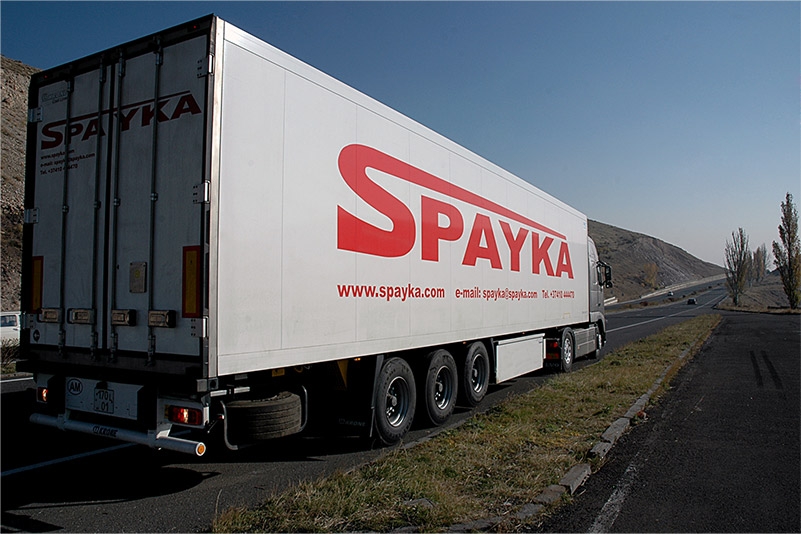
rmenia’s largest food exporter, Spayka, warned Friday it may stop buying fruit and vegetables from local farmers by the end of the month if its fleet of more than 100 trucks remains blocked in Russia.
The trucks, loaded with agricultural produce, were intercepted in several Russian cities three weeks ago for reasons that remain unclear. Spayka dispatched lawyers to negotiate with Russian authorities but has yet to receive an explanation, company executive Karen Baghdasaryan said.
Farmers in Armenia’s Ararat province, heavily dependent on Spayka, voiced concern over the potential halt. They said Spayka pays higher prices for produce than any other buyer.
“The plant pays 180 drams per kilogram, while Spayka took them for 220 drams. There is quite a difference,” said farmer Armen Andreasian. Another grape grower added, “Our bread and water depend on them.”
Spayka, which employs about 2,500 people, accounts for roughly two-thirds of Armenia’s fruit and vegetable exports, valued at more than $140 million in the first half of 2025, according to government data. Russia is the main destination for those shipments.
The move comes amid rising tensions between Yerevan and Moscow. Russian officials have warned of economic consequences for Armenia’s stated goal of eventually joining the European Union.
The trucks were reportedly blocked two weeks after Spayka’s founder, Davit Ghazaryan, hosted U.S. Ambassador Kristina Kvien at the company’s headquarters and discussed ways to deepen U.S.-Armenia economic ties.
Russian authorities, including agricultural watchdog Rosselkhoznadzor, have not commented on the blockade. The Armenian government has also remained silent.