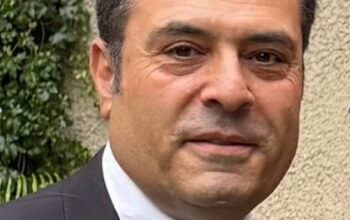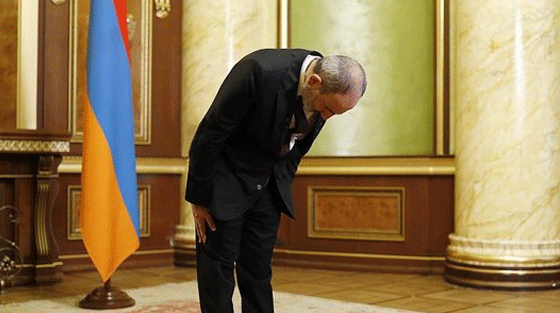
Prime Minister Nikol Pashinyan said Thursday that he rejects any agenda aimed at restoring what he called “historical justice,” declaring instead that his government will pursue what he described as a “just reality.”
Speaking at a press briefing ahead of the June 7 parliamentary elections, Pashinyan said that the more Armenians seek historical justice, the more they will face new historical injustices. His remarks amounted to yet another public renunciation of the national cause in favor of a policy of accommodation and surrender.
Pashinyan also refused to clearly describe the 2023 forced displacement of more than 100,000 Armenians from Artsakh as ethnic cleansing. He argued that using such language would be harmful because Azerbaijan could respond with similar accusations, and that doing so would place Armenia on a path of renewed conflict.
Instead of speaking about justice for the people of Artsakh or their right to return, Pashinyan said his government’s priority is to provide displaced Armenians with housing, jobs, security, and rights inside Armenia. Earlier the same day, during a cabinet meeting, he criticized what he called efforts to keep displaced Artsakh Armenians in “refugee status” and again dismissed the opposition’s emphasis on the right of return as unrealistic and dangerous.
He also repeated his claim that peace requires not only agreements with Azerbaijan but a change in thinking within Armenian society itself, saying that peace is not just an agreement, but a state of mind.
During the same press briefing, Pashinyan reaffirmed that his Civil Contract party will seek a constitutional majority in the next parliament in order to adopt a new constitution without any reference to Armenia’s 1990 Declaration of Independence. That declaration includes reference to the 1989 act on the unification of Soviet Armenia and Artsakh, a point long opposed by Baku and cited by Azerbaijani President Ilham Aliyev as an obstacle to a final peace agreement.
Pashinyan openly stated that Armenia itself needs a new constitution without that reference, arguing that this is necessary for the country to have a lasting state in the region. Asked what he would do if such a constitution failed in a referendum, he said his government would simply continue trying until the public is persuaded.
The opposition has strongly rejected Pashinyan’s postwar policies, arguing that the concessions made to Azerbaijan are one-sided, dangerous, and unsustainable. They maintain that any so-called peace built on Armenian retreat and national humiliation cannot endure.
Last week, Pashinyan warned that any attempt to revise the understandings reached with Baku at last year’s Washington summit would lead to an “inevitable” and “disastrous” war. Opposition forces dismissed those remarks as fearmongering aimed at intimidating voters before the elections.
Pashinyan’s latest statements leave little room for doubt. His government is no longer merely negotiating from weakness. It is attempting to ideologically normalize defeat, strip Armenian statehood of its historical foundations, and convince the public to accept national retreat as realism.