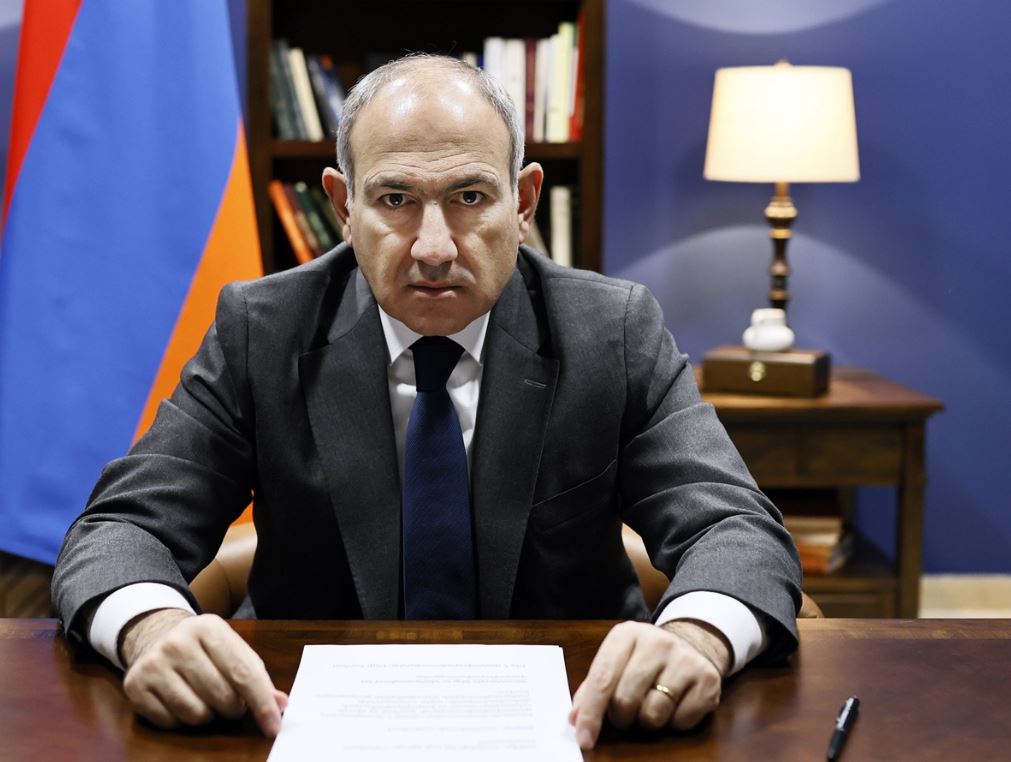
According to the official results announced by Armenia’s Central Electoral Commission, Nikol Pashinyan’s Civil Contract party received only 49.81% of the vote, followed by Strong Armenia with 23.29%, the Armenia Alliance with 9.94%, and Prosperous Armenia with 4%. Four political forces will enter the National Assembly.
For months leading up to the election, the ruling authorities exploited every advantage available to an incumbent government. Opposition forces faced investigations, raids, arrests, administrative pressure, and a media environment heavily tilted in favor of the government. State institutions increasingly became involved in political battles, while critics repeatedly raised concerns regarding misuse of administrative resources, voter pressure, and unequal conditions for political competition.
At the same time, Pashinyan benefited from an extraordinary level of political and diplomatic support from Western governments, institutions, media outlets, NGOs, and foreign-funded organizations that have openly aligned themselves with his government’s agenda in recent years. Throughout the campaign, a series of Western-backed polls consistently projected a far stronger position for Civil Contract than many observers on the ground believed existed.
Critics argued that these polls were intended not merely to measure public opinion, but to shape it. By repeatedly presenting Pashinyan as the inevitable winner and portraying opposition forces as fragmented and weak, they sought to create a perception that the election’s outcome was already decided.
Yet even with all these advantages, Pashinyan was unable to secure even half of the vote.
Perhaps the most important number in this election is not Pashinyan’s 49.81%, but the fact that a majority of Armenian voters cast their ballots for someone else. While the opposition was divided among multiple political forces, the official results themselves demonstrate that support for the government is far from overwhelming.
The government’s supporters will point to a parliamentary majority. But such a majority, if ultimately confirmed, is likely to be narrow and vulnerable. It may be enough to form a government, but it is not the kind of result that resolves the deep political, national, and security crises facing Armenia.
It is also far too early to conclude that Pashinyan has successfully digested these results politically. A majority on paper does not automatically translate into stability. Opposition parties will maintain a significant parliamentary presence, while broader political and public challenges are unlikely to disappear simply because the ballots have been counted.
Significantly, Pashinyan rushed to declare victory when only a small portion of the votes had been counted. With roughly ten percent of precincts reporting, he was already presenting the outcome as settled. Such haste suggested an effort to establish a narrative before the full results, objections, and political reactions could emerge. What’s more, he asserted he is going to jail all three of his major opponents: Samvel Karapetyan, Robert Kocharyan, and Gagit Tsarukyan.
Many Armenians will also question the role played by polling organizations that spent months portraying Civil Contract as politically dominant. Whether those surveys reflected poor methodology, institutional bias, or an effort to influence voter expectations, the gap between the public narrative promoted throughout the campaign and the mood felt by many Armenians on the ground will remain a subject of debate.
Whether one accepts the official results at face value or believes the election was marred by significant irregularities, one conclusion is difficult to avoid: after years in power, after deploying the full advantages of incumbency, after months of pressure on opponents, and after benefiting from substantial Western political support, this appears to be the strongest result Pashinyan could manufacture.
If that assessment is correct, then the story of this election is not that Pashinyan demonstrated overwhelming public confidence. The story is that despite every advantage available to him, he still failed to win the support of a majority of Armenian voters.
And that reality is likely to shape Armenian politics long after election night headlines have faded.