
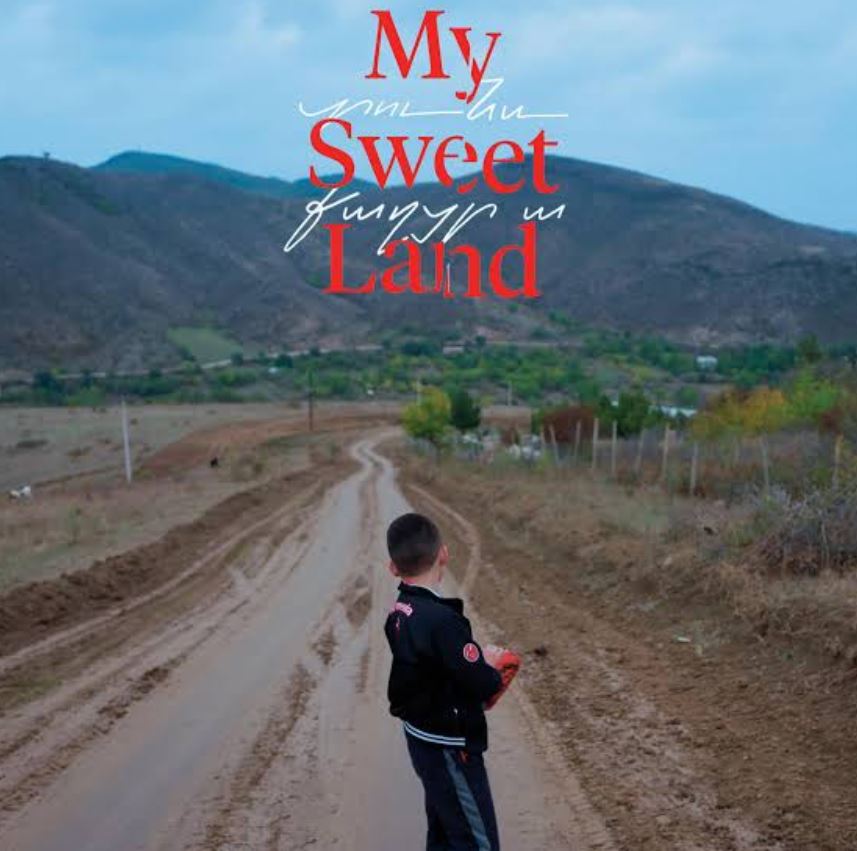
The documentary My Sweet Land, directed by Armenian-American filmmaker Sareen Hairabedian, is now available to stream on PBS platforms and is reaching television audiences across the United States, giving renewed visibility to the story of Artsakh and its people at a time when their dispossession is too often treated as yesterday’s news. The film is currently streaming on PBS.org and the PBS App, and is scheduled for a U.S. broadcast premiere on April 23 on the WORLD Channel, while also airing on local PBS stations this month.
At the center of the documentary is Vrej, an 11-year-old Armenian boy from Artsakh whose childhood unfolds against the backdrop of war, displacement, return, and the transformation of his homeland. Through his eyes, the film captures not only the innocence of village life and a child’s ordinary dreams, but also the burden placed on an entire generation forced to grow up under siege, uncertainty, and eventual loss. PBS describes the film as a coming-of-age story seen through the experience of a boy in Artsakh whose life is reshaped by conflict, exile, defeat, and a return to a land marked by politics, grief, and militarization.
What gives My Sweet Land its deeper significance is that it now stands as a document of a homeland that has been emptied of its Armenian population. What the film records is no longer merely a difficult chapter in an unresolved conflict, but the lived reality of a people whose presence in Artsakh was violently uprooted. In that sense, the documentary is more than a personal story. It is a witness. It preserves the human face of a national tragedy that much of the world preferred to discuss in sterile geopolitical language while Armenian families lost their homes, their security, and their ancestral land.
Oragark has previously covered the film and the attempts to silence or marginalize it. Its arrival on PBS and WORLD Channel therefore carries meaning beyond a simple programming update. It represents an opportunity for wider American audiences to encounter Artsakh not as an abstract dispute on a map, but as a place of children, families, villages, memory, and interrupted futures. At a time when Azerbaijan and its supporters continue to push narratives meant to erase the Armenian reality of Artsakh, every serious platform that gives space to the truth matters.
For Armenian viewers, the film will be painful. For non-Armenian viewers, it should be revealing. And for all who still care about truth, justice, and historical memory, My Sweet Land deserves to be seen, shared, and discussed. Its broadcast on public television is a reminder that the story of Artsakh is not over simply because powerful states and institutions would prefer to move on. The land may have been overtaken, but its people, their testimony, and their claim to remembrance remain.


