In its new report, “Rewiring the South Caucasus: TRIPP and the New Geopolitics of Connectivity”, the Carnegie Endowment presents TRIPP as a practical path toward peace, regional connectivity, and reduced Russian influence.
But the report’s central flaw is that it treats a deeply political and national issue as if it were mainly a technical transportation project. Its language is full of “connectivity,” “interdependence,” and “opportunity,” while avoiding the more basic question: who is being asked to legitimize whose agenda?
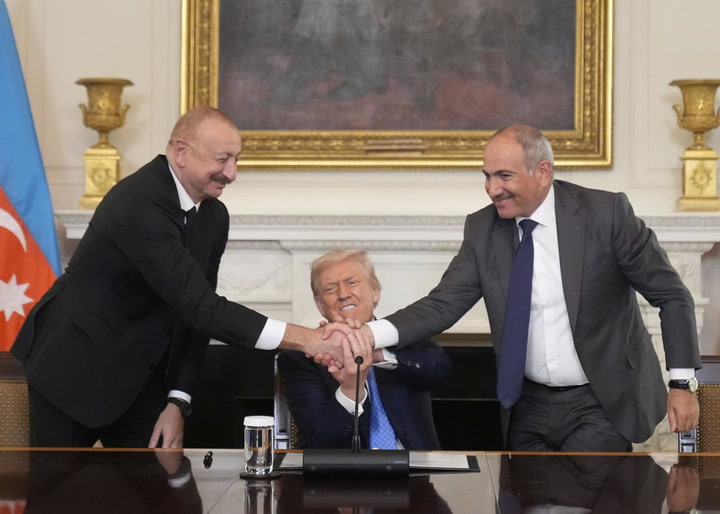
The piece openly frames TRIPP as a U.S.-designed arrangement born out of the August 8, 2025 White House meeting involving Donald Trump, Nikol Pashinyan, and Ilham Aliyev, and describes the proposed 43-kilometer Meghri route as a key breakthrough in the Armenia-Azerbaijan process. That alone explains why Armenians should read it cautiously. This is not neutral analysis. It is a policy argument for institutionalizing a new regional order. Carnegie itself describes its role as engaging decision-makers and advancing strategic ideas.
The report tries to reassure readers by saying Armenian sovereignty and jurisdiction will remain intact. Yet in the same breath, it acknowledges “unimpeded access,” third-party operators, and even the possible use of privately employed operational security personnel under Armenian licensing. That is exactly why so many Armenians remain skeptical. A regime can remain “sovereign” on paper while being diluted in practice through exceptional arrangements imposed under foreign pressure.
The report also assumes that trade and infrastructure can soften the underlying conflict. But the sequence matters. The pressure came first. The demands came first. The political concessions by Pashinyan came first. Now comes the effort to package the outcome as modernization and peace. What the Carnegie piece presents as a fresh opportunity looks far more like an attempt to ratify and finalize, in polished diplomatic language, what has already been conceded step by step.
Its geopolitical bias is just as clear in how it describes the beneficiaries. Carnegie says TRIPP serves Azerbaijan by reconnecting it more directly to Nakhchivan, serves Armenia by “de-isolating” it, and serves Turkey by strengthening its role in the broader Middle Corridor and benefiting Kars and Iğdır. But these are not equal gains. Azerbaijan and Turkey are positioned to expand strategic depth, while Armenia is told to accept risk and call it opportunity.
Even the economic case is far less settled than the report suggests. It admits that financing is incomplete, that only an initial tranche had reportedly been sourced by the end of 2025, that the road segment remains unfunded, and that the commercial case is still unproven given existing routes through Georgia. So the political commitments expected from Armenia are immediate, while the promised benefits remain speculative.
In the end, the Carnegie report is valuable less for the strength of its argument than for the assumptions it reveals. It reflects the mindset of outside policy circles that believe almost any national concession can be made acceptable if it is wrapped in enough language about peace, transit, and regional integration.
That may satisfy think tanks and diplomats. It should not satisfy Armenians.
This new Carnegie piece is not simply reviewing TRIPP. It is trying to sell it. And in doing so, it repackages a dangerous and one-sided process as a forward-looking peace initiative. Oragark readers should understand it for what it is: not an objective roadmap to peace, but an effort to legitimize in Western policy language what Pashinyan has already been pushed, or willing, to give away.