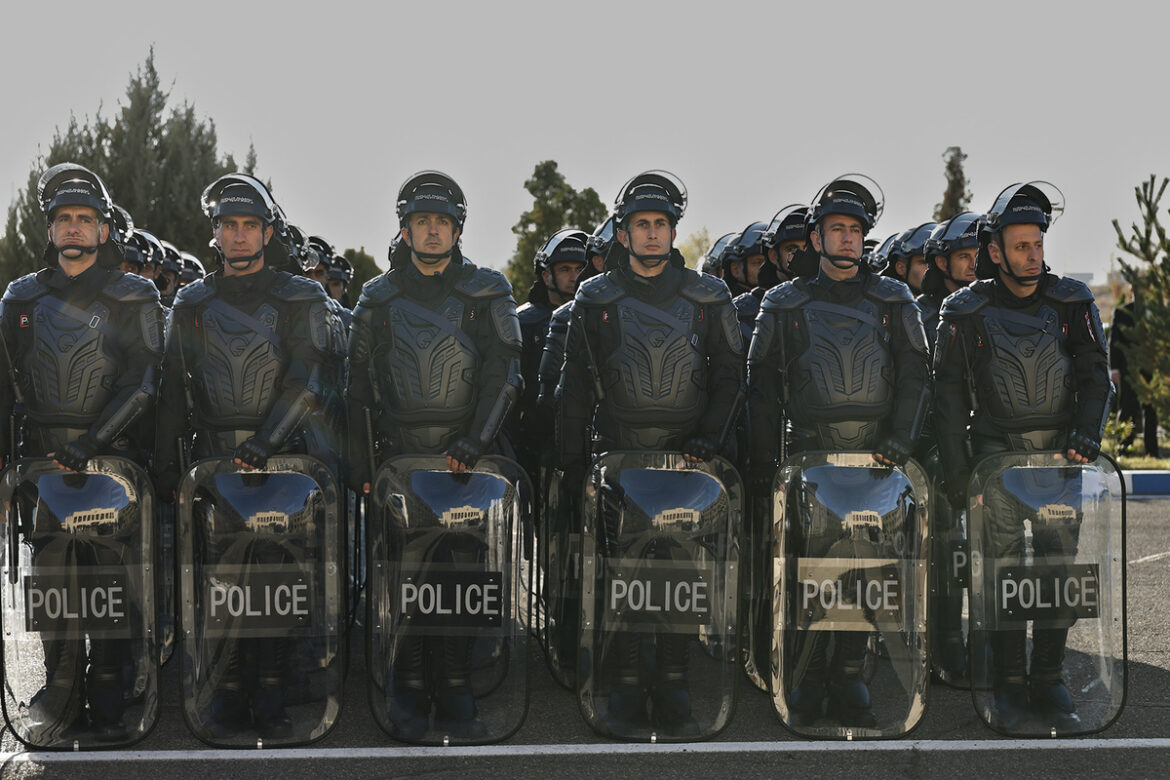
With parliamentary elections only months away and public discontent on the rise, Armenia’s government has unveiled the Police Guard, a new branch of the national police that critics say is tailored to consolidate control over the streets.
Officials tout the unit—one of four branches of the force—as a reform that will “strengthen domestic security” with specialized personnel and modern, standards-compliant weaponry. Its formal remit spans public order and safety; guarding strategic state sites; assisting protections for individuals under special state security; supporting criminal proceedings; and taking part in civilian protection during emergencies. Authorities add that officers cannot use force without special training and claim the structure will “better organize” the exercise of freedom of assembly.
Opposition figures see something very different. They argue that rolling out a new, well-armed policing arm on the eve of elections is less about reform than it is about managing dissent—especially after repeated allegations of brutality at political rallies over the past year. In their view, the Police Guard’s mandate over public order and strategic facilities, paired with expanded operational tools, risks becoming a pre-election pressure lever against protest activity.
Prime Minister Nikol Pashinyan attended Saturday’s inauguration, calling the launch “a new page” in domestic security reform and promising a “qualitatively new service” for citizens and personnel alike. But opposition groups counter that such language masks a trajectory toward a police-state model, insisting the timing—amid widening demonstrations and the government’s sliding popularity—underscores the political intent. They warn that, without independent oversight and enforceable limits on use of force, the Police Guard will chill lawful assembly precisely when voters are preparing to judge the government at the ballot box next year.