Hostage Artsakh Leaders Decry Yerevan’s Indifference
ECHR Challenge Launched for Vardanyan
Azeri Abuse of Armenian POWs Escalates
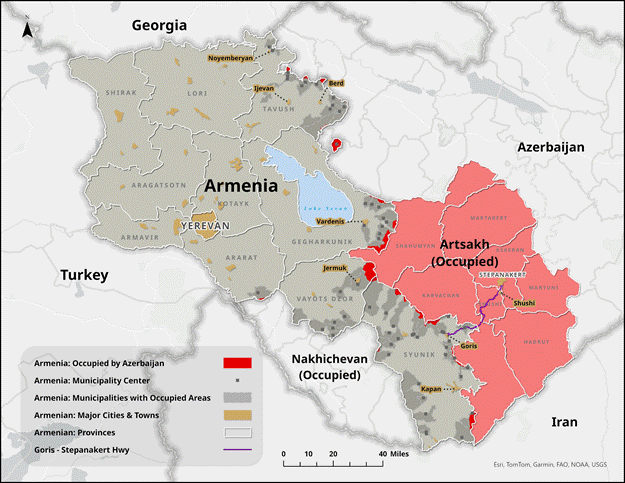
The Center for Armenian Research and Analysis (CARA) gathers and analyzes critical information on activities occurring in occupied Arstakh by state and non-state actors, and produces a weekly brief, with actionable data, to public and private stakeholders. Keeping Artsakh alive and in the public consciousness is part and parcel of CARA’s mission of providing clear and unfettered research and analysis pertaining to indigenous Armenian rights and cultural survival.
TOP ARTSAKH HEADLINES, JULY 20-26, 2026
Book Review: Anatomy of a Catastrophe and the 2020 Karabagh War
The book Defeat: Documenting the Karabagh War of 2020, published by the Gomidas Institute and supported by the Calouste Gulbenkian Foundation, offers a forensic review of Armenia’s 2020 military defeat. Drawing on 35 interviews with 31 senior political and military leaders, political scientist Vicken Cheterian exposes three fatal miscalculations: failing to anticipate Azerbaijan’s modern military transformation and Turkish drone integration, underestimating Ankara’s direct and mercenary intervention, and over-relying on an inactive Russian security umbrella. The volume also includes contributions demanding political accountability (Karen Harutyunyan), analyzing societal populism (Ashot Voskanyan), and detailing a day-by-day wartime chronology (Mkrtich Karapetyan). (Source: Armenian Weekly Article)
Artsakh Leaders Condemn Armenian Government’s Indifference from Azeri Captivity
From a Baku prison, former Artsakh Armed Forces Major-General Davit Manukyan released an audio message accusing Prime Minister Nikol Pashinyan’s administration of total indifference toward captive Armenian leaders. Manukyan and seven former officials face 20-year to life sentences following Baku “sham trials.” Manukyan demanded Pashinyan publicly denounce the fabricated charges, warning that silence renders Yerevan complicit in Baku’s assault on Armenian statehood. Similar statements were echoed by former State Minister Ruben Vardanyan and former Speaker David Ishkhanyan. (Sources: Asbarez Article, Azatutyun Article)
ECHR Complaint Filed Over Ruben Vardanyan’s 20-Year Sentence
Human rights lawyer Siranush Sahakyan has filed an ECHR (European Court of Human Rights) complaint challenging the outrageous 20-year sentence handed-down to former Artsakh State Minister and world-renowned philanthropist Ruben Vardanyan by an Azeri military court. The conviction framed Vardanyan’s civilian governance and service as a violent power grab and his charitable work as purported “terrorism” financing.” Having boycotted Azerbaijan’s prejudicial and contrived domestic legal process as judicial farce, Vardanyan is pursuing international legal remedies. The case underscores the systemic threats, abuse, and violence facing all 19 Armenian political and military leaders illegally imprisoned in Baku without any independent human rights oversight. (Sources: JAM News Article, Civilnet Article, Public Radio of Armenia Article, Armenian Report Article)
11-Year-Old’s Artsakh Painting Sparks Controversy and Sells for $1,800
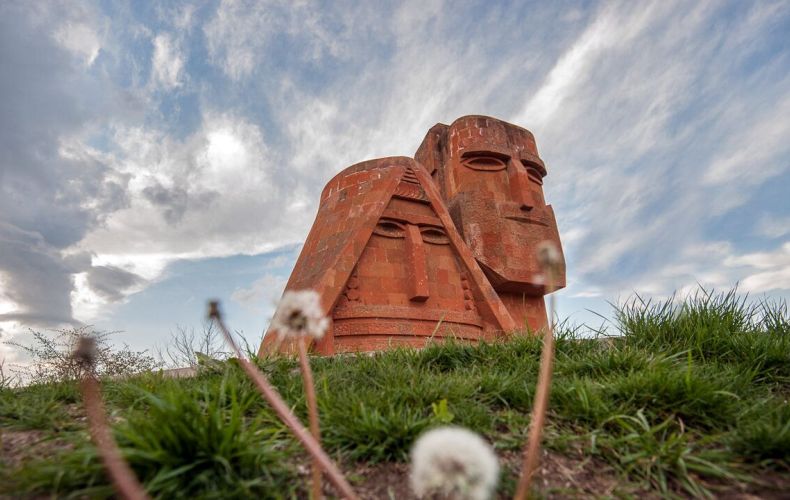
A painting of the “We Are Our Mountains” monument by 11-year-old Eva Danielyan was abruptly removed from a Yerevan school exhibition after administrators labeled it an “anti-state act.” The incident prompted Eva’s art teacher to resign in protest and sparked widespread backlash over the government’s perceived suppression of Artsakh identity. The controversy turned the artwork into a symbol of resistance, leading to its auction sale for $1,800 to an Artsakh native living in Moscow. (Source: Armenian Report Article)
Armenian Prisoners Facing Severe Abuse in Azeri Custody
Lawyer Siranush Sahakyan and relatives of Armenians illegally imprisoned in Baku report alarming physical abuse and severe health threats and decline—including fractures, emaciation, and heart complications—among Armenian POWs in Baku, warning that conditions are “incompatible with life.” With international observers and the Red Cross denied access to any of the prisoners and hostages, the ECHR (European Court for Human Rights) has ordered Azerbaijan to safeguard the physical integrity of all 19 Armenian hostages and submit comprehensive detention and medical records by August 31st. (Source: Armenian Report Article)
“On the Ground” in Occupied Artsakh
Mined Terrain Obstructs Azeri Firefighters Near Aghdam-Fuzuli Highway
A fire broke out in an open area near the Aghdam-Fuzuli highway in occupied Artsakh, prompting an immediate response from the Azeri Ministry of Emergency Situations and the State Fire Protection Service. While operations to extinguish the flames are underway, the effort is significantly complicated by the heavily mined terrain, which poses a serious safety risk to Azeri authorities. (Source: Fire Near Aghdam-Fuzuli Highway)
Baku Tries to Whitewash Occupation with Solar-Powered Open-Air Library in Shushi
On July 20th, Azercell Telecom, in collusion with Azeri state cultural ministries, opened what they have called “Book Stop,” as yet another attempt at disguising the continued destruction of Armenian culture and the total ethnic cleansing of indigenous Armenians from their millennial homeland. Being promoted as occupied Shushi’s “first 24/7 open-air library on Karabakh Street,” the solar-powered facility is said to provide “free books, Wi-Fi, and mobile charging stations” to, what in reality is, a meager post-forced deportation of native Armenians group of imported Azeri inhabitants. The launch coincided with the choreographed “Vagif Poetry Days,” hosting propagandist and so-called “People’s Poet” Vahid Aziz as its inaugural guest. (Source: Book Stop in Occupied Shushi)
Azeri Shepherd Wounded in Occupied Karvachar Munitions Explosion
On July 21st, a civilian Azeri shepherd, Sarkhan Isgandarov, was hospitalized after a munitions explosion in the occupied Zaglik (Zaylik) village of Karvachar. Following treatment and discharge, the Azeri District Prosecutor launched an investigation. In response, ANAMA and the Azeri Ministry of Internal Affairs issued a joint public warning, urging citizens to strictly obey mine warning signs and avoid restricted zones. (Source: Landmine Incident)
Trying to paint a Pleasant Face onto Artsakh Ethnic Cleansing, Azerbaijan Attempts to Promote Golf in Occupied Hovuslu Village
On July 22nd, the so-called Azerbaijan Golf Federation and the Azeri Ministry of Youth and Sports claimed to host introductory “golf training” in the occupied Hovuslu (Horovlu) village of Jrakan. Aimed at purportedly boosting “regional youth engagement” in sports, Azeri national coaches taught residents golf history and fundamental techniques, followed by hands-on practical exercises. (Source: Golf Promotion Event)
Karvachar Hydropower Plants Register for Global Carbon Credits
On July 23rd, five small formerly Armenian owned and deployed hydropower plants in occupied Karvachar (Chirag-1, Chirag-2, Soyugbulag, Meydan, and Gamishli) were registered for receiving international carbon credit certificates. Partnering with Azeri SOCAR Trading, the facilities project a verified annual emissions reduction of 37,000 tonnes. This follows recent activities wherein occupied Berdzor plants earned Gold Standard carbon credits. These and other energy sector facilities and projects created and implemented by Armenians prior to Azeri ethnic cleansing of Artsakh are being exploited by Azeri occupiers and other foreign interests. Additional registrations are currently advancing for facilities in occupied Berdzor and Kovsakan, as well. (Source: International Carbon Certification)
Azerbaidjian Amends Law to Cap Azeri IDP Social Protections at Three Years
On July 23rd, Azerbaijan amended its social protection law for Azeri internally displaced persons (IDPs), capping state support at three years from the date an individual loses their IDP status or receives free housing in occupied Artsakh. The amendment also removes the requirement for the government to provide temporary alternative housing within the same settlement during relocations. IDPs currently enrolled in state educational institutions will retain their tuition coverage through graduation. (Source: Social Support Model)
More Than 250 Azeris Relocated to Occupied Ivanyan, Martakert, and Jrakan
A total of 65 families, comprising 257 people were relocated to the Khojaly, Aghdara, and Jabrayil areas of occupied Artsakh on July 24, 2026, and were presented with the keys to new homes in the recently indigenous Armenian lands. 28 families (106 people) moved to the occupied villages of Khanabad, Tazabina, Badara, Dashbulag, and Seyidbeyli, in occupied Khojaly, 25 families (96 people) were relocated to occupied Ashaghy Oratag and to occupied Aghdara, Vangli, Hasanriz, and Kolatag. In occupied Jabrayil, 12 families (55 people) were relocated to the occupied village of Shukurbeyli. (Source: Relocation to Occupied Artsakh)
Azeri Plans for Resettling Artsakh’s Soltanli Village Scheduled in Occupied Jrakan
Azerbaijan announced preparations for the first wave of resettlement in the village of Soltanli, located in Azeri occupied Jrakan (Azeri named Jabrayil), and is scheduled to take place by the end of this year. Spanning 108 hectares, the village’s development project is said to be a collaborative effort between the Hungarian KESZ Group of Companies and the Baku State Design Institute. The plan features 420 individual residential houses available in two-, three-, four-, and five-room designs, each with auxiliary structures. Rough construction has already been completed on 336 of these homes, with the rest to follow. The village is slated to be equipped with an administrative building, a multifunctional building, a 140-seat kindergarten, and a Flag Square. Extensive works are underway to ensure the proper management and safe removal of rainwater and floodwaters. (Source: Occupied Soltanli)
Foreign Interests and Actions in Occupied Artsakh
Azeris Partner with UN-Habitat
Azeris Showcase “Reconstruction” in Occupied Artsakh to UN, Whitewashing Wholesale Destruction of Armenian Cultural and Religious Sites
On July 20th, Azerbaijan presented its so-called “post-conflict reconstruction efforts” in occupied Artsakh at the United Nations General Assembly, completely whitewashing its war crimes, ethnic cleansing and genocide. According to their presentations, the Azeri state is attempting to obfuscate its ongoing destruction of Armenian civilian sites, historic landmarks, and cultural heritage through presenting ethnic cleansing as a “modern post-conflict development model.” According to Azerbaijan, rather than “simply restoring old settlements, the reconstruction is treated as a strategic opportunity to build modern cities and villages and create sustainable, inclusive, and resilient communities for future generations.” This narrative aims to present Azerbaijan as a modern, progressive state rather than the genocidal, authoritarian petro-terror state it is. Over the past six year–ever since Azerbaijan’s illegal aggression–facilities covering three million square metres have been completed across the occupied Armenian territories, according to Azeri sources. The Azeri authorities also claim to have built housing for 16,000 illegal settler families, with occupiers entering 10 cities and 30 villages. Azeri state representatives claim more than 90,000 people live, work, and study in occupied Artsakh, a number with minimal real backing. To further advance Azerbaijan’s illicit and genocidal plans for Armenian erasure, under the guise of the settler based operation called, “The Great Return,” Azerbaijan signed an agreement with none other than “UN-Habitat” giving further credence to its genocidal acts and marking that organization’s first direct involvement in the erasure of Armenian indigenous culture. UN-Habitat will also, sadly, help prepare territorial planning documents for the occupied villages of Guyjag in Jrakan and Karakhach (Azeri named Mollabayramli) in Karvachar. (Source: Agreement with UN Habitat)
The Center for Armenian Research and Analysis (CARA) is a trans-national research institute that provides investigative, analytic, and informational resources to public and private entities across the Armenian experiential spectrum.