PASHINYAN’S PARTY WALKS OUT ON ARTSAKH’S REFUGEES
PASHINYAN SILENT ON THE 44-DAY WAR’S ANNIVERSARY
THE UN MAKES THE OCCUPATION OF ARTSAKH A “PRIORITY”
The Center for Armenian Research and Analysis (CARA) gathers and analyzes critical information on activities occurring in occupied Artsakh by state and non-state actors, and produces a weekly brief, with actionable data, to public and private stakeholders. Keeping Artsakh alive and in the public consciousness is part and parcel of CARA’s mission of providing clear and unfettered research and analysis pertaining to indigenous Armenian rights and cultural survival.
TOP ARTSAKH HEADLINES, SEPTEMBER 21-27, 2026
State-Run Armenian Public Television Ignores Anniversary of Artsakh’s Forced Depopulation and Ethnic Cleansing
A review by Media.am revealed that Armenia’s Public Television provided no dedicated coverage whatsoever to the anniversary of Azerbaijan’s September 19, 2023 vicious assault on and ethnic cleansing of Artsakh (Nagorno Karabakh). That Azeri military assault followed a ten-month blockade, killed 223 people, and drove 150,000 indigenous Armenians from their millennial homeland. Other outlets covered a march to Yerevan’s Yerablur military cemetery while Armenia’s public broadcaster filled its news with official engagements, economic statistics, and preparations for Armenia’s 35th Independence Day. Its only mention came in passing, when German Minister of State Serap Güler spoke of the trauma of the displaced at a ceremony awarding collusionist Armenian Prime Minister Nikol Pashinyan the Hessian Peace Prize. Pashinyan and lawmaker Gevorg Papoyan have increasingly cast the Artsakh issue as “foreign leverage” and an “obstacle to Armenian sovereignty.”
A state broadcaster that makes room for a German puppet prize and an Independence Day countdown, but not for the fall of Artsakh, is doing the anti-Armenian regime’s work: teaching the public to forget the past, present, and future. (Source: Civilnet Article)
Baku Suspends Civil Society Visits After Its Own Concocted “Albanian” Tour Stirs Anger and Outrage
Azerbaijan abruptly postponed a planned Yerevan meeting of the so-called Peace Bridge Initiative, an Armenian-Azerbaijani civil society “dialogue” launched after the August 2025 Washington summit. Baku says meetings are paused “until tensions subside.” Earlier exchanges had crossed the closed land border at the demarcated section between Tavush and Ghazakh. Boris Navasardyan of the Armenian Press Club argued that “tense periods,” (alluding to Azerbaijan’s ludicrous claims over Armenian cultural heritage presence and provenance across the occupied territories, especially at Gandzasar and Dadivank) are exactly when meeting matters most, both for “mutual understanding” and for managing the public information environment. The tensions Baku cites are of its own making. Azeri presidential aide Hikmat Hajiyev took foreign diplomats through occupied Artsakh and claimed its Christian monasteries were “Caucasian Albanian” rather than Armenian, a claim international experts, Armenian historians, and the Armenian Apostolic Church reject as political pseudohistory. Academics, the Armenian Apostolic Church, and civil society groups reject the claim. Baku then escalated its revisionist rhetoric and falsification measures, announcing its intent to create a “working group” to study its so-called “Caucasian Albanian heritage” theory in Armenia itself.
The “dialogue” is one strand of a Baku-centric peace agreement, and Baku pauses it when Armenians object to the theft of their monasteries. A “working group” on “Albanian heritage” inside the Republic of Armenia carries Baku’s revisionism across the border, onto sovereign Armenian soil and beyond. (Sources: OC Media Article, AzerNews Article)
Pashinyan’s Party Walks Out on Artsakh’s Refugees
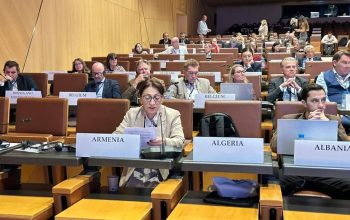
On September 23rd, the Armenian Parliament’s human rights committee held a hearing, chaired by opposition lawmaker Lilit Galstyan, on the crises facing the 150,000 forcibly displaced, ethnically cleansed indigenous Armenians of Artsakh. Thirty minutes in, lawmakers of Pashinyan’s Civil Contract party and government officials walked out. The trigger was Galstyan introducing guests as “representatives of Artsakh’s parliament.” Civil Contract lawmaker Mariam Poghosyan claimed that recognizing Artsakh’s state bodies violated government policy and that the administration would not tolerate “a second state” in Armenia. She was echoing Pashinyan’s own inhumane position against any Artsakh National Assembly or government in exile within Armenia’s shrinking borders.
Opposition lawmaker Arega Hovsepyan, an Artsakh Armenian, reminded them of their own past official visits to Artsakh’s legislature. International law expert Ara Ghazaryan compared their conduct to that of Azerbaijani state representatives in international courts. Ghazaryan said the European Court of Human Rights has consistently rejected Baku’s demands to disregard Artsakh’s state names and documents, and has even recognized Artsakh court decisions as legitimate.
The hearing went on without them. Former Artsakh State Minister Artak Beglaryan and opposition lawmakers Artur Khachatryan and Gegham Manukyan named Artsakh refugee housing the most urgent need, especially since state rent subsidies ended. Current estimates put poverty among Artsakh refugees at 60% to 70%, with unemployment at the same rate. Speakers described long delays in obtaining Armenian citizenship (which Artsakh natives already legally should have), unaddressed hate speech, and obstacles in higher education within Armenia proper. Galstyan said these problems have gone without analysis or evaluation for three years and need daily legislative attention.
Walking out on refugees describing their poverty, the ruling party continues to adopt and intensify the argument Baku unashamedly makes in international courts: that Artsakh’s institutions have no standing. This is the continuation of larger anti-Armenian genocidal policies, now carried out against Armenia’s own indigenous population by the Pashinyan regime and its foreign allies. (Sources: Asbarez Article, Azatutyun Article, OC Media Article)
Pashinyan Ignores the 44-Day War’s Anniversary as Baku Stages “Remembrance Day”
On September 27th, the sixth anniversary of the start of the so-called and choreographed 44-day war, Pashinyan issued no tribute, statement, or message for the thousands of Armenian servicemen killed and maimed because of Azeri, Turkish, and Armenian governmental collusion. His website carried no statement; the latest item was his September 24th speech to the UN General Assembly. He made no announced visit to the Yerablur Military Pantheon in Yerevan. His office did find time, however, to congratulate Turkmen President Serdar Berdimuhamedow on Turkmenistan’s Independence Day. A year earlier, on the fifth anniversary of the atrocities he helped coordinate, Pashinyan had issued a cursory statement concerning the massacred martyrs.
Families of the fallen, opposition deputies of the Strong Armenia and Armenia factions, and members of Artsakh’s former leadership gathered at Yerablur without Pashinyan or his lackeys. Armenian Public Television shamefully aired an absurd entertainment concert by singer Tata Simonyan that day, then apologized the following day, calling it a mistake. In Baku, Ilham Aliyev led an official wreath-laying ceremony at the Azeri “Victory Monument” for what Azerbaijan calls “Remembrance Day,” with a nationwide minute of silence.
Azerbaijan launched the war on September 27, 2020. The war ended with the misguided and slanted November 9, 2020 trilateral statement signed by Armenia, Azerbaijan, and Russia, leaving thousands of Armenians dead, maimed, and missing, with Azerbaijan in control of Shushi, Hadrut, and the surrounding Artsakh districts. The statement led directly to the September 2023 Azeri offensive, which followed the devastating blockade and drove out 150,000 indigenous Armenians, ending their millennial presence in Artsakh.
By prioritizing a greeting to Turkmenistan while staying silent on the day families gathered at Yerablur, the Pashinyan regime is writing the war, and the men who died defending Artsakh, out of national memory, while Baku writes its own version in. (Source: Armenian Report Article)
“On the Ground” in Occupied Artsakh
“Albanian” Revisionism: Baku Stages an Udi Pilgrimage to Gandzasar and a Conference to Claim It
On September 21st, members of a concocted “Albanian-Udi Christian religious community,” led by a so-called chairman Robert Mobili and deputy chairman Rafig Danakari, set upon Artsakh’s ancient Gandzasar Monastery in occupied Vank (Azeri “Vangli”), in Martakert (Azeri “Aghdara”). They lit candles on the Nativity of the Mother of God, which they paired with Azerbaijan’s “State Sovereignty Day.” This “community” claims it could not visit the site for “100 to 200 years” before Baku’s conquest and Mobili claimed, in one of the more audacious lies put forth by the Azeri dictatorial regime, that Armenian Gandzasar belongs to “the Christian ecclesiastical heritage of Caucasian Albania” and has “no historical connection to the Armenian Church.” He absurdly argued Gandzasar’s “Albanian” heritage was “Armenianized.” He went further, claiming this purported “Albanian” legacy reaches “Eastern and Western Zangazur,” a false narrative theme promulgated by Azeri occupiers and their settler units, including Tatev Monastery (squarely in sovereign Armenia’s strategic Syunik province in the south), as well as Derbent and the Kish church in Sheki. As purported “evidence” he cited a distinct Albanian alphabet, scripture preserved at St. Catherine’s Monastery on Mount Sinai, and cross symbols he claims were recognized at a 2010 UNESCO event in Geneva. He credited Azerbaijan’s “atmosphere of tolerance” for his community’s freedom to worship, and said it hopes to make regular visits to Gandzasar and to present “Caucasian Albania” to the “global community.”
The same day, Baku’s dystopian Center for the Analysis of International Relations and Multiculturalism (AIR Center) held a fully falsified conference on “The Legacy of Caucasian Albania in Azerbaijan’s History of Statehood,” moderated by Matin Mammadli and built around Aliyev’s own statements on the subject. Ramil Aghayev of the Azerbaijan National Academy of Sciences (ANAS) and Rizvan Huseynov of the Caucasus Historical Center laid claim to Gandzasar, Dadivank (Azeri “Khudavang”), and Amaras Monastery, citing Moses Kalankatuatsi’s History of Albania as proof that Christianity reached “Caucasian Albania” in the 1st century. Speakers, in an attempt to further embed this genocidal narrative against Armenian indigeneity, called for a “systematic study” of primary sources and archives (created and promoted by Azeri propagandists) to fit “Albania” into “Azerbaijani statehood traditions.” Huseynov repeated an 1836 decree story as the start of this imaginary “appropriation” of “Albanian” heritage supposedly by the Armenian Apostolic Church. AIR Center officials Farid Shafiyev and Farhad Mammadov callously called for “objective, research-backed” findings for the international community, further adding insult to cultural genocide injury against Artsakh and its ethnically cleansed natives, and claimed that denying the “Albanian” legacy feeds “revanchist political narratives.”
Gandzasar was built in the 13th century under Hasan-Jalal Dawla, the Armenian prince of Khachen. The History of Albania they cite was written in Armenian. Tatev stands in the Republic of Armenia’s Syunik province. A small Udi community is being used as a front-group to put a Christian face on the erasure of Armenian Christian heritage. Occupied Nakhichevan, where Azerbaijan razed all Armenian cultural and world heritage sites, including the medieval Armenian cemetery at Djulfa, shows where the current anti-Armenian assault leads – complete erasure. (Sources: Visit to Gandzasar Monastery, Trend Article, Mobili Comments, Conference on Caucasian Albania)
The Azeri “Settlers Offensive” Advances: 59 More Settler Families and New Occupation Housing in Azeri-Controlled Kashunik and Kovsakan
On September 22nd, under Baku’s illegal and genocidal “Great Return” program, 35 settler families (136 people) were deployed to occupied Stepanakert, including Karkijahan; to occupied Ivanyan (Azeri “Khojaly”), including Noragyugh (Azeri “Tazabina”), Khnatsakh (Azeri “Khanyurdu”), Khnapat (Azeri “Khanabad”), and Aygestan (Azeri “Ballija”); and to occupied Martakert, including Vank, Chapar, and Nerkin Horatagh (Azeri “Ashaghi Oratagh”). Another 24 families (148 people) were deployed to Shukurbayli, in occupied Jrakan (Azeri “Jabrayil”). Baku’s so-called Restoration, Construction, and Management Service Settler and Occupation Offensive front-group moved them from dormitories, sanatoriums, and administrative buildings and bases into new apartments. The settlers thanked Aliyev, First Vice President Mehriban Aliyeva, and the army for “liberating” the land.
On September 21st, Novras Jafarov, head of Baku’s Reconstruction, Construction, and Management Service in occupied Jrakan, Kashunik, and Kovsakan, announced an “accelerated” first residential complex in occupied Kashunik (Azeri “Gubadli”): 21 buildings with 176 apartments on 3.34 hectares, with playgrounds, parking, and two non-residential buildings. Design of a second complex is due to finish within the year. On September 24th, the service’s deputy head, Emil Aghazade, said 242 single-family houses are finished on 179.5 hectares in Jahangirbeyli, in occupied Kovsakan (Azeri “Zangilan”), in two- to five-room layouts with private yards. They come with a 264-seat school, an 80-seat kindergarten, an administrative building, a multipurpose facility, and a market complex. Crews are now finishing interiors and connecting utilities.
The “Settlers Offensive” is filling land emptied of 150,000 indigenous Armenians in September 2023. Experts say it is based on Israeli models and algorithms. Settler schools on cleared Armenian land are settlement infrastructure, built to make the occupation permanent. (Sources: Relocation to Occupied Artsakh, Urban Development in Occupied Gubadli, Construction in Occupied Zangilan)
Baku Budgets AZN 3.4 Billion to Settle Occupied Artsakh and AZN 8.8 Billion for Its Military
On September 24th, Azeri Prime Minister Ali Asadov announced that the 2027 state budget gives AZN 3.4 billion (USD 2 billion) to the so-called “restoration and reconstruction” of occupied Artsakh, projects Baku says are led by Aliyev and Mehriban Aliyeva and framed as “sustainable resettlement” and “economic reintegration.” He claimed that more than AZN 25 billion (USD 14.7 billion) spent from 2020 to 2026 has settled over 93,000 people in 47 localities: 10 cities, 3 towns, and 34 villages. The same budget sets aside AZN 8.8 billion (USD 5.2 billion) for defense and national security. At the same Cabinet meeting, Asadov said drafts of a new strategy and a “Second State Program on the Great Return” for 2027 to 2030 have gone to Aliyev after review by the Economic Council, with approval expected in the coming months. He presented them as Baku’s answer to “geopolitical and economic challenges,” building on “Azerbaijan 2030” and the “First State Program on the Great Return to the liberated territories.”
The two lines are linked: the same state is funding both the settlement and the military that emptied the land. Baku’s own figures differ: a week earlier its Deputy Foreign Minister claimed about 100,000 people. (Sources: Budget Allocation, Second State Program)
AzerGold Opens Occupied Artsakh’s Mines to Investors
On September 24th, Zakir Ibrahimov, chairman of AzerGold CJSC, said metal deposits in occupied Artsakh are at the center of a national state program. He said mining has begun at the copper mine at Tsaghkashen (Azeri “Damirli”) in occupied Martakert, extraction is due soon in occupied Karvachar (Azeri “Kalbajar”), and reserves are being re-evaluated in occupied Kovsakan. The program, set by Aliyev, aims for a full chain “from raw ore to finished product” and seeks private investment, pitched to global demand for copper and critical minerals in the “green energy” transition. Azeri state-funded geological surveys covering 15,000 square kilometers, including occupied Artsakh, are due to finish in 2027. AzerGold is also exploring five portfolio deposits and 10 gold-copper sites, and is preparing exploration in occupied Nakhichevan, described as “under-explored” during and after the Soviet era, with UAE partner International Resources Holding.
These rich deposits lie in Armenian territories Azerbaijan took by force and emptied of their Armenian population, in similitude to what Turkish forces did to Armenian indigenous lands across the Armenian Highland in occupied and ethnically cleansed Western Armenia. The “green energy” pitch does not change that. Every investor who takes a share in an ethnically cleansed homeland participates in genocide. (Sources: Resource Deposits, Mineral Deposits)
Azeri Front-Groups Showcase Efforts to Teach Settler Children “Mine Awareness” in Occupied Haterk in a Ploy to Promote Image of “Armenian Violence” to International Community
On September 22nd, under a project strategically titled, “Supporting the Fight Against the Threat of Landmines and Explosive Remnants of War,” the Azeri-backed International Eurasian Press Fund (IEPF) held two training sessions at a school in occupied Haterk (Azeri “Hasanriz”), in Martakert. The project is coordinated by ANAMA and backed by Baku’s Agency for State Support of Non-Governmental Organizations and the Karabakh Revival Fund front group. It covers occupied Akna (Azeri “Aghdam”), Martakert, Ivanyan, and Stepanakert. IEPF director Ruslan Ibrahimbayli, project manager Khudaverdi Guliyev, school director Raisa Niftaliyeva, and Nazakat Aslanova made sure to amplify the notion that mine hazards persist” in occupied Artsakh, thus projecting a difficult-to-negate humanitarian crisis image to the world. The narrative is built to promote the idea that mines and ordnance purportedly placed by Armenians are making “safety education” essential for children and “returning residents,” a reference to the occupying settlers deployed to the region. Instructor Kamran Mammadli ran a Mine and Explosive Awareness program on mines, booby traps, and unexploded ordnance, and on reporting suspicious objects to the authorities.
Teaching settler children to avoid mines turns the danger into a reason to be there. The training treats the new population’s presence in Martakert as settled fact, and the reporting on it does not mention the Armenians murdered and displaced from their native villages. The training is the post-war “humanitarian theater” moved into a classroom. (Source: Mine Education Training)
Baku’s Security Chiefs and Ombudsman Mark “Remembrance Day” by Inverting the 44-Day War
On September 27th, Azeri State Security Service Chief Colonel General Ali Naghiyev and Azeri Foreign Intelligence Service Chief Colonel General Orkhan Sultanov laid flowers at Victory Park in Baku for what Azerbaijan calls “Remembrance Day,” created by Azeri dictator Aliyev’s decree of December 2, 2020. Azeri state media repeated Baku’s categorically false claim that Aliyev ordered a “counteroffensive” in response to what it called Armenian ceasefire violations, and that the army “liberated” five cities, four settlements, and 286 villages by November 9th. A minute of silence at 12:00 stopped highway traffic, and ships and trains sounded their signals.
Azeri Ombudsman Sabina Aliyeva, once again, advanced Baku’s patently false claim that Azeri war-mongering and atrocities against Armenians “restored territorial integrity” and the rights of “forcibly displaced persons.” She accused Armenian forces of shelling Ganja, Barda, Naftalan, and Tartar with “prohibited missile systems,” called for “accountability” for war crimes, and listed demining, “missing persons,” and the “safe and dignified return” of displaced Azerbaijanis as priorities – all issues on which the genocidal Azeri state is, in fact, the guilty party.
The state that launched this war, blockaded Artsakh, and expelled its indigenous people now demands “accountability” and a “safe and dignified return.” It offers neither to the Armenians it drove out. Its “missing persons” concern ignores the at least 80 Armenians forcibly disappeared and more than 200 unaccounted for. (Sources: Visit to Victory Park, Trend Article, Aliyeva Comments, Minute of Silence)
Foreign Interests and Actions in Occupied Artsakh
International Collusion Continues: The UN Makes Occupied Artsakh a “Key Strategic Priority,” With EU Money for Mine Action
On September 25th, at the 2nd Azerbaijan International Investment Forum in Baku, UN Resident Coordinator and collaborationist shill, Dmytro Shlapachenko, said expanding the UN’s involvement in occupied Artsakh is a “key strategic priority.” The UN Office for Project Services (UNOPS) is in final negotiations to launch its first mine action program backed by European Union funding. The UN plans a sadly one-sided “strategic dialogue” with the Azeri fascist government in October, around United Nations Day, to review “government priorities” and explore “educational engagement” at what was Artsakh State University, now renamed Azerbaijan’s “Qarabakh University.” The forum was organized by the Azeri Ministry of Economy and AZPROMO in strategic partnership with European House-Ambrosetti, and promoted the “Middle Corridor,” green energy, and infrastructure.
EU-funded demining will continue to clear ground for and green-light Baku’s genocidal “Settlers Offensive.” In lending its name, the UN is, in fact, supporting colonial command-control and paramilitary expansion programs in the ethnically cleansed and continuously erased lands of Artsakh. The UN has named no “strategic priority” for the right of return of the 150,000 indigenous Armenians of Artsakh forced out since September 2020. (Source: UN-Azerbaijan Cooperation)
More UN Collusion: Bayramov Sells Occupied Shushi as the ECO’s “Tourism Capital” at the UN
On September 25th, at the Economic Cooperation Organization (ECO) Council of Ministers, held alongside the 81st UN General Assembly in New York, Azeri Foreign Minister Jeyhun Bayramov promoted a so-called “Strategic Khankendi Communiqué and Action Plan” from the 17th ECO Summit, named with the Azeri occupation’s term for Stepanakert. He pointed to the ECO Clean Energy Center in Baku and to occupied Shushi as the “ECO Tourism Capital for 2026.” He promoted the “Middle Corridor” through the Baku-Tbilisi-Kars railway and the Port of Alat, and the “Digital Silk Road.” He briefed members on the deadly “peace process” foisted upon Armenian citizens, Artsakh refugees, and Armenia’s diaspora since the August 2025 Washington summit, claiming progress on “confidence-building measures,” the “removal of transit restrictions,” and “reconstruction” across what he called “Karabakh” and “Eastern Zangazur.”
A body that names its communiqué for the occupation’s term for Artsakh’s capital, and crowns ethnically cleansed Shushi its “tourism capital,” endorses the conquest, genocide, and erasure of Armenians and Artsakh. Transit projects including the Middle Corridor act as fronts for Turkish and Azeri colonial aspirations and military expansion throughout the region. (Source: ECO Ministerial Meeting)
More Betrayal: Russian Orthodox and Catholic Clergy Sign Baku’s War Declaration for “Remembrance Day”
On September 24th, at the Caucasus Muslim Board, leaders of Azerbaijan’s religious communities signed a joint statement for September 27th, in which signatories, ruthlessly, claim that the so-called 2020 choreographed war and atrocities of genocidal proportion were acts of “self-defense” under the UN Charter, citing Armenian indigeneity in Artsakh a“30 years of occupation” of “20% of Azerbaijan’s territory,” unimplemented UN Security Council resolutions, “military provocations” in Tovuz, and the “ethnic cleansing” of “over one million” people, a charge made by the state that went on to ethnically cleanse Artsakh. It falsely accuses Armenians of destroying mosques and churches, praises the “restoration” of mosques and churches in Baku and occupied Shushi, and calls this proof of Azerbaijan’s “tolerance and multiculturalism.” It claims the faith communities reported “war crimes” to international organizations and supported the families of fallen soldiers during the war. Signatories included Sheikh-ul-Islam Allahshukur Pashazade and representatives of the Russian Orthodox, Catholic, Mountain Jewish, European Jewish, Sephardic Jewish, and Albanian-Udi communities.
Christian clergy signing a text alongside Muslim and multiple Jewish religious groups, as well as concocted Christian sub-groups, that justifies genocidal atrocities and erasure of Armenians, lends religious cover and absolution to cultural erasure and genocide. (Source: Statement)
Erdogan and Slovakia’s Ambassador Join Baku’s “Remembrance Day”
On September 27th, Turkish President Recep Tayyip Erdogan continued falsifying Armenian history and cultural provenance, as he has done for decades regarding Armenian millennial presence, cultural history, and indigenous life in Western Armenia, by posting on X that “Karabakh is Azerbaijani land and will remain so forever,” and honored the soldiers who “fought to liberate Karabakh from occupation.” The same day, Slovak Ambassador to Azerbaijan Elchin Gasymov also posted on X in “honor” of those who died for Azerbaijan’s “territorial integrity and sovereignty,” expressing Slovakia’s “deep respect” and “solidarity with the people of Azerbaijan.”
With “forever,” Erdogan commits Turkey publicly to Baku’s claim to Artsakh. Slovakia, which is building a “Smart Village” in occupied Akna, now honors the army that emptied it. Know your enemies. (Sources: Erdogan Statement, Slovakia Commemoration)
The Center for Armenian Research and Analysis (CARA) is a trans-national research institute that provides investigative, analytic, and informational resources to public and private entities across the Armenian experiential spectrum.