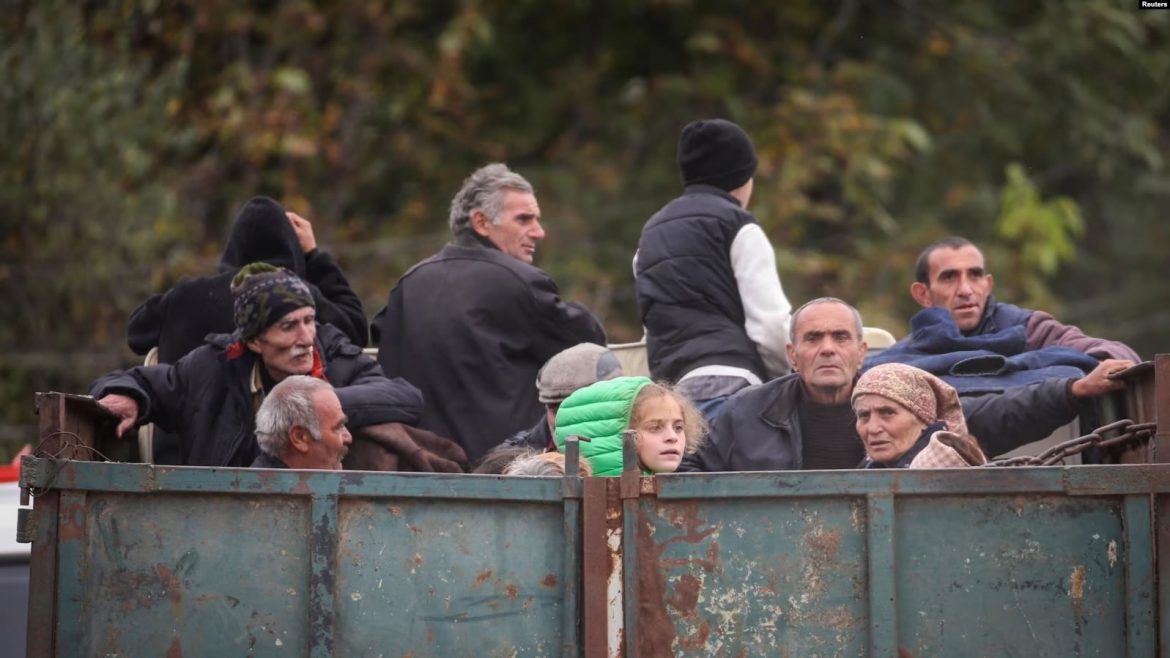
YEREVAN, — Two developments in Armenia this week have highlighted a growing disparity between the government’s treatment of senior officials and the tens of thousands of displaced Armenians from Artsakh who continue to struggle with housing and financial insecurity.
On Tuesday, October 13, Yerevan’s municipal council approved substantial salary increases for Mayor Tigran Avinyan and senior members of his administration, despite objections from opposition representatives. Meanwhile, Minister of Labor and Social Affairs Arsen Torosyan indicated that the Armenian government has no immediate plans to increase housing assistance for Artsakh refugees, even as existing grants remain insufficient for many displaced families to purchase homes.
Under the newly approved municipal salary increases, Avinyan’s monthly compensation will rise from approximately 1.3 million drams to more than 2 million drams, equivalent to roughly $5,700, beginning in January 2027. The salaries of Yerevan’s four deputy mayors will nearly double, averaging approximately 1.9 million drams per month. District administrators and mayoral advisers will also receive increases.
Opposition representatives criticized the decision, which was advanced by the ruling Civil Contract majority without a detailed public justification. Opposition parliamentarian Mesrop Manukyan questioned why the administration was prioritizing raises for senior officials while leaving municipal bus drivers, sanitation workers, and other essential employees without comparable increases.
Deputy Mayor Suren Grigoryan defended the raises, arguing that his existing salary of approximately 952,000 drams per month was no longer sufficient to meet his needs because of rising living costs.
The municipal decision follows plans announced by Prime Minister Nikol Pashinyan’s government to substantially increase compensation for senior government officials and members of parliament, alongside the bonuses already paid to many of them.
At the same time, the government’s housing assistance program for displaced Artsakh Armenians continues to face serious criticism.
More than 100,000 Armenians were forcibly displaced from Artsakh following Azerbaijan’s September 2023 military offensive. Many remain without permanent housing three years later.
The government’s five-year housing assistance program, introduced in 2024, provides grants ranging from 2 million to 5 million drams per person, depending on eligibility and location. However, rising property prices have made the available assistance inadequate for many families, particularly in communities where employment opportunities are available.
According to Torosyan, approximately 5,000 displaced Armenians have benefited from the program so far, compared with a target of 20,000 families. Despite repeated appeals to increase the grant amounts, the minister indicated that no such decision has been made.
Torosyan also discouraged displaced families from seeking housing in Yerevan and surrounding communities, arguing that the government cannot accommodate everyone in the capital. Yet these are precisely the areas where many displaced Armenians have better prospects for employment and economic stability.
The situation has been compounded by the government’s reduction of monthly rental and utility assistance. Previously available at 50,000 drams per person, the assistance was discontinued for most refugees in June 2025, while payments for certain vulnerable groups were reduced to 30,000 drams.
The contrast between the two decisions has raised questions about the government’s priorities. While senior officials cite rising living costs to justify substantial increases in their own compensation, displaced Artsakh families are being told that additional financial assistance is not presently forthcoming.
For the Armenians of Artsakh, who lost their homes and livelihoods as a consequence of Azerbaijan’s military aggression and forced displacement, the housing crisis is more than an economic hardship. It is an ongoing national and humanitarian responsibility that cannot be addressed through inadequate grants and declining financial support.
As Armenia’s authorities allocate additional resources to senior officials, the continued difficulties facing displaced Artsakh families underscore the need for a reassessment of government priorities and a housing policy that reflects the actual cost of rebuilding their lives.