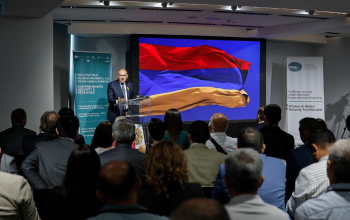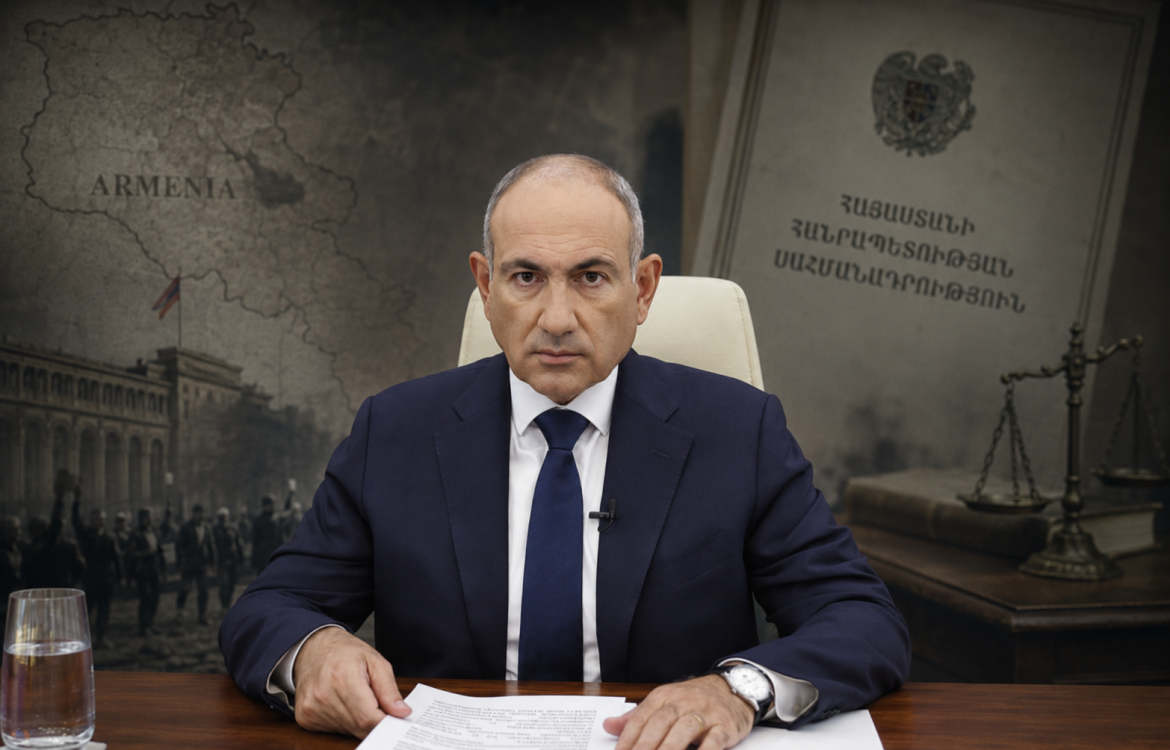
Prime Minister Nikol Pashinyan is trying to present Armenia’s June 7 election as a settled matter. It is anything but.
Less than two weeks after the vote, Armenia is not moving toward stability. It is moving deeper into political confrontation, economic vulnerability, and national danger. The official results gave Pashinyan’s Civil Contract party 49.8 percent of the vote, just under half, while the main opposition forces together demonstrated that a large part of the Armenian public has rejected his mandate. Yet instead of responding with restraint, humility, or national dialogue, Pashinyan has chosen threats.
Opposition forces have now taken their challenge to the Constitutional Court, alleging serious fraud, pressure on state employees and security personnel, ballot miscounts, arrests of opposition supporters, and a controversial Central Election Commission decision that helped keep Prosperous Armenia just below the parliamentary threshold. Whether the court will act independently is itself in doubt, since most of its judges were installed under Civil Contract rule. But the legal challenge is important because it places the legitimacy crisis on the record.
Pashinyan’s response has been telling. He did not sound like the leader of a confident government with a secure mandate. He vowed to “crush” Robert Kocharyan, Samvel Karapetian, and Gagik Tsarukyan, the leaders of the main opposition forces. Prosecutorial pressure has already followed the election, with criminal proceedings targeting opposition figures and candidates. This is not the language or behavior of democratic consolidation. It is the behavior of a government that knows it is politically wounded and is trying to frighten its opponents into submission.
Samvel Karapetian’s call for a post-election opposition coalition is therefore a necessary step. The opposition cannot afford fragmentation, hesitation, or personal rivalries. The immediate tasks are clear: challenge the official results, coordinate strategy, decide whether to enter parliament or boycott, and prepare public resistance to any further concessions made in the name of Pashinyan’s so-called peace agenda. The opposition’s role now is not merely parliamentary. It is national.
That national danger is already visible. Azerbaijan has wasted no time. Baku has renewed its demands for the so-called “return of Western Azerbaijanis,” a political formula that openly targets the territory of the Republic of Armenia. Azerbaijani officials are again presenting Armenian lands as “ancient territories” of Azerbaijan, while Pashinyan continues to avoid championing the right of Artsakh’s displaced Armenians to return to their homes. This contrast is devastating. Azerbaijan demands entry into Armenia, while Armenia’s own government refuses to demand justice for Artsakh Armenians.
This alone exposes the falsehood of Pashinyan’s peace narrative. If peace had truly been achieved, Baku would not be escalating territorial and demographic claims against Armenia. If Pashinyan’s concessions had brought security, Azerbaijan would not be pressing for constitutional changes and new political humiliations. What Armenia is witnessing is not peace. It is the continuation of pressure by other means.
At the same time, Armenia is being squeezed economically. Russia has imposed severe restrictions on Armenian exports, and Yerevan is now urgently asking the European Union to accelerate aid. The EU has announced tens of millions of euros in assistance and promised market access for some Armenian products. But this is not a serious replacement for Armenia’s deep economic exposure to Russia, especially in agriculture, trade, energy, and gas. Pashinyan promised voters that Moscow would lift restrictions if he won. Instead, Russia tightened them.
This is the strategic bankruptcy of the current government. Pashinyan has alienated Russia without securing real Western protection, provoked economic retaliation without building alternative markets, and made concessions to Azerbaijan without obtaining peace. Armenia is now dependent on emergency aid packages, diplomatic statements, and promises of “diversification,” while its enemies and rivals act with far greater clarity.
The tragedy is that Pashinyan’s government sold Armenians an illusion: that surrendering Artsakh, weakening ties with traditional security structures, and rushing toward the West would bring democracy, prosperity, and peace. Instead, Armenia has received a disputed election, threats against opposition leaders, pressure from Moscow, demands from Baku, and uncertainty from Brussels.
A leader with less than half the vote, facing serious allegations of fraud, cannot claim a blank check to remake Armenia’s constitution, silence the opposition, or gamble with the country’s sovereignty. The election did not close Armenia’s political crisis. It opened a new phase of it.
The path forward requires national discipline. The opposition must coordinate. Civil society must not normalize political persecution. The diaspora must stop treating Pashinyan’s rule as a democratic success story simply because Western governments find him useful. And Armenians everywhere must understand that the issue is no longer only who governs Armenia. The issue is whether Armenia will remain a viable state with the will to defend itself.
Pashinyan’s “victory” has already become a crisis. Armenia cannot afford to pretend otherwise.