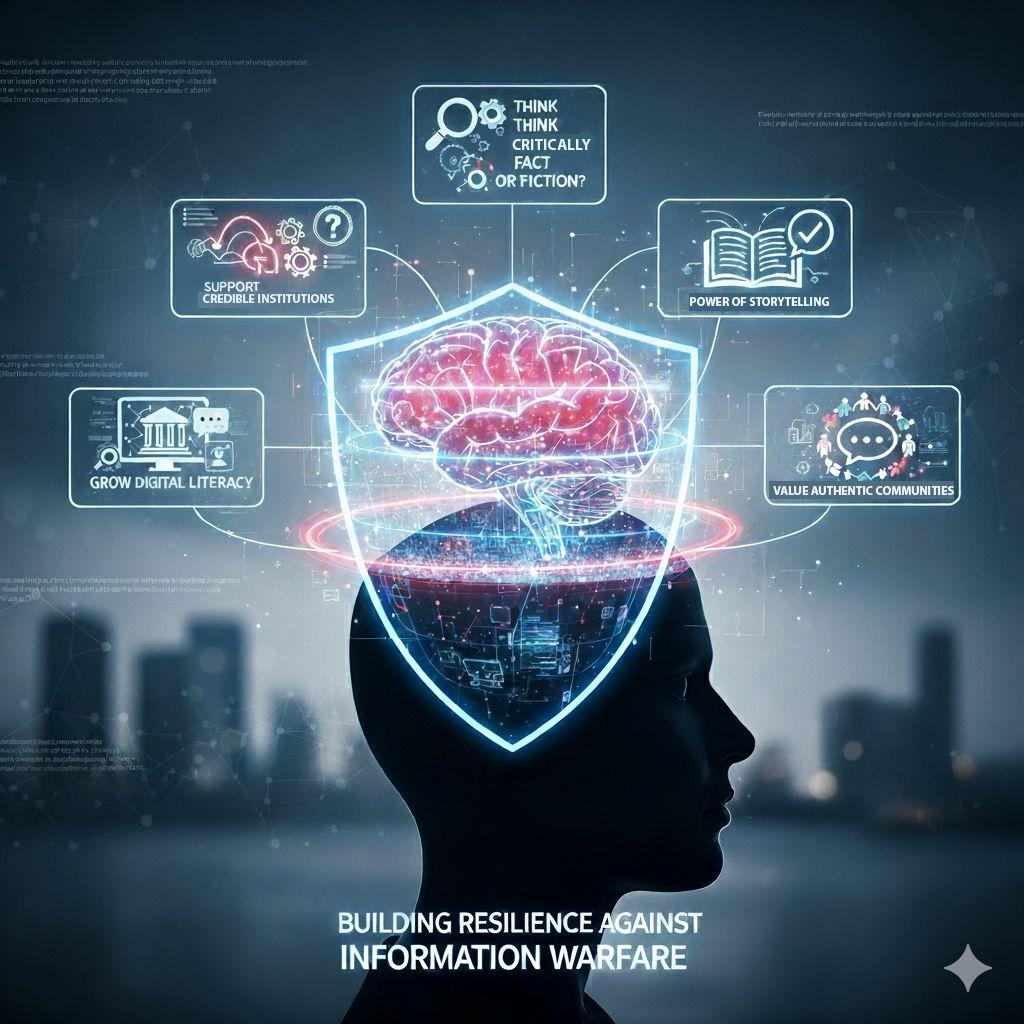
The following is the second installation of a series of public service announcements to raise awareness concerning Information Warfare and its effects on our communities here and in the Homeland.
Why You Matter in the Fight Against Information Warfare
Defending against Information Warfare is a collective responsibility involving organizations and community members alike, undertaking a conscious effort to rebuild trust in shared realities and institutions.
Why It’s Hard to Fight
Combating Information Warfare is challenging due to several factors:
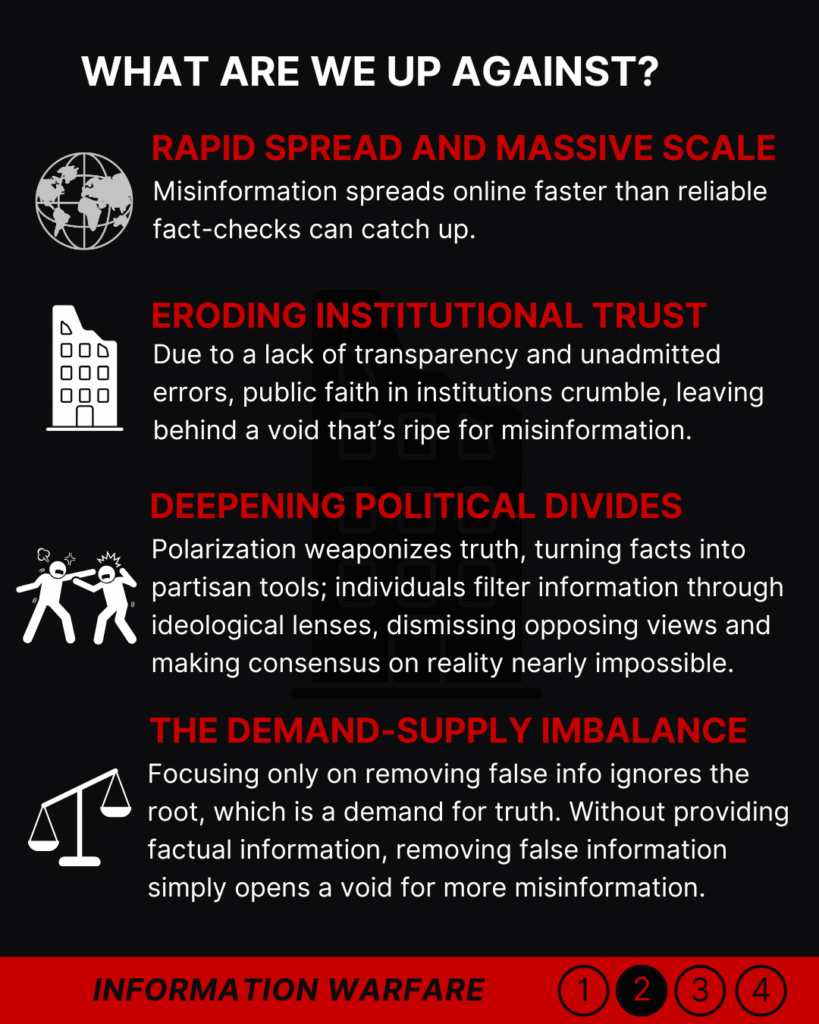
- Speed & Scale: Online misinformation spreads quickly, often faster than efforts to debunk it.
- “Demand Problem” vs. “Supply Problem”: The fundamental mistake of the “misinformation paradigm” (focused on suppressing supply) is that it often fails to address the underlying “demand problem.” When trust in authority is lost, constraining the supply of information can inadvertently increase the demand for alternative, even false, sources.
- Trust Crisis: Perceived failures of institutions (e.g., government agencies, media) to be transparent, admit mistakes, or hold themselves accountable significantly erode public trust, making people more susceptible to alternative narratives.
- Political Polarization: Truth becomes partisan.
The biggest issue isn’t just false content—it’s that people want to believe it because they’ve lost trust. Trust must be addressed, not just the information supply.
How to Build Resilience
Combating information warfare requires a shift from reactive crisis management to proactive, systemic resilience.
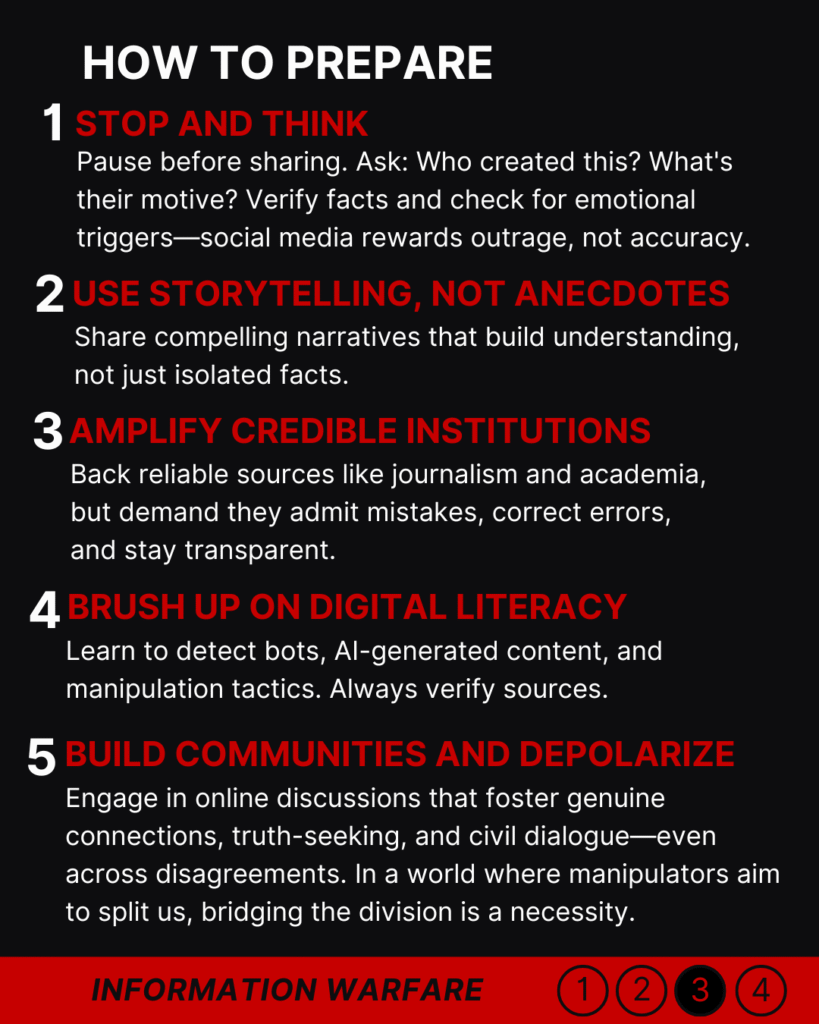
- Think Critically: Pause before reacting. Ask: Who made this? Why? Be aware that social media is designed to capture attention, not to make you think critically. Consider the source of information, its factual accuracy, and whether it’s designed to provoke strong emotions. Be skeptical, but not nihilistic.
- Power of Storytelling: Recognize that successful campaigns operate through compelling stories or narratives, not just isolated facts.
- Support Credible Institutions (and demand accountability): While institutions have flaws and make mistakes, demand that they acknowledge errors, provide corrections, and maintain integrity. This includes traditional journalism, academia, and government bodies. Push for transparency and accountability.
- Grow Your Digital Literacy: Understand the tactics used to spread false information. Learn to spot bots, AI-generated content, and manipulation. Question sources of information and their legitimacy.
- Value Authentic Communities: Information is often trusted based on social relationships. Look for sources and communities that build trust through authenticity, open discussion, and a commitment to method rather than just institutional seals of approval. Trust spreads best in spaces that value discussion, not outrage.
- De-Polarization: Many Information Warfare tactics aim to divide people, which makes them easier targets for manipulation. Efforts to depolarize and learn to communicate across differences can help build societal resilience.
Your Role Matters
You don’t need to be perfect—just pause, question, and act with care. When individuals grow more aware, our communities grow stronger. Truth becomes harder to defeat.