An Armenian nongovernmental organization has accused state institutions of failing to adequately protect the cultural heritage of Azerbaijani-held Artsakh (Nagorno-Karabakh) and said a recent incident at a Yerevan music school, where a student’s artwork depicting the landmark We Are Our Mountains monument was removed from a competition display, reflects a broader pattern of marginalizing Artsakh’s cultural symbols.
In a statement released on Thursday, the Center for the Preservation of Artsakh Culture NGO said Armenian authorities have not fully utilized available international legal mechanisms to protect Artsakh’s cultural heritage. The organization argued that Armenia has not sufficiently pursued initiatives through UNESCO, relevant United Nations bodies, or other international forums to document violations against Nagorno-Karabakh’s cultural heritage, seek preventive measures, or advance legal action.
The NGO also criticized public statements by Armenia’s leadership that characterize the preservation of Armenian churches and cultural heritage in Artsakh as an internal matter for Azerbaijan. According to the organization, such statements weaken Armenia’s legal and diplomatic position in future international efforts concerning cultural heritage protection.
The statement said public concern has also grown over reports that some cultural organizations in Armenia had allegedly been instructed to remove the word “Artsakh” from the titles of artistic works.
Seeking clarification, the NGO submitted a formal request to Armenia’s Ministry of Education, Science, Culture and Sports. According to the ministry’s written response, neither the ministry nor its subordinate institutions had received written or verbal instructions to remove the name “Artsakh” from cultural works or historical materials. The ministry also said no restrictions had been imposed on displaying Artsakh-related symbols at institutions under its authority.
Despite the ministry’s denial, the NGO said it believes incidents affecting Artsakh’s intangible cultural heritage continue to occur at the level of individual institutions and officials, even in the absence of formal government directives.
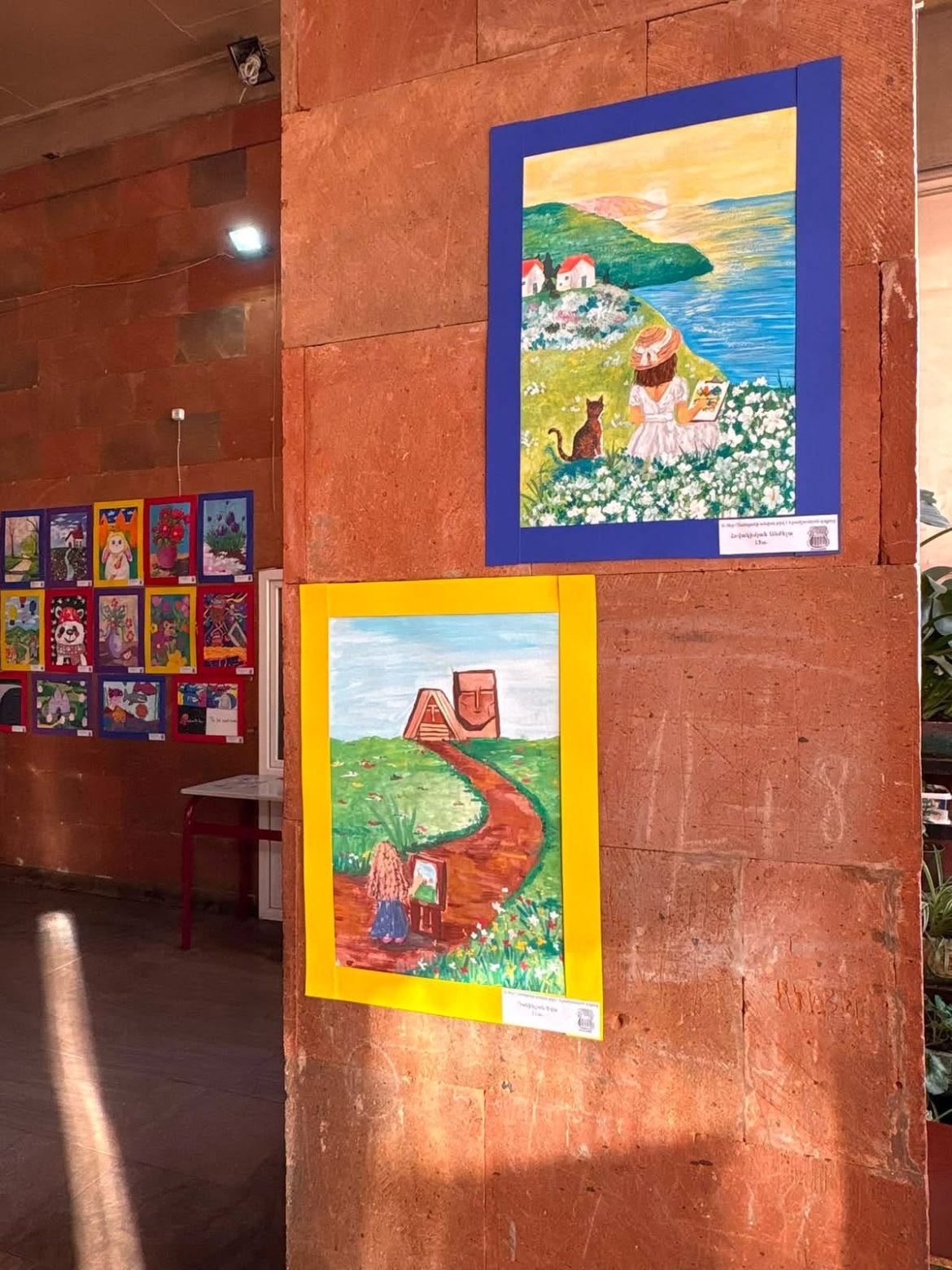
The organization cited a recent incident at the Anushavan Ter-Ghevondyan Music School in Yerevan as an example.
According to the NGO, during a student exhibition and competition, the school’s acting principal removed a student’s drawing depicting the We Are Our Mountains monument in Stepanakert, widely known as Tatik-Papik, from the exhibition display, allegedly describing it as an “anti-state act”.
The NGO said it requested an explanation from the Yerevan Municipality. In response, municipal authorities forwarded a written explanation from the school’s administration but did not provide their own assessment of the incident.
According to the school’s explanation, the artwork was removed because it had been displayed without prior administrative approval, constituting a violation of internal procedures. The NGO disputed that explanation, arguing that the drawing fit the exhibition’s theme and that it was the only work depicting a Karabakh monument to be removed, raising questions about the decision’s underlying motivation.
The organization also noted that the school’s written response referred to the monument as “the picture of grandparents” rather than by its official name, We Are Our Mountains, describing the wording as notable in an official communication. It further said that the student’s teacher resigned shortly after the incident in protest.
The NGO argued that while the physical preservation of Armenian cultural heritage in territories under Azerbaijani control remains a concern, Armenia must also safeguard its intangible cultural heritage, including historical memory, place names, cultural symbols, and identity.
It warned that even if individual incidents are not the result of centralized government directives, their cumulative effect could normalize the exclusion of Artsakh-related symbols and references from Armenia’s public and cultural life.
The statement emphasized that the right to preserve cultural identity is recognized under international human rights law, including the Universal Declaration of Human Rights, the International Covenant on Economic, Social and Cultural Rights, and other international instruments concerning cultural heritage.
The NGO also pointed to Armenia’s 2023–2027 Strategy for the Preservation, Development and Promotion of Culture, which identifies the protection of the cultural rights of Armenians forcibly displaced from Nagorno-Karabakh, along with the preservation, documentation and transmission of their intangible cultural heritage, as a state priority. The strategy acknowledges that the forced displacement of the region’s Armenian population in September 2023 disrupted the continuity of cultural identity and heritage transmission.
According to the organization, the apparent gap between those stated policy goals and developments such as the school incident demonstrates the need for a more consistent state policy toward the preservation of Artsakh’s cultural heritage.
The NGO called on international and local human rights organizations, cultural heritage institutions, competent authorities and media outlets to pay closer attention to the issues outlined in its statement.