By Levon Baronian
Artsakh belongs first and foremost to the people of Artsakh. But it also belongs to all of us.
For Armenians in the Diaspora, that should be instinctive. We are largely a people born of genocide, dispossession and exile. We preserved our language, churches, schools, culture and national institutions not simply so that Armenian life could continue indefinitely in Los Angeles, Beirut, Paris or elsewhere.
Preservation is not an end in itself.
We preserve because we remain connected to a homeland. We remember because what was taken from us remains part of who we are. And we must keep the prospect of return alive, because accepting permanent dispossession means allowing genocide and ethnic cleansing to define the boundaries of Armenian existence.
That is why Artsakh is not someone else’s cause.
Today, Artsakh has been emptied of its Armenian population, while much of its political and military leadership sits illegally imprisoned in Baku. In Yerevan, too, figures inseparably tied to the political history of Artsakh have been imprisoned and persecuted. The people have been displaced, their leadership neutralized, and Armenians are being told that the issue is over.
It is not.
On September 2, 1991, the people of Artsakh declared their determination to live freely on their ancestral land. Thirty-five years later, after blockade, starvation, assault and ethnic cleansing, more than 100,000 Armenians have been driven from their homes.
The result is an Artsakh without Armenians.
We cannot accept that as permanent.
The people of Artsakh retain the right to return safely and with dignity. Armenian prisoners must be freed. Artsakh’s churches, monasteries, cemeteries and cultural heritage must be protected. And Artsakh must remain firmly on the Armenian national agenda.
That responsibility falls especially heavily on the Diaspora today.
Nikol Pashinyan’s regime is not only trying to remove Artsakh from Armenian political consciousness. It is increasingly challenging the legitimacy of the organized Diaspora itself and questioning the right of Armenians outside the Republic to speak about Armenian national interests.
No government has that authority.
The Republic of Armenia is governed by its citizens. But the Armenian nation is larger than the present borders of the Republic and older than any government occupying its offices.
Our grandparents understood this. They preserved Armenia in exile even when return seemed impossible and when an independent Armenian state did not exist.
They did not preserve Armenian identity merely so their descendants could become successful custodians of Armenian culture abroad.
They preserved a living connection to a homeland.
That distinction matters.
If Armenian schools teach the language but not the meaning of homeland, if our institutions commemorate the past while abandoning the possibility of return, and if our children inherit Armenian identity stripped of Armenian national aspiration, then preservation itself becomes hollow.
Artsakh makes that question immediate.
We do not know what the Caucasus will look like in twenty, fifty or one hundred years. No government does.
So acknowledging today’s reality must never mean accepting it as permanent.
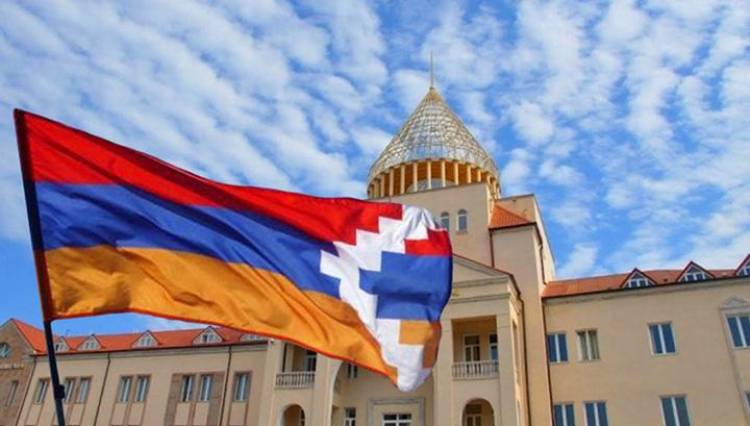
There may be no Armenian flag flying over Stepanakert today. But that does not mean our children should learn of Stepanakert, Shushi, Hadrut, Martakert and Martuni merely as places Armenians once inhabited.
They should know that Armenians were forcibly removed from them.
They should know that the right to return remains.
And they should know that Artsakh remains part of the Armenian national inheritance.
The Diaspora itself is proof that exile does not erase belonging.
We cannot demand that the world remember the dispossession of our ancestors while accepting the permanent dispossession of the people of Artsakh.
And remembrance alone is no longer enough.
Diasporan institutions must keep Artsakh on their agendas—not ceremonially, once or twice a year, but as an ongoing national priority. Our schools must teach its history. Our churches and community organizations must keep its people connected to the broader Armenian nation. Our advocacy organizations must continue raising the right of return, the release of Armenian prisoners and the protection of Armenian heritage with governments and international institutions. And our communities must stand with displaced Artsakh Armenians not merely as refugees in need of assistance, but as a people with a homeland and rights that have not disappeared.
The Diaspora cannot allow itself to become a museum of Armenian identity while the homeland steadily shrinks from our consciousness.
Our institutions were built to preserve a nation, not merely a culture.
So this September 2 must be more than a commemoration. It must be a recommitment: to speak, to teach, to organize, to advocate, and above all to refuse the normalization of an Artsakh without Armenians.
Our message should be simple:
Artsakh belongs to its people.
Artsakh belongs to the Armenian nation.
Artsakh existed. Artsakh exists.
And Artsakh must remain on our national agenda until its people can return home.