By Alex Manoukian
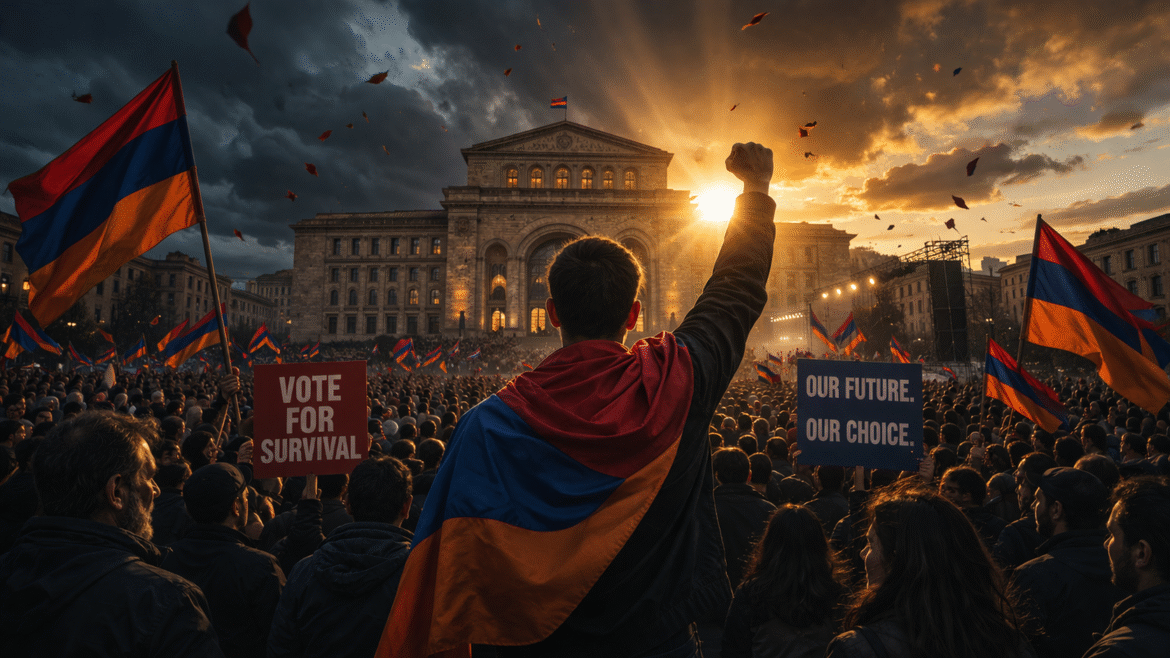
In 2021, during Armenia’s snap parliamentary elections, the opposition warned that the vote
would be the most consequential in the country’s modern history. At the time, many dismissed
that claim as political rhetoric. In hindsight, it was anything but.
The years that followed reshaped Armenia in ways few could have imagined. The total loss of
Artsakh, the forced displacement of its Armenian population, and the ongoing erosion of national
security marked a historic rupture. Armenian sovereign territory has faced repeated incursions.
Confidence in state institutions has declined. Divisions have deepened—between political
factions, between the government and the Armenian Apostolic Church, and between the state
and its global diaspora.
For a nation that once stood united and proud in its identity and purpose, these developments
have been nothing short of devastating.
Now, five years later, Armenia once again approaches an election that will define its future,
perhaps even more decisively than before.
Today, the concerns are even more urgent and directly tied to the decisions and direction of the
current Pashinyan government. As we speak, the government is advancing negotiations with
Azerbaijan and Turkey that many fear will come at the expense of Armenia’s long-term
sovereignty and security. At the same time, Armenia’s military posture has weakened, even as
Azerbaijan continues to expand and modernize its forces, creating a dangerous and widening
imbalance.
The Pashinyan government has also taken steps that signal a retreat from long-standing national
positions. The right of Artsakh Armenians to self-determination, once a central pillar of
Armenia’s national cause has been effectively abandoned in official rhetoric and policy. For
many, this is not just a political shift, but a fundamental betrayal of national principles.
Internally, the damage has been just as serious. The government has fueled unnecessary divisions
by targeting core national institutions, most notably the Armenian Apostolic Church,
undermining one of the key pillars of Armenian identity and unity. At the same time, relations
with the diaspora have deteriorated, weakening a vital global network that has historically
supported Armenia in its most difficult moments.
Taken together, these are not isolated missteps—they are the result of a consistent governing
approach that has left Armenia more vulnerable, more divided, and less certain of its future.
This is why the upcoming election is not simply another political contest. It is a referendum on
Armenia’s future.
For the opposition, the path forward requires clarity and discipline. Unity does not mean entering
the election under a single banner or candidate. It means something more practical and more
necessary. It means that once opposition forces earn representation in parliament, they must be
prepared to come together immediately, form a governing coalition without infighting, and rally
behind a single leader to serve as prime minister.
Anything less will result in paralysis and hand over continued power to the current government.
A divided opposition after the election will not inspire confidence, nor will it be capable of
governing effectively. The responsibility is not just to compete but to be ready to lead, together,
the moment the opportunity arises.
At the same time, voters must approach this election with a clear understanding of what is at
stake. The decisions made in the coming months will shape Armenia’s trajectory for years, if not
decades. They will determine whether the country can restore its security, rebuild its institutions,
and reclaim a sense of national purpose.
There are those who argue that if the current government loses, instability—or even war—will
follow. But it is under this government that Armenia has already experienced catastrophic loss:
war, territorial concessions, and the collapse of Artsakh. Fear cannot be used as a shield for
continued failure.
There was a time, not long ago, when Armenians around the world spoke with pride about
Artsakh, about a strong and capable military, and about a nation that stood resilient in the face of
adversity. That sense of pride has been shaken, but it has not disappeared.
The question now is whether Armenia can rediscover it.
This election is a moment of reckoning. It is, quite simply, a do-or-die moment for the Armenian
state.
The outcome will determine not only who governs, but what kind of country Armenia will be.
And whether it will endure.
Alex Manoukian brings a strong blend of public and private sector experience to his work.
As the former Programs Director for the Armenian National Committee of America, Alex not
only led youth empowerment and advocacy initiatives for high school and college students, but
also played a central role in grassroots organizing and advancing key policy priorities in
Washington, D.C. He also directed a professional development program that helped young
professionals secure internships and full-time positions in government and public service across
the nation’s capital. Today, Alex is a campaign consultant with Blue State Campaigns, where he
applies his background in advocacy, policy, and strategic communication to a wide range of
electoral efforts. He earned his degree in Government from Georgetown University.