PEACE DEAL GIVES BAKU LEGAL IMPUNITY
YEREVAN “SHRUGS-OFF” SHOOTING OF ARMENIAN MOTHER
BY AZERI MILITARY INFILTRATOR
BAKU’S TOP CLERIC CLAIMS ARMENIA AS “WESTERN AZERBAIJAN”
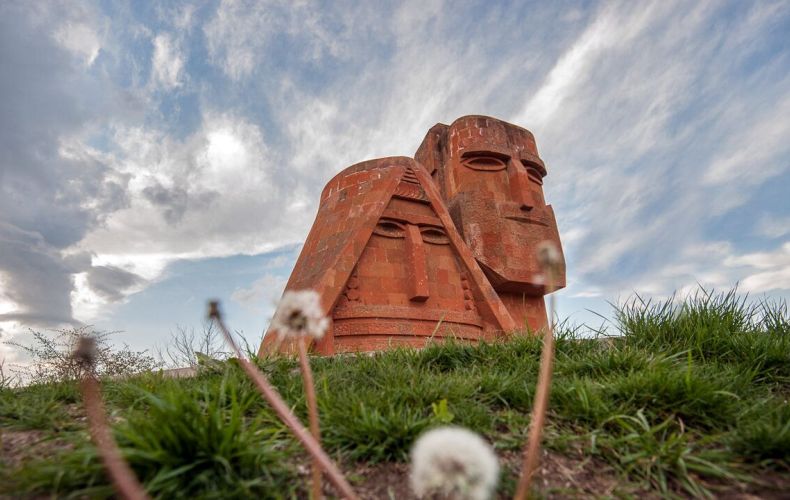
The Center for Armenian Research and Analysis (CARA) gathers and analyzes critical information on activities occurring in occupied Artsakh by state and non-state actors, and produces a weekly brief, with actionable data, to public and private stakeholders. Keeping Artsakh alive and in the public consciousness is part and parcel of CARA’s mission of providing clear and unfettered research and analysis pertaining to indigenous Armenian rights and cultural survival.
TOP ARTSAKH HEADLINES, NOVEMBER 2-8, 2026
Baku’s Top Cleric Supports “Western Azerbaijan” False Narrative Claim on Sovereign Armenia
Azerbaijan’s top Shia Muslim cleric, Sheikh-ul-Islam Allahshukur Pashazade, has publicly backed Baku’s absurd demand that Armenia permit a so-called “return” of Azerbaijanis it says were “displaced” during the Soviet era. Speaking at the presentation of a book co-published with the government-linked and state organized “Community of Western Azerbaijan,” Pashazade baselessly referred to significant portions of present-day Armenia as “Western Azerbaijan.” At the same event, Azeri parliamentary deputy Aziz Alekberli accused Armenia of “seizing and ethnically cleansing” what he called Azeri “historical lands.” Azeri dictator Ilham Aliyev keeps asserting claims to indigenous Armenian territories, despite initialing a peace treaty in Washington with Armenia’s prime minister, Nikol Pashinyan.
The demands and continued aggression have sparked intense controversy in Armenia, where experts and rank and file citizens, alike, note that Baku’s ultimate aim is to dismantle Armenia as a viable state. During the election campaign, opposition cited information that Pashinyan would allow up to 300,000 Azerbaijani settlers into the country, a claim the notoriously libelousPashinyan strongly rejected. Pashinyan claims instead that the “Western Azerbaijan” rhetoric is mainly a “counter-narrative” meant to neutralize efforts by the Armenian opposition and the Diaspora to defend the rights of the forcibly displaced, ethnically cleansed indigenous Armenians of Artsakh (Nagorno Karabakh), whose homeland Baku seized in September 2023.
The state that drove 120,000 Armenians out of Artsakh in September 2023 now accuses Armenia of ethnic cleansing–a classic case of the perpetrator accusing its victim. Pashinyan’s reading shrinks a territorial claim on Armenia to a debating tactic. “Western Azerbaijan” is the next Azeri “Great Return”: a claim on sovereign Armenian land, voiced by Baku’s clergy and parliament while its dictator’s government has initialed a peace agreement–this has occurred every time prior to Azeri aggressors and genocide perpetrators siezing more Armenian territories and murdering indigenous Armenians. (Source: Armenian Mirror-Spectator Article)
Yerevan “Shrugs-Off” Azeri Soldier Attack on Armenian Family and Shooting of Armenian Mother in Syunik
On Oct. 1, Nasimi Musayev, an Azerbaijani soldier absent without leave, illegally crossed Armenia’s sovereign border into the village of Shaki in Syunik and entered the home of resident Ani Avetisyan, holding her young children at gunpoint and shooting the mother as she protected her family. The Azeri military transgressor inflicted serious bodily harm, before Avetisyan fought him off and forced him to flee ahead of the police. After his capture, Musayev gave testimony describing his route and actions. He faces preliminary charges of causing grievous bodily harm, unlawful deprivation of liberty, violating the inviolability of a home, theft, and illegal border crossing.
Armenia’s top officials then, downplayed, both, this critical security breach and the violence wrought upon a civilian Armenian mother and her family. Investigative Committee Chair Artur Poghosyan claimed the evidence showed that Musayev “had no intent to kill,” despite the Azeri aggressor’s having shot Mrs. Avetisyan multiple times and although Avetisyan saying her family would have been killed had she not defended them. Prime Minister Nikol Pashinyan called the incursion “a random criminal act” and astonishingly questioned the resident’s “failure to wait for police.” Alen Simonyan, chairman of the National Security Council of the Republic of Armenia, suggested the soldier had simply “lost his way” and crossed by mistake. Throughout, the questionable Armenian state leadership insisted the incident must not derail its “peace efforts” with Azerbaijan.
The Pashinyan regime’s answer was to find no intent to kill, fault the victim for defending her family and call the intruder lost. The sham “peace process” with genocidal Azerbaijan now ranks above the security of Armenian citizens in their own homes, the protection of Armenian sovereign borders, and human life, all in the province across which Azerbaijan, Turkey, Israel and Western powers demand a so-called “Zangezur Corridor.” (Source: Asbarez Article)
The Text of So-Called “Peace” Would Force Armenia to Drop Its Cases and Hand Baku Even More Impunity
The initialed peace agreement between Armenia and Azerbaijan contains a treaty obligation to withdraw interstate lawsuits on both sides, and binds both states not to join or open new proceedings over disputes that predate the accord. Lilit Makunts, chief of staff to Armenia’s prime minister, confirmed that both states “could drop” their international legal actions once the deal is concluded.
International legal expert Siranush Sahakyan warns that a state’s declaration of withdrawal does not automatically end proceedings. Formal discontinuation rests with the courts themselves, such as the International Court of Justice and the European Court of Human Rights. They may keep examining a case where the interests of justice and the protection of human rights require it, particularly when victims’ rights remain unrestored. That precedent exists at the European court, and similar considerations could apply to Armenia’s cases against Azerbaijan, including those under the International Convention on the Elimination of All Forms of Racial Discrimination. Existing binding orders of the International Court of Justice require Azerbaijan to permit the safe return of forcibly displaced Armenians to Artsakh and to safeguard their personal documents and property records. The European court continues to issue inquiries about Azerbaijan’s 2020 genocidal war against Artsakh and Armenians.
Ending these proceedings would strip Armenia of critical instruments of international legal protection and grant Azerbaijan impunity, legitimizing international crimes committed against Armenians. Sahakyan rejects the idea that withdrawing cases on both sides puts the parties on equal legal footing. Azerbaijan’s claims, she explains, are largely tactical counterclaims meant to draw an “unjust equivalence” between the sides, although Armenia and Artsakh suffered the military aggression and forced displacement. Withdrawal, she warns, would abandon victims seeking redress, encourage future violations, and weaken the enforcement of international law.
The withdrawal clause is a Baku-centric sham peace agreement at its most concrete, trading away the binding orders that protect the right of return of the 150,000 indigenous Armenians forced out of Artsakh since September 2020. The Pashinyan regime has agreed to surrender those protections for a signature Baku keeps withholding, establishing a matrix of false equivalencies between the perpetrator and its victims. (Sources: Asbarez Article, Armen Press Article, News.az Article, Civilnet Article)
Vienna Festival Canceled After Embassies Force Out Two Artsakh Ensembles
An international cultural festival set for late November 2026 in Vienna has been canceled after weeks of controversy over the abrupt exclusion of two Artsakh Armenian ensembles. The World Festival Association had invited the “We Are Our Mountains” State Song and Dance Ensemble and the State Orchestra of Artsakh National Instruments through the Artsakh Cultural Preservation Center. On Oct. 21, the center disclosed that the association had rescinded the invitations after “several embassies objected,” alleging that the ensembles were engaged in “separatist activities.”
The center rejected the allegation, saying traditional music and dance are cultural expression and not political activity. It asked for documentary evidence and the names of the objecting diplomatic missions. The association produced no proof. Its president, Zoran Strezovski, instead confirmed that the festival was canceled and signaled that the groups would be invited to a later event in March 2027. Despite a wave of public protest, the center says it has received no detailed explanation, and that canceling the festival does not address the exclusion of Artsakh’s artists.
“Separatist activities” is the label for the continued existence of Artsakh’s people. Embassies whose names the organizer will not disclose have now silenced a folk ensemble and an orchestra of national instruments in a European capital. A forcibly expelled people is being denied even a stage, and the organizer canceled its own festival rather than defend them. (Source: Asbarez Article)
53,039 Displaced Artsakh Armenians Apply for Citizenship as Their Right of Return Hangs in the Balance
After Azerbaijan’s September 2023 military offensive, 120,000 indigenous Armenians were forced from their ancestral homes in Artsakh and took refuge in Armenia. According to Interior Minister Arpine Sargsyan, 53,039 of the ethnically cleansed had applied for Armenian citizenship as of Nov. 1, through a digital platform for electronic migration services. Of these, 32,690 have been granted citizenship by presidential decree, and another 14,344 minors acquired it through the issue of passports.
Citizenship resolves pressing legal and administrative needs, but forcibly displaced families still face severe difficulty securing permanent housing, employment, social protection and long-term stability. Armenian human rights advocates stress that acquiring citizenship must not be read as relinquishing the right to return to Artsakh. Integration in Armenia, they argue, is separate from internationally recognized rights to property, cultural heritage and a safe, dignified return. As documentation reforms proceed, the status of the forcibly displaced remains a matter of national and international concern.
A passport is not a homecoming. The government processing these applications has initialed a treaty that would withdraw the international cases protecting their return, and has narrowed state support until families leave the country, anti-Armenian policy turned by the Pashinyan regime against its own indigenous population. Every passport must be matched by a defense of the right of all 150,000 indigenous Armenians forced out of Artsakh since September 2020 to go home. (Source: Horizon Weekly Article)
Vardanyan Cut Off From His Lawyer as Yerevan Leaves His Wife’s Request Unanswered
Ruben Vardanyan, international philanthropist and former state minister of Artsakh, held hostage and serving an illegal 20-year sentence in a Baku prison, has been barred from meeting his state-appointed attorney since August. In response, attorney Siranush Sahakyan plans to take his case to the European Court of Human Rights.
His wife, Veronika Zonabend, says her efforts to secure diplomatic help from the Armenian government have been fruitless and stalled. A written request she submitted at an Aug. 17 meeting with Armenia’s Ministry of Foreign Affairs remains unanswered, with no responsible official assigned. Zonabend has also tried to organize a humanitarian women’s delegation to visit the Armenian hostages, arguing that growing economic contacts and official Armenian visits to Azerbaijan show the conditions for such a visit already exist. Her repeated appeals to Azerbaijan’s Rights Defender have gone unanswered, while Azerbaijani media have reported that she could be arrested if she travels to Baku.
After 1,254 letters to the hostages were delivered to the Armenian government on Oct. 1, increasingly authoritarian Armenian Prime Minister Nikol Pashinyan publicly asked why the government should act as an intermediary “instead of sending them by regular postal services.” Foreign Minister Ararat Mirzoyan claimed that Azerbaijani officials rebuffed inquiries to third-country partners, leaving direct bilateral dialogue with Azerbaijan as the “primary path forward.”
Vardanyan is one of the 20 Armenian hostages held in Baku, according to ANC-International’s dossier “The Armenian Hostages.” Cut off from his lawyer, his wife reportedly facing arrest if she travels to Baku, his government unwilling to carry a letter: this is the isolation Baku wants, and the collaborationist Pashinyan regime is completing. Telling families to post letters to men held by the genocidal state of Azerbaijan is abandonment dressed as procedure. (Source: Asbarez Article)
“On the Ground” in Occupied Artsakh
Aliyev Stages “Victory Day” Under an Arch in Emptied Stepanakert
On Nov. 8, Azeri dictator Ilham Aliyev delivered his “Victory Day” address in front of what Azeri sources have labeled the “Victory Arch” in occupied Stepanakert (Azeri “Khankendi”). He claimed the so-called “victory” (ethnic cleansing, settlement, and genocide…) went “beyond territorial occupation” to what he claimed as “restoration of state sovereignty” and the “elimination of separatism.” Delivering the address in Stepanakert, he declared, marked the “tangible realization” of the slogan “Karabakh is Azerbaijan,” completed with the “full restoration of sovereignty” on Sept. 20, 2023. The seat of the Republic of Artsakh’s government, which Baku calls the “former separatist administration building,” is to house a “Victory Museum,” and Aliyev presented the imprisonment and torture of Artsakh’s leaders in Baku as “legal accountability.” He boasted that Azerbaijani forces seized more than 300 cities and villages in the 44-day war, culminating in the capture of occupied Shushi (Azeri “Shusha”) on Nov. 8, 2020, which he claimed forced Armenia to sign “an act of capitulation.” He further claimed that no Azerbaijani soldier deserted while Armenia purportedly reported nearly 12,000 desertions, proof, he said, of the role of “morale, discipline and military preparedness.” He framed Baku’s course in three phases: the “military victory” of 2020, the “complete restoration of sovereignty” in 2023, and the “post-conflict reconstruction” now under way, which he called an enduring process of “preserving historical memory.”
Attempting to frame a choreographed set of aggressions, atrocities, and ethnic cleansing as anything but genocide, doeas not turn these action, magically, into victories, reconstruction or territorial integrity.
On Nov. 3, the Azeri Parliament adopted a matching “Victory Day” statement, read by MP Hikmat Babaoghlu, crediting the so-called “44-day Patriotic War” to Aliyev as “Supreme Commander-in-Chief” and to the “national statehood concept” of his father, Heydar Aliyev. It listed nearly 300 indigenous Armenian cities, towns, and villages seized in the Varanda (Azeri “Fizuli”), Jrakan (Azeri “Jabrayil”), Kovsakan (Azeri “Zangilan”) and Sanasar (Azeri “Gubadli”) districts, and the later surrender, through what it absurdly called “diplomatic efforts,” of the Karvachar (Azeri “Kalbajar”), Akna (Azeri “Aghdam”) and Berdzor (Azeri “Lachin”) districts, a step it claimed enforced U.N. Security Council resolutions. It called the violent assaults of Sept. 19-20, 2023, following an 11 month merciless blockade of Artsakh’ indigenous civilian population, a “targeted anti-terror operation” that “dismantled the separatist regime.” It cited the Washington Agreements of Aug. 8, 2025, hosted by President Donald Trump, as proof of Baku’s role as an “initiator of regional peace,” and demanded that Armenia fulfill “signed commitments,” eliminate what it called “pretexts for territorial claims” and avoid, what Azerbaijan would consider, “actions that foster hostility.” It credited the Azeri illegal “Great Return” program (The Settler Offensive) with “rebuilding destroyed cities and villages,” modernizing energy and transport networks, “restoring historical and cultural monuments” and the “dignified return of former internally displaced persons” in occupied Artsakh. It called strong defense capabilities essential to “state independence and regional stability” and pledged full legislative and diplomatic support for Aliyev’s agenda. On the day of the speech, Prime Minister Ali Asadov, Speaker Sahiba Gafarova and presidential administration head Samir Nuriyev paid tribute at the Victory Park monument in Baku to the soldiers who died for what they called Azerbaijan’s “territorial integrity and sovereignty.”
Turning the seat of Artsakh’s government into a “Victory Museum” is the Nakhichevan template at work: an ancient, indigenous Armenian land stripped first of its people, then of every trace of their statehood. Aliyev’s “legal accountability” is the hostage-taking of Artsakh’s elected leaders by sham courts. The Azeri Parliament’s “pretexts for territorial claims” is code for the forced changes to the Armenian constitution Baku has set as its price, demanded the same week by its top cleric as “Western Azerbaijan.” (Sources: Aliyev Speech, Azerbaijani Parliament Statement, Victory Day)
A Museum, a Media Council and a Book Launch Turn Baku’s “Victory Week” Into More War Propaganda
On Nov. 5, the National Museum of the History of Azerbaijan unveiled what it called a “Patriotic War” exhibition and a new “Hall of Victory,” a joint project of the Baku City Executive Authority and the Ministry of Culture, before scientists, educators, veterans and the families of soldiers killed in the war. After museum director Naila Valikhanli opened it, Baku executive authority head Eldar Azizov and Culture Minister Adil Karimli claimed the 44-day war let Azerbaijan “regain its occupied territories” for the first time in 200 years, crediting Aliyev’s “strategic vision.” The exhibition features digital displays, a simulation game for younger visitors and an immersive hall on what is falsely termed the “restoration and reconstruction” and “Great Return” in occupied Artsakh. Its central theme is how “territorial integrity and postwar nation-building” were achieved through “resolute political leadership and national solidarity.” What it leaves out, of course is how in reality, genocide perpertator and global corruption leader, Azerbaijan, continues to destroy Armenian historical and global heritage sites and artifacts, while promulgating genocide against all Armenians, as it did in Nachichevan and so many other Armenian territories. This sham event aiming to further Azeri fascist interests and regional instability, closed with the presentation of an equally preposterous book laughingly entitled, “History of the Patriotic War: Restoration of Azerbaijan’s Territorial Integrity, The Factor of Personality,” in English and Russian, produced with the Azeri Institute of History.
The same day, Baku’s Media and Broadcasting Council held a round table, “The Chronicle of the Patriotic War in Azerbaijani Media,” moderated by the council’s Natig Mammadli. Participants described the war as an “information and ideological struggle” fought alongside the front, praised Aliyev’s addresses and international interviews, and called for “reporting” that would counter, what it called, “Armenian disinformation.” Veterans and media figures Ilham Tumas, Mail Asgarov, Fardin Isazade, Araz Khan, Bahruz Mammadzade, and Maghrur Aliyev urged documenting “heroism and self-sacrifice” to “inspire future generations” and train young journalists. Speakers praised the “professionalism and patriotic stance” of so-called war reporters.
On Nov. 3, at the Baku launch of a book entitled, “The War for Karabakh: Strategy, Technology, and Victory,” Vugar Zifaroghlu, chairman of the Press Council and dean of the journalism faculty at Baku State University, claimed the war was won not by drones alone, but by long-term “state-building,” army modernization and the “mobilization of national strength.” He cited “national will,” the “determination of political leadership” and “societal solidarity,” and credited Aliyev’s foreign media interviews with having “neutralized disinformation.” He claimed the book brings Azerbaijan’s “modern combat methodologies” into international military-scientific debate, where foreign military experts are now evaluating them. Also, on Nov. 5, Aliyev’s special representative in occupied Berdzor, Masim Mammadov, and Rafig Salmanov of the town’s “Restoration, Construction, and Management Service” visited the families of Azerbaijani soldiers killed in the war who now live in occupied Berdzor, among them Afat Novruzova and Hokuma Shahverdiyeva, the widows of Ogtay Gulaliyev and Israfil Shahverdiyev, to “assess family needs.”
A state that ethnically cleansed Artsakh now calls the truth about it “Armenian disinformation,” and trains its next generation of journalists and the world to say so. A simulation game teaches Azeri children to replay the conquest. The agents and lackeys of the Azeri state relax in Berdzor, living in an indigenous Armenian land bereft of of its Armenian native population, emptied only to be settled by Azeri contingents under the “Settlers Offensive,” a sinister program of erasure. (Sources: War Exhibition, Media Coverage Roundtable, Zifaroghlu Comments, Visits in Occupied Berdzor)
Baku Writes the Occupation Into Its 2027 Budget and Its 2030 Forecasts
Baku has made the colonization of occupied Artsakh a pillar of its fiscal planning. On Nov. 4, the Azeri Parliament’s economic policy committee reviewed the draft 2027 state budget: revenues of 39.2 billion manats, spending of 42.4 billion manats (up 1.7% on 2026), a deficit capped at 3.2 billion manats, 18.7 billion manats (44.2%) in social spending and 13.8 billion manats (32.5%) in capital spending, alongside national defense and security. Non-oil revenues are to supply 60.6% of receipts (23.8 billion manats) and cover 90.1% of current spending. Finance Minister Sahil Babayev claimed the budget is the “core financial foundation” for Aliyev’s strategic initiatives, placing “reconstruction and regional development” in occupied Artsakh beside strengthening defense capabilities and macroeconomic stability. The capital budget funds the state investment program across these priorities.
In the same debates, Baku disclosed that it spent nearly 26 billion manats (approximately $15.3 billion) on the “restoration and reconstruction” of Artsakh’s occupied territories from 2020 to 2026. It reports purportedly 60 businesses registered in the Aghdam Industrial Park and the Araz Valley Economic Zone Industrial Park, supposedly producing some 3 billion manats (around $1.8 billion) in goods, more than 1,300 private-sector projects and agreements from international investment forums exceeding $20 billion. Proposed Tax Code amendments would exempt profits and income from local production, service exports and international tourism there, add incentives for micro and small enterprises and extend tax relief in healthcare and agriculture.
Baku’s medium-term forecasts name the same territory as an “engine of growth.” Under its 2027-2030 socioeconomic strategy and the Second State Program on the “Great Return,”(Azerbaijan’s toxic Settlers Offensive) the “development” of occupied Artsakh and use of the Middle Corridor are to offset an oil and gas sector shrinking 0.4% a year from 2027. They are to support forecast non-oil growth of 4.4% a year, non-oil output of 109.1 billion manats ($64.2 billion), in 2027, and overall growth averaging 3.3% a year through 2030. On Nov. 5, Baku said investment in the occupied territories drives its fixed-capital plan, projected to grow from 25.38 billion manats ($14.93 billion) in 2027 to 28.4 billion manats ($16.7 billion) in 2030. Domestic investment is purportedly to rise to 23.99 billion manats ($14.11 billion) as foreign investment falls to 4.41 billion manats ($2.6 billion). Investment in non-oil and gas sectors is to rise by nearly 3.45 billion manats ($2.03 billion) to 20.9 billion manats ($12.29 billion), while oil and gas investment falls by 429.8 million manats ($252.8 million) to 7.5 billion manats ($4.41 billion).
These are the Azeri accounts of its “Settlers Offensive.” Nearly 26 billion manats have remade Armenian land for Azerbaijani settlers while the 150,000 indigenous Armenians forced out since September 2020 are denied any return. Settlement infrastructure is military infrastructure, and this buildout buttresses Turkish-Azeri military, logistics and intelligence designs for regional hegemony. The Middle Corridor is a front for Turkish-Azeri colonial aspirations and military expansion across the region. (Sources: Draft State Budget, Spending on Occupied Territories, Non-Oil GDP Growth and Role of Occupied Artsakh, Fixed-capital Investments)
Baku’s Revival Fund Pledges 500 Million Manats to Sell Occupied Artsakh as a “New Market”
At the AIREX 2026 international real estate and investment exhibition, held in Baku from Nov. 4 to 6 with more than 70 local and international companies, Baku presented occupied Artsakh as an “emerging, high-potential market.” On Nov. 4, Rahman Hajiyev, chairman of the board of the Karabakh Revival Fund, announced that the fund will invest approximately 500 million manats ($294 million) in businesses in occupied Artsakh over the next three to four years. With Azerbaijan’s Ministry of Economy, it is designing a business support program to bring “modern” real estate projects, “new industry standards,” “best practices” and “innovative real estate developments” to what it calls a dynamic “new market” with “high-potential commercial opportunities.” Hajiyev claimed that expanding the real estate market is the main “catalyst” for the “revival” of occupied Artsakh and for its illegal “Great Return” Settlers Offensive.
The “new market” is Armenian land and Armenian homes, emptied by ethnic cleansing and now offered to developers. Every investor who buys in is financing genocide ongoing through the “Settlers Offensive,” destruction of Armenian and world heritage sites, and the implementation ecologically toxic water and resource exploitation along the lines of regional hegemony for the benefit of Azeri, Turkish, and Israeli interests. (Sources: Karabakh Revival Fund, AIREX 2026)
Baku Carves Up Artsakh’s Farmland for Settlers, Investors and an Aliyev Agropark
On Nov. 5, Aliyev signed a decree creating the “Zangilan Agropark” across the occupied Kovsakan and Sanasar districts to purportedly “unlock the economic potential” of the occupied territories. The park will produce, process, package, store, sort and sell “competitive” agricultural products using “modern technologies,” under the Economic Zones Development Agency of the Ministry of Economy, which will also enroll it in state support programs. An initial 500,000 manats ($294,000) from the 2026 reserve fund will pay for project documents, land preparation and infrastructure. Within two months, the Azeri Cabinet of Ministers must transfer 1,424.55 hectares near the city of Kovsakan and 164.15 hectares near the village of Tatar, in the Sanasar district, to the agency for permanent use with leasing rights. The decree orders electricity, heating, gas, water, sewage, communications, road and fire protection networks, as well as production, administrative and social infrastructure. The ministry must also set priority production areas within two months, on the recommendation of Aliyev’s special representative office for the occupied Jrakan, Sanasar and Kovsakan districts, and the decree amends regulations to “encourage business activity” there.
The same day, Baku set out a “50-50” formula targeting the occupied Artsakh territories’ farmland: half for so-called “returning residents,” meaning settlers, and half leased to investors, Azeri government designees. To give Azeri deployed settlers “sufficient income above the subsistence level,” these agent families are to get at least 5 hectares within 1 to 2 kilometers of a village, against a national average farm of 1.7 hectares. Where land is short, Baku steers them into family farms or cooperatives, such as a women’s cooperative in occupied Khnatsakh (Azeri “Khanyurdu”), in Ivanyan (Azeri “Khojaly”). Land farther from villages goes to “investors” by tender, in plots of at least 20 hectares. Four tender rounds have processed more than 500 applications, with “winners” chosen for 48% to 50% of plots in livestock, fisheries, horticulture and crops. Baku is also simplifying registration for some 700 fish farms, more than half of them unregistered, to give them production subsidies.
Also on Nov. 5, at Baku’s first regional aquaculture forum, Latif Gasimov, head of the Cabinet of Ministers’ agriculture and ecology department, announced “sustainable aquaculture clusters” in occupied Artsakh. They are to be built on the region’s “clean water resources,” with artificial intelligence monitoring and digital sensors tracking water temperature, oxygen and biochemical composition, under a 2026-2030 State Program approved by Aliyev and a new Fisheries and Aquaculture Center at the Ministry of Agriculture run as a “one-stop shop.” He also promised growth in agritourism and ecotourism.
Half the farmland goes to Azeri deployed settlers and half to so-called investors.” None, however, will ever go to the Armenian families who farmed it for millennia. A park of some 1,600 hectares with its own roads, power and administration is a planned settlement zone on the borders of Iran and Syunik, in the path of the corridor that Azerbaijan, Turkey, Israel and Western powers demand across one of the most important and fecund regions in the world. (Sources: Zangilan Agropark, Agricultural Land, Aquaculture Clusters in Occupied Artsakh)
Aliyev Reopens Stepanakert’s 1956 Stadium as a Showpiece of the Occupation
On Nov. 7, Aliyev attended what Azeri news sources called the reopening of the city stadium of Kankendi (occupied Stepanakert) after an “extensive overhaul.” Built in 1956, it was supposedly “comprehensively reconstructed” after Azerbaijani forces ethnically cleansed and seized the city in 2023. Upgraded to UEFA Category 3 standards, it now covers 3.39 hectares with 8,554 seats, a 105-by-68-meter artificial turf pitch, an athletics track, a medical center and a press conference hall. Baku presents it, purportedly, as part of a drive to expand “sports infrastructure” across Artsakh’s occupied territories, foster “youth athletics” and host tournaments such as the FIFA U-15 and upcoming FIFA U-20 events.
This was the stadium of Stepanakert’s Armenians for more than six decades. It now hosts Aliyev’s ribbon-cutting in a city cleansed of all Armenians and continuing to be swept clean of all indigenous Armenian traces. UEFA and FIFA events in occupied Stepanakert would make international sport a stage for whitewashing ethnic cleansing and a genocide ongoing. (Source: Stadium Reopening)
Foreign Interests and Actions in Occupied Artsakh
Akna Industrial Park Plans Boot Exports to Canada and Italy as Aliyev Opens a Metal Products Plant With European Machinery
On Nov. 2, BAFCO Invest LLC, a resident of the Aghdam Industrial Park in occupied Akna, began manufacturing safety footwear and polyurethane boots. Its 2.5-hectare plant, according to Azeri reports, can make 510,000 pairs a year, 350,000 pairs of safety shoes and 160,000 pairs of boots, using German DESMA injection-molding machines and BASF polyurethane. Beyond the domestic market, it exports to Kazakhstan, has shipped 1,200 pairs to Albania, holds a contract for more than 3,500 boots with a Canadian partner and plans to ship 1,200 pairs to Italy under a “Made in Azerbaijan” brand. Businesses in the United Arab Emirates and Jordan have signaled interest, and the company exhibits at Big 5 Dubai, with expos planned in Moscow, Astana and Düsseldorf.
On Nov. 7, Aliyev opened a metal products plant of ASMC LLC, founded by Almet Holding OJSC, in the same park. The first phase of the 24.9 million-manat project, worth 8.8 million manats, drew on nearly 4.7 million manats in subsidized loans from the state Azerbaijan Business Development Fund and 470,000 manats in value-added tax and customs exemptions. Using machinery from Italy, Germany, Turkey and China, it will make wire, steel mesh, nails and rebar for “construction and restoration projects” across the Artsakh occupied territories, starting with 12,000 tons of wire, 4,920 tons of steel mesh and 3,180 tons of nails a year. A second phase of 16.1 million manats is to add 10,000 tons of galvanized wire and 8,240 tons of high-carbon drawn wire. It employs 26 people, with 100 jobs projected.
The 190-hectare park, managed by Azerbaijan’s Economic Zones Development Agency and created by presidential decree in 2021 to supposedly drive “economic recovery” and “job creation” in occupied Artsakh, has long been seen by regional security experts as part of a much larger plan to create infrastructure to be weaponized by Azerbaijani, Turkish, and Israeli actors in the region for current and future occupation, surveillance, and paramilitary designs pursued in the region.
It also gives “residents” 10-year exemptions from property, land and income taxes and from value-added tax and customs duties on imported equipment and raw materials.
The boots bound for Canadian and Italian buyers under a “Made in Azerbaijan” label are made in occupied Akna in Artsakh, Armenian land emptied of its native Armenians. Every foreign buyer, and every German and Italian machine maker, is now in the supply chain of an occupation and genocide. The wire and rebar from the new metal products plant will build the housing of the “Settlers Offensive” among others. (Sources: BAFCO Invest, Metal Products Manufacturing)
Bayramov Pitches Occupied Artsakh’s “Reconstruction” and Its Landmines to Japan and the UN
On Nov. 2, Azeri Foreign Minister Jeyhun Bayramov received Japan’s new ambassador, Takuro Furui, in Baku. They discussed political dialogue and cooperation in trade, energy, transport and high technology. Bayramov pitched investment for Japanese companies, particularly in the Alat Free Economic Zone, and Baku’s role on the East-West and North-South transport corridors. Central to the meeting was the occupation of Armenian lands in Artsakh presented as “large-scale restoration and reconstruction” which Baku claims is building “modern infrastructure” and “sustainable development.” Bayramov raised what he termed the “severe threat” of landmine contamination, in a bid to project legacy Armenian complicity in global humanitarian threats, which he claimed obstructs recovery, endangers civilians and delays the “relocation of internally displaced persons.”
On Nov. 6, Bayramov gave the same account to U.N. Under-Secretary-General Li Junhua: “modern infrastructure,” the “safe return of former internally displaced persons” and the “economic reintegration” of occupied Artsakh, again framed around the threat of landmines and unexploded ordnance.
The “internally displaced persons” Bayramov wants to relocate are Azeri and foreign national settlers deployed by the Azeri regime in occupied Artsakh. His landmine appeal asks Tokyo and the U.N. for money and technology to clear the ground for the “Settlers Offensive,” while the 150,000 indigenous Armenians forced out of Artsakh since September 2020 are refused any return at all and are blamed for genocide and ecocide in their own millenial home. (Sources: Azerbaijan and Japan, United Nations)
Ankara, Islamabad, and Occupied Northern Cyprus, Allies in Genocide, Celebratethe Fall of Shushi
Baku’s genocidal allies marked the sixth so-called “Victory Day,” the anniversary of the choreographed violent capture of occupied Shushi on Nov. 8, 2020. On Nov. 8, Turkey’s Ministry of Foreign Affairs posted congratulations on X to the “fraternal Azerbaijani people and state” and paid tribute to its “fallen heroes.” President Recep Tayyip Erdoğan congratulated Azerbaijan on X, marking the sixth anniversary of the end of what he called “30 years of occupation.” Turkey’s Nationalist Movement Party paid tribute to Azerbaijan’s “martyrs” and veterans, and its leader, Devlet Bahçeli, issued a video proclaiming that “Karabakh is Turkic, Karabakh is free, Karabakh is Azerbaijan,” calling it the “steel-strong arm of the Turk” and invoking “two states, one nation” and “one soul in two separate bodies.”
On Nov. 4, Pakistan’s President Asif Ali Zardari wrote to Aliyev praising the so-called “reconstruction and development” of the occupied Artsakh territories and what he erroneously termed the restoration of Azerbaijan’s “sovereignty and territorial integrity.” On Nov. 8, Prime Minister Shehbaz Sharif reaffirmed Pakistan’s “steadfast solidarity” on X, recalling that he attended last year’s “Victory Day” parade in Baku. The foreign ministry of the so-called “Turkish Republic of Northern Cyprus” hailed Azerbaijan’s “heroic army” and called the anniversary a symbol of the “liberation of brotherly territories” after “28 years of occupation,” the fulfillment of “a long-awaited national aspiration.”
Turkey’s leaders celebrate the conquest of Artsakh in the language of Pan-Turkic union, “two states, one nation,” while Ankara pursues “normalization” with Yerevan. The praise from northern Cyprus comes from an illegal entity created by Turkey’s own 1974 hegemonic invasion and recognized by no state, but Turkey. Pakistan, which still refuses to recognize the Republic of Armenia, completes the coalition behind Baku. (Sources: Turkey MFA Statement, Erdogan Statement, Turkish MHP Party Statement, President Zardari Letter, Sharif Comments, Northern Cyprus Message)
The Center for Armenian Research and Analysis (CARA) is a trans-national research institute that provides investigative, analytic, and informational resources to public and private entities across the Armenian experiential spectrum.