YEREVAN — Nikol Pashinyan’s disastrous foreign policy is increasingly leaving Armenia caught between competing powers, alienating longtime partners while failing to secure meaningful new security guarantees from the West.
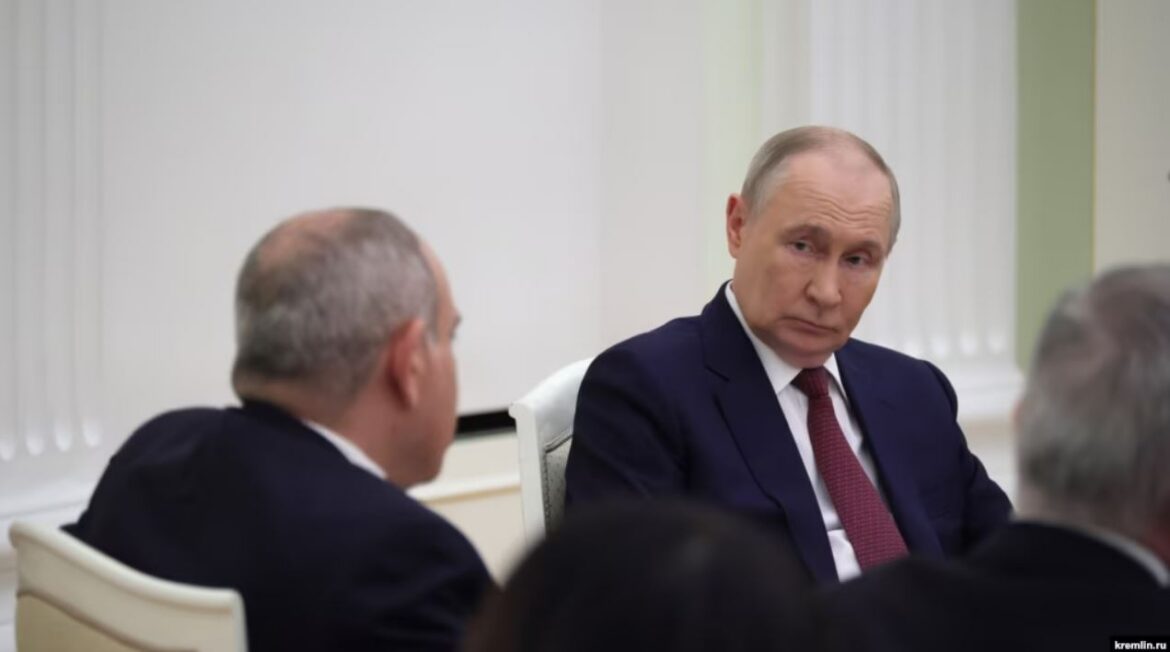
That failure was on full display this week during Pashinyan’s meeting with Russian President Vladimir Putin in Bishkek.
Putin openly demanded clarity on Armenia’s geopolitical direction, arguing that Armenia cannot simultaneously pursue membership in the European Union while remaining in the Russian-led Eurasian Economic Union. He again called for the Armenian people to be given the opportunity to decide the matter through a referendum. Pashinyan refused, saying the issue was “not yet ripe enough.”
The contradiction is glaring. Pashinyan’s government has formally launched a process toward eventual EU membership and repeatedly markets its foreign policy as a historic pivot toward the West. Yet when confronted with the economic and strategic consequences of that policy, Pashinyan insists Armenia is not actually prepared to make the choice.
In effect, he wants the political benefits of proclaiming a Western orientation while continuing to depend on Russia economically and avoiding accountability for where his policies are actually taking the country.
Putin’s response was unusually blunt. Asked about Russia’s 102nd military base in Gyumri, he said Moscow could remove it “even tomorrow” if Armenia decides it is no longer necessary, while pointedly asking whether Armenia is prepared for the consequences.
This is the dangerous position Pashinyan has created. Armenia has steadily weakened its relationship with Russia, but there is no NATO security umbrella waiting to replace it, no EU army defending Armenia’s borders and no Western treaty guaranteeing Armenia’s security.
Even more disturbing was Pashinyan’s declaration to Putin that “peace has been established” between Armenia and Azerbaijan.
That declaration comes after the ethnic cleansing of Artsakh, the forced displacement of its entire indigenous Armenian population, Azerbaijan’s continued imprisonment of Armenian captives and Artsakh’s political leadership, and continuing demands from Baku against the Republic of Armenia itself.
Calling this “peace” is not diplomacy. It is an attempt to normalize the consequences of Armenian defeat and present surrender as a foreign-policy achievement.
The widening divide with Moscow was underscored a day earlier when Putin sent an unusually pointed birthday message to imprisoned former President Robert Kocharyan, wishing him “resilience” in confronting the challenges facing him and his family. The message came amid the Pashinyan government’s continuing imprisonment and prosecution of political opponents.
Pashinyan is now preparing to travel to Moscow for further talks with Putin, even as he continues telling Armenians that the country is supposedly moving toward Europe.
After years of catastrophic losses, the problem is no longer whether Armenia should look East or West. Armenia should pursue productive relations wherever its national interests require them.
The problem is that under Pashinyan, Armenia has no coherent national strategy at all.
He has traded strategic relationships for slogans, surrendered Armenian positions without obtaining enforceable guarantees in return, and repeatedly weakened Armenia’s bargaining position before declaring the resulting vulnerability a success.
Armenia does not need another geopolitical experiment.
It needs a government that understands that foreign policy exists to protect the Armenian state and the Armenian people, not to justify the failures of Nikol Pashinyan.