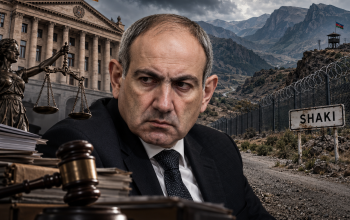
Prime Minister Nikol Pashinyan’s regime is continuing to tighten its grip on Armenia’s political life, using parliamentary authority, law-enforcement institutions and criminal prosecutions to intimidate opponents and suppress increasingly vocal criticism.
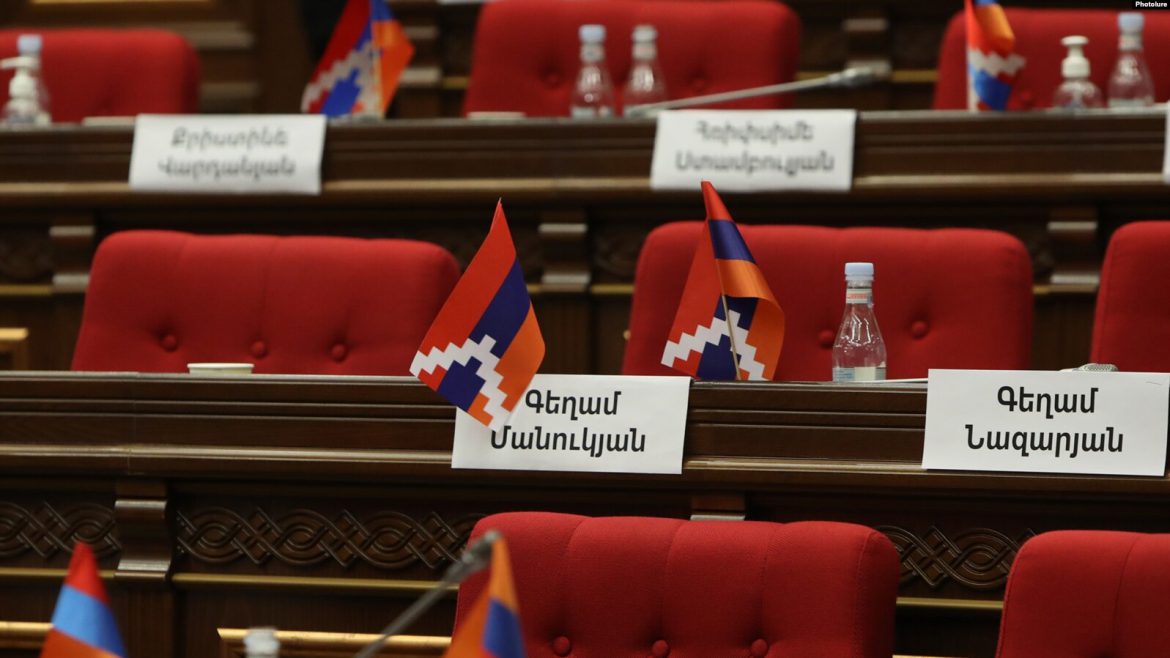
The latest confrontation erupted in parliament after Deputy Speaker Vahagn Aleksanian of the ruling Civil Contract party ordered security officers to remove opposition deputy Davit Ghazinian from the chamber. Ghazinian had objected to Aleksanian repeatedly interrupting opposition lawmakers and using the presiding chair to challenge and comment on their speeches.
Ghazinian ultimately left the chamber himself, after which deputies from both opposition blocs walked out in protest.
Opposition lawmakers accused the ruling majority of systematically abusing parliamentary procedure to silence criticism. They also pointed to the continued refusal to allow opposition Deputy Speaker Aram Vartevanian to preside over sessions, despite his formal position in the National Assembly leadership.
Aleksanian defended his interventions by claiming that opposition lawmakers spread misinformation, effectively asserting the ruling party’s right to decide which opposition statements may be heard without interruption.
The incident reflects a broader pattern under Pashinyan, in which institutions that should serve as checks on executive power are increasingly being used to protect the government from political challenge.
That pattern is also visible outside parliament.
In Gyumri, 36-year-old Mher Khachatrian is facing criminal prosecution over a social media post criticizing Investigative Committee Chairman Artur Poghosian. His comments came after Poghosian publicly addressed criminal proceedings against senior Armenian Apostolic Church clergymen who have themselves emerged as outspoken critics of Pashinyan.
Khachatrian has been charged over allegedly defamatory statements concerning law-enforcement officials and maintains that the case is politically motivated.
The prosecution comes amid a growing number of cases involving citizens investigated or charged for harsh criticism of Pashinyan and other officials. What once would have been treated as political speech is increasingly being drawn into the criminal justice system.
The message is becoming difficult to miss: criticism of the government can carry consequences.
From the parliament chamber to the courts, Pashinyan’s administration is increasingly replacing political debate with institutional coercion. Opposition lawmakers are interrupted and removed, critics are prosecuted, Church figures are targeted, and state institutions are repeatedly deployed against those challenging the government.
A government that once came to power under the banner of democracy is now steadily eroding the very democratic freedoms it claimed to defend. Armenia is witnessing not simply political polarization, but the normalization of state pressure against organized opposition and public dissent.