YEREVAN — Armenian authorities have intensified legal action against prominent opposition and Armenian Apostolic Church figures, with the arrest of former lawmaker Martun Grigoryan in Gyumri and a new prosecutorial effort to overturn a favorable court ruling for Archbishop Mikael Ajapahyan.
The developments have renewed accusations that Prime Minister Nikol Pashinyan’s government is using law enforcement and the courts to weaken political opponents and continue its confrontation with the Armenian Apostolic Church.
Former parliamentarian Martun Grigoryan, a leading opposition figure in Gyumri, was detained on August 13 and subsequently ordered held for two months. Armenia’s Anti-Corruption Committee says the case concerns an alleged electoral offense connected to the June 7 parliamentary election. Authorities accuse Grigoryan of violating restrictions against providing material benefits to voters.
Grigoryan, who ran on the Prosperous Armenia Party ticket, denies wrongdoing. His attorney Arsen Babayan has described the case as politically motivated.
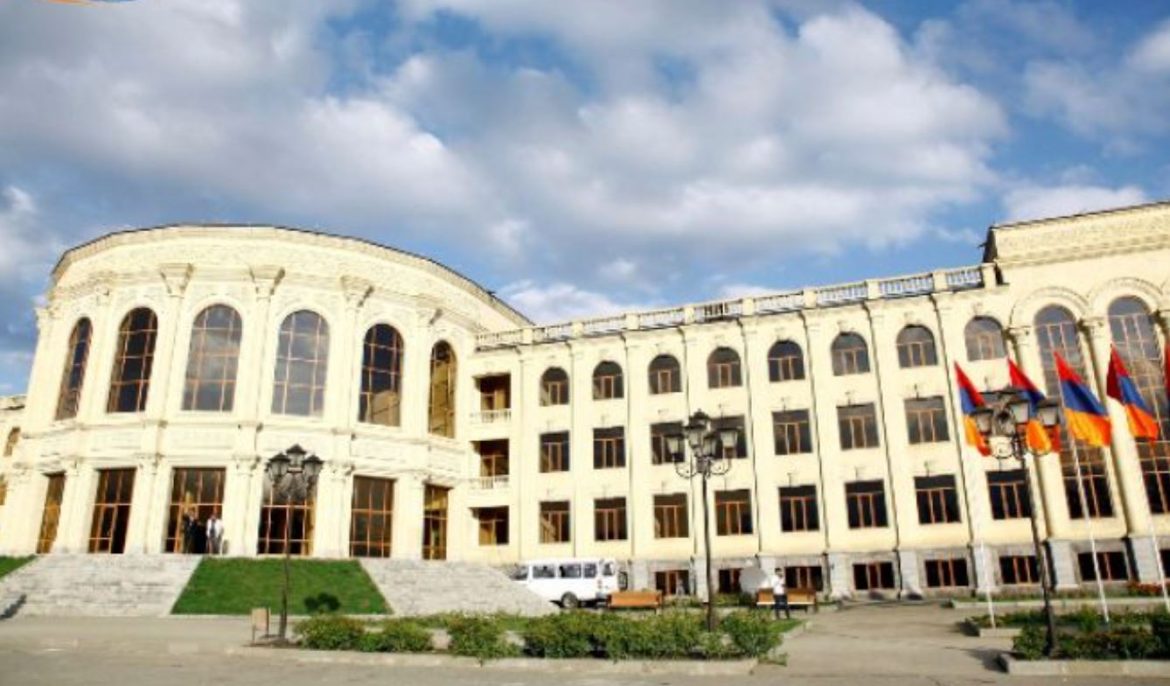
The arrest carries particular significance in Gyumri, Armenia’s second-largest city, where opposition forces collectively defeated Pashinyan’s Civil Contract party in the 2025 municipal election and retained control of the City Council.
Grigoryan’s Our City bloc is one of four opposition groups forming the council majority. Opposition representatives say the latest arrest is intended to destabilize that majority and create conditions for a new municipal election.
The pressure on Gyumri’s opposition leadership has extended beyond Grigoryan. Mayor Vartan Ghukasyan, another prominent government critic, was arrested last year on corruption allegations he rejects. Although he was subsequently transferred to house arrest, additional criminal charges have been brought against him.
Pashinyan has openly called for another election in Gyumri, while Civil Contract representatives maintain that the criminal cases involving opposition figures are legitimate law-enforcement matters rather than political persecution.
Opposition members, however, say they have no intention of surrendering control of the municipality.
The latest developments follow a broader series of arrests and prosecutions involving opposition politicians and activists surrounding Armenia’s June parliamentary election. Grigoryan’s own home and political headquarters were searched before the vote, and law enforcement released recordings it claims support the allegations against him.
Prosecutors Pursue Archbishop Ajapahyan
At the same time, Armenia’s Prosecutor General Anna Vardapetyan has appealed a June 25 ruling by the Criminal Court of Appeals in the case of Archbishop Mikael Ajapahyan, Primate of the Shirak Diocese of the Armenian Apostolic Church.
The appellate court overturned the earlier judgment against Archbishop Ajapahyan, lifted his house arrest and ordered that the case be reconsidered, concluding that questions concerning proper jurisdiction required a new trial. Prosecutors are now asking the Court of Cassation to overturn that decision.
Archbishop Ajapahyan was arrested in June 2025 and accused of publicly calling for the violent seizure of power under Article 422 of Armenia’s Criminal Code. He was subsequently convicted and sentenced to two years in prison.
The clergyman has consistently rejected the charges, while his attorneys have characterized the prosecution as politically driven.
Earlier this year, his imprisonment was replaced with house arrest amid health concerns. The Court of Appeals later overturned the lower court judgment and removed the house-arrest restriction.
The prosecution of Archbishop Ajapahyan unfolded amid Pashinyan’s unprecedented confrontation with Catholicos Garegin II and the Armenian Apostolic Church. Several senior clergymen have faced arrests or criminal proceedings since the dispute escalated, while the government has pursued a campaign aimed at removing the Catholicos from leadership of the Church.
The renewed effort to prosecute Archbishop Ajapahyan and the arrest of Martun Grigoryan are particularly notable because both are closely associated with Shirak and Gyumri, a region where the ruling Civil Contract party has faced strong political resistance.
Taken together, the cases are adding to concerns among government critics that Armenia’s criminal justice system is increasingly being deployed against political and institutional centers of opposition.
The government rejects those accusations and insists that prosecutors and investigators are acting independently and enforcing Armenian law.
For its opponents, however, the pattern is increasingly difficult to separate from the political context: opposition leaders are arrested, elected municipal majorities face sustained pressure, and senior clergy challenging the government continue to be prosecuted.
In Gyumri, opposition representatives say they intend to remain in control of the municipality despite the mounting pressure. Their resistance now represents another test of whether Armenia’s remaining opposition-held institutions can withstand the expanding use of criminal proceedings against government adversaries.