Los Angeles Armenian artist, writer, counselor, and cultural figure Ara Mgrdichian will be among the artists featured in the Autry Museum of the American West’s forthcoming exhibition, “Life, Liberty, and Los Angeles,” opening May 30, 2026, at the museum’s Marilyn and Calvin Gross Gallery.
Mgrdichian’s photograph, “Quo Vadis?” Los Angeles Sister Cities Monument, City Hall, Los Angeles, CA, 2016, will be included in the exhibition, curated by Carolyn Brucken, Senior Curator at the Autry Museum.
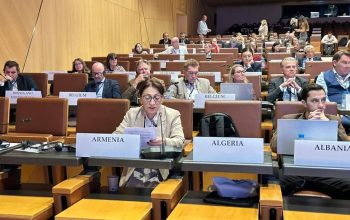
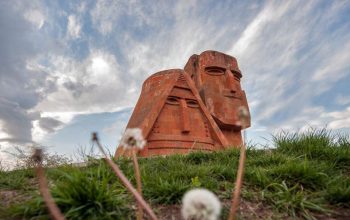
For Oragark readers, Mgrdichian is a familiar name. His work was previously featured in “Remain in Light: Visions of Homeland and Diaspora,” the Fowler Museum exhibition that brought together the photography of Sossi Madzounian, Ara Mgrdichian, and Ara Oshagan to explore the contemporary Armenian experience in the homeland and diaspora. That exhibition addressed themes of survival, exile, memory, rebirth, and the evolving social fabric of Armenian life across Armenia, Artsakh, and Los Angeles.
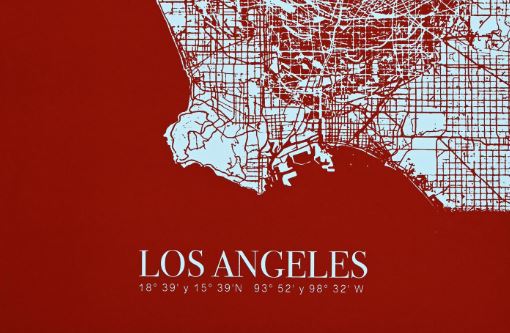
His inclusion in “Life, Liberty, and Los Angeles” places an Armenian voice within a broader civic and historical conversation about America’s founding ideals as experienced in Los Angeles. The exhibition explores the meanings behind life, liberty, and the pursuit of happiness through the stories of diverse Angelenos and the tensions, promises, contradictions, and opportunities that have shaped the city.
In that context, Mgrdichian’s participation is especially meaningful. His work has long dealt with displacement, collective memory, inherited trauma, justice, and identity. Having lived in Los Angeles since early childhood, and in the Republic of Armenia from 1990 to 1993 with extended stays in Artsakh, Mgrdichian brings a diasporan Armenian perspective rooted both in the American urban landscape and in the historic wounds and survival of the Armenian people.
The title “Quo Vadis?” meaning “Where are you going?” is a fitting question for an exhibition concerned with civic ideals and the future of the city. For Armenians in Los Angeles, it also carries a deeper resonance: where does a people go after genocide, exile, displacement, assimilation, and rebirth? Where does a community locate itself within a city that has become one of the largest Armenian centers in the world, while remaining part of a wider American story still struggling to reconcile liberty with historical injustice?
Mgrdichian’s work does not treat Armenian identity as decoration or nostalgia. It treats memory as a living force. His writing and artistic work have consistently addressed genocide, cultural erasure, trauma, and the necessity of bearing witness. Oragark previously published his article on Azerbaijan’s appropriation of Armenian cultural arts, where he warned that the stripping away of cultural meaning, tradition, and identity represents one of the final stages of genocide.
The Armenian experience in Los Angeles is not peripheral to the city’s story. It is one of its defining diasporan chapters. Through Mgrdichian’s participation, that presence enters the exhibition not merely as an ethnic category, but as a historical consciousness. His work invites viewers to see Los Angeles as a place of refuge and reinvention, but also as a place where inherited trauma, cultural memory, and civic belonging remain active and unresolved.
“Life, Liberty, and Los Angeles” opens May 30, 2026, at the Autry Museum of the American West. For the Armenian community, Ara Mgrdichian’s presence in the exhibition is another opportunity to recognize the continuing contribution of Armenian artists to the cultural life of Los Angeles, and to understand that the Armenian story remains inseparable from the broader story of this city.