
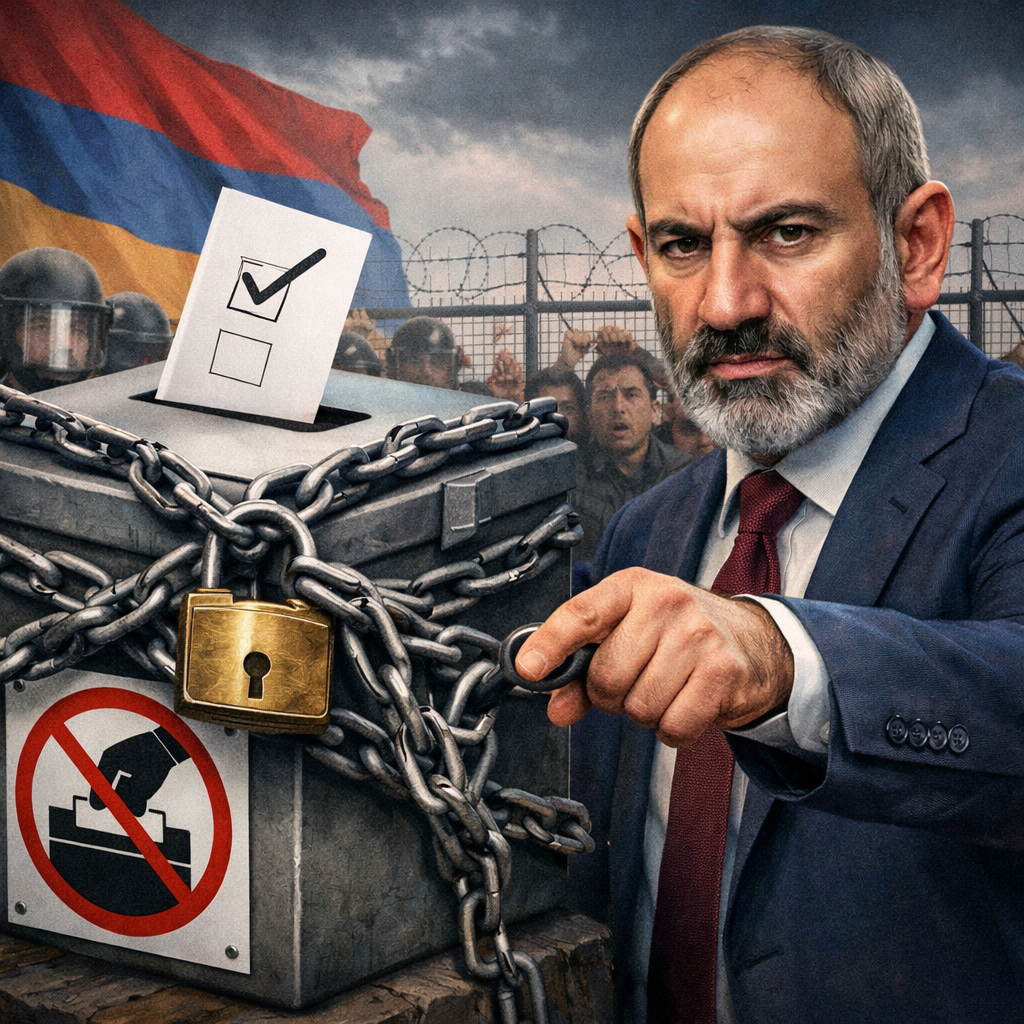
Prime Minister Nikol Pashinyan declared on Friday that Armenia’s three principal opposition forces should be left entirely outside the next National Assembly, openly stating that none of them should win seats in the parliamentary elections scheduled for June 7. Speaking from the floor of the outgoing parliament, Pashinyan said this goal is becoming “more realistic” by the day and went so far as to suggest that anyone who believes those forces deserve representation is showing disrespect for the electorate.
The three forces targeted by Pashinyan were the Hayastan alliance led by former President Robert Kocharyan, the Strong Armenia party associated with businessman Samvel Karapetyan, and Prosperous Armenia, headed by Gagik Tsarukian. In recent weeks, the prime minister has intensified his rhetoric against all three, again portraying them as a dangerous camp bent on dragging Armenia back toward war. He has branded them a “three-headed party of war,” while opposition figures have countered that such language is nothing more than fearmongering from a government increasingly anxious about its own political future.
Pashinyan’s latest remarks are especially notable because they stand in contrast to statements made earlier this year by senior members of Civil Contract, who openly signaled concern that these same opposition blocs could collectively secure a parliamentary majority and remove him from power. Those earlier warnings, coupled with repeated claims that the authorities “will not allow” such an outcome, fueled concerns that the regime might be preparing the political or legal ground to sideline serious challengers ahead of the vote. That suspicion has only grown as the government’s attacks on opposition forces have become more direct and more aggressive.
The speech came at the conclusion of a three-day parliamentary debate on the government’s implementation of its five-year program adopted after the 2021 elections. During those sessions, opposition deputies again charged Pashinyan and his party with failing to fulfill key campaign promises, while holding him directly responsible for the 2020 war, the loss of Artsakh, and the severe security crisis facing Armenia today. Hayastan bloc representative Artsvik Minasyan delivered one of the bluntest rebukes, telling Pashinyan that he had brought war, disaster, and loss to the country and would continue to do so if he remains in office.
In substance, Pashinyan’s statement was more than campaign rhetoric. It was an unusually explicit expression of a political desire to see the country’s main opposition currents erased from parliamentary life altogether. In any state claiming to uphold democratic norms, the question is not whether the ruling party wants its opponents defeated; that is a given. The real question is whether Armenia’s voters will be permitted to decide freely, without intimidation, manipulation, or administrative interference, who speaks for them in the next parliament. With the June 7 election approaching, that question is becoming harder to ignore.


