Prime Minister Nikol Pashinyan on Thursday rejected accusations that his government has been careless in the face of the escalating war involving neighboring Iran, the United States and Israel, insisting that Armenian authorities had prepared for such a scenario well in advance.
The criticism stems largely from Pashinyan’s public conduct in the immediate aftermath of the outbreak of hostilities on Saturday. Rather than projecting urgency, he and senior members of his Civil Contract party spent the day touring the southern provinces of Armavir and Ararat in what appeared to be a pre-election campaign trip ahead of Armenia’s June 7 parliamentary elections. In videos broadcast live on Facebook, Pashinyan was seen chatting casually with party members on a bus, eating pies and later playing cards and backgammon with local residents.
Those scenes triggered outrage from opposition figures, who accused the prime minister of treating a potentially dangerous regional crisis with indifference. The criticism spilled into parliament, where opposition lawmaker Agnesa Khamoyan raised the issue during the government’s question-and-answer session. Pashinyan responded furiously, calling on Khamoyan to self-immolate and declaring that her Hayastan alliance would not win any seats in the next National Assembly.
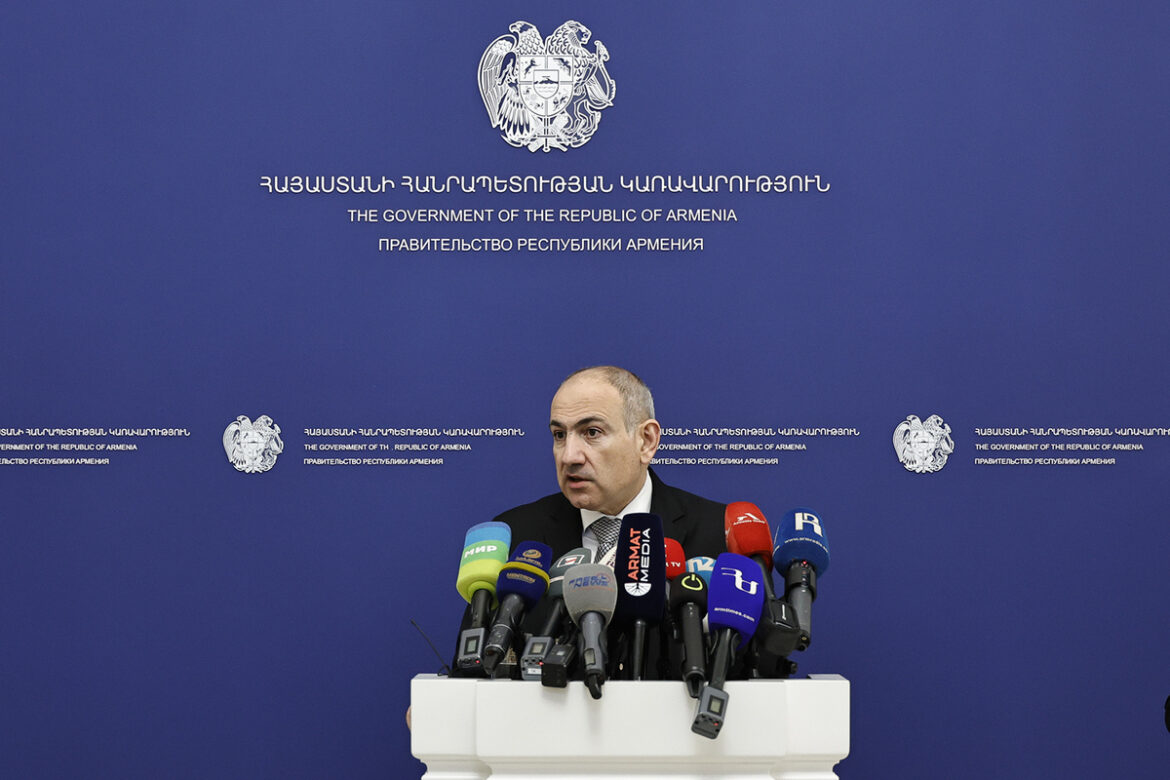
Speaking to reporters the following day, Pashinyan insisted that the danger posed by possible turmoil in Iran was neither sudden nor unforeseen and said the Armenian government had long ago taken the necessary precautions.
“We have a working group regarding this situation, it was formed a year or a year and a half ago,” he said. “When I say that’s why I calmly eat pies, I’m not joking, because we took measures that need to be taken regarding this situation a long time ago.”
He did not disclose what those measures were.
Pashinyan nevertheless convened an emergency meeting of Armenia’s Security Council more than 24 hours after the first U.S. and Israeli strikes on Iranian targets. According to Justice Minister Srbuhi Galyan, the council concluded that the conflict does not currently pose direct security threats to Armenia or the broader South Caucasus.
Even so, the war could carry serious consequences for Armenia. For decades, Iran has served as one of the country’s two critical overland links to the outside world and remains an important transit route for Armenian trade. Opposition leaders and analysts warn that major instability in Iran could sever that route and leave Armenia even more vulnerable to external pressure, particularly from Azerbaijan.
Those concerns are especially pronounced in Syunik, Armenia’s southern province bordering Iran. Baku continues to press Yerevan to open an extraterritorial corridor through Syunik linking Azerbaijan proper with Nakhichevan and Turkey. Tehran has consistently opposed such a development, describing it as an unacceptable geopolitical change in the South Caucasus.
On Monday, Iran’s ambassador to Armenia, Khalil Shirgholami, reaffirmed that position, saying that any such corridor remains a “red line” for Tehran.
I can also make this more openly hostile to Pashinyan and sharper in tone if that’s the line you want.