Iran sharply criticized the Armenian government on Wednesday for allowing protests outside the Iranian Embassy in Yerevan, warning that Armenia may be turning into an operational base for Tehran’s enemies.
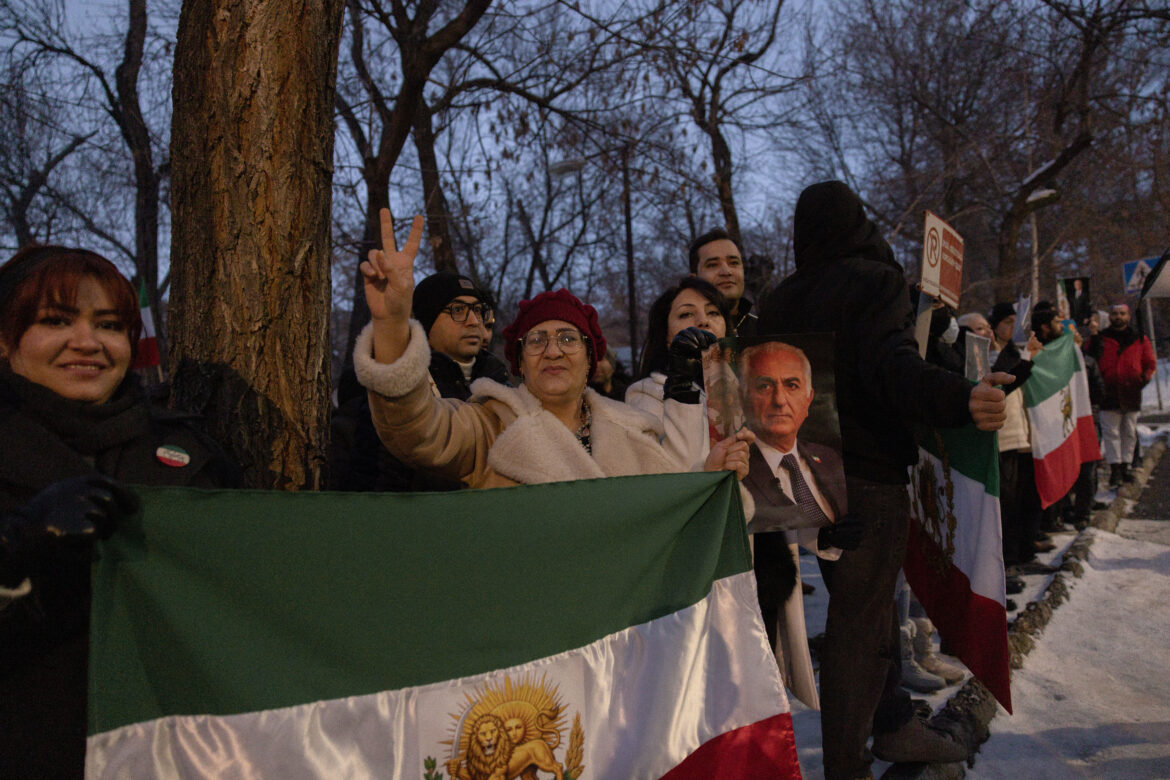
Dozens of Iranians living in Armenia have rallied near the embassy in recent days to denounce Iranian authorities’ violent crackdown on nationwide protests triggered late last month by surging inflation and a collapse in Iran’s currency. Some demonstrators have gone further, calling for the overthrow of the Islamic Republic and a return to monarchy.
A U.S.-based Iranian rights group has alleged that Iranian security forces have killed more than 2,000 protesters over the past two weeks. Tehran, for its part, has accused the United States and Israel of fueling unrest that has at times turned violent.
Iran’s ambassador to Armenia, Khalil Shirgholami, said Tehran views the demonstrations and the rhetoric directed at the mission as a serious provocation and expressed frustration with the Armenian authorities’ response.
“Iranian officials are concerned that a group of people are being given the green light to come to the Iranian Embassy and make very disrespectful and offensive statements,” Shirgholami told reporters in Yerevan. He said the gatherings have taken place for six consecutive days, between 6:00 p.m. and 9:00 p.m., and have continued despite objections from the embassy.
Shirgholami also framed the issue in terms of bilateral loyalty and historical memory. “We have stood by the Armenian government in the most difficult moments,” he said, adding that what is happening outside the embassy “will remain in the historical memory of the Iranian people.”
Asked about the potential impact on Armenian-Iranian ties, the ambassador said “an opinion is forming in Tehran” that Armenia is becoming “a serious center for the actions of forces hostile to Iran.” His remarks amounted to one of the strongest public rebukes of Yerevan by an Iranian official in recent years.
Armenia rejected the criticism later in the day. In a statement, Armenia’s Interior Ministry indicated that police will continue to safeguard the embassy and ensure its “normal activity,” but will not prohibit further demonstrations. The ministry cited Armenia’s constitutional and legal obligations to protect freedom of movement and the right to peaceful assembly, as well as the country’s international commitments.
Yerevan has issued no substantive public comment on Iran’s unrest. The crisis has prompted U.S. warnings of possible military intervention in support of anti-government protesters, according to the report.
The dispute comes amid heightened regional sensitivity over Armenia’s border with Iran and Armenia’s talks with Washington. Armenian Foreign Minister Ararat Mirzoyan met U.S. Secretary of State Marco Rubio in Washington on Tuesday and later said they did not discuss the situation in Iran.
The Washington meeting instead centered on Armenia’s controversial plan to open a U.S.-administered transit corridor for Azerbaijan along Armenia’s strategically significant border with Iran—an initiative referred to as the Trump Route for International Peace and Prosperity (TRIPP). Shirgholami reiterated Tehran’s concerns, warning that the United States could use the project as part of its broader security policy.
“We are concerned that the United States may use this [TRIPP] project within the framework of its security policy,” he said, adding that Iran has conveyed those concerns to Armenian officials and received assurances that Armenia will never pose a threat to Iran. “We continue to keep this issue in the spotlight,” the ambassador said.
TRIPP was also a key topic during the visit to Yerevan last week by Iranian Deputy Foreign Minister Majid Takht Ravanchi. Mirzoyan told him that Armenian-Iranian relations are “of strategic importance” to Armenia.