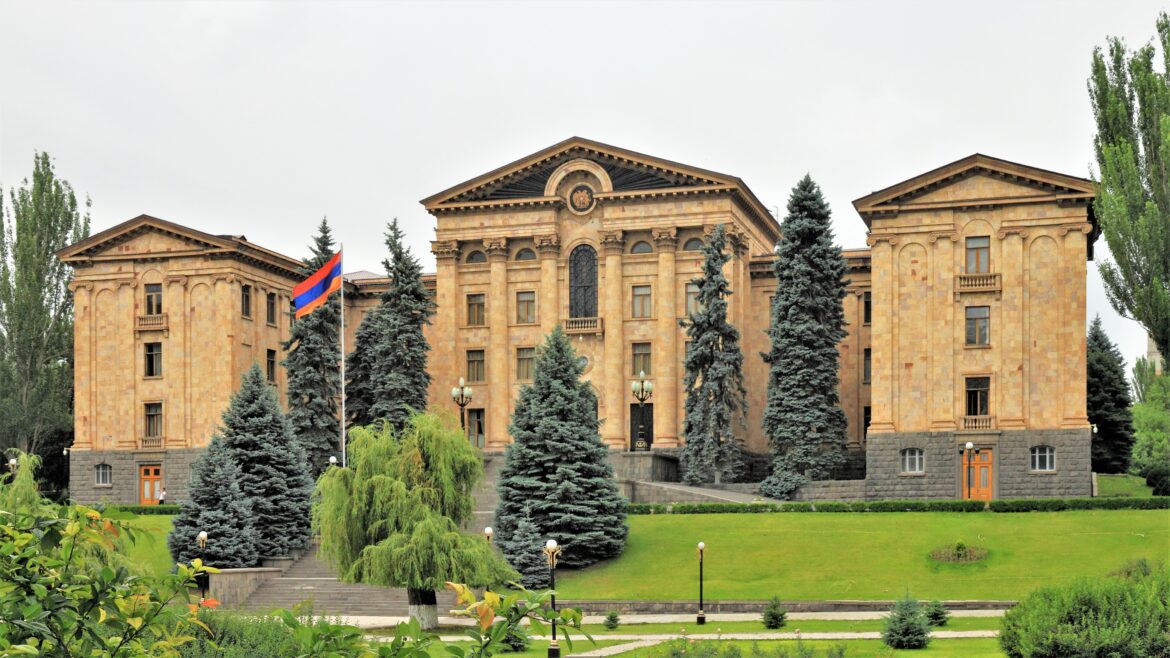
Ignoring strong objections from the parliamentary opposition, Armenia’s National Assembly on Friday rushed through government-backed legislation that would make it easier for authorities to block local civic groups from monitoring the country’s upcoming general elections.
The amendments to the Electoral Code, drafted by the ruling Civil Contract party, would give the Central Election Commission (CEC) broader powers to disqualify election-observation organizations deemed insufficiently “politically neutral and impartial.”
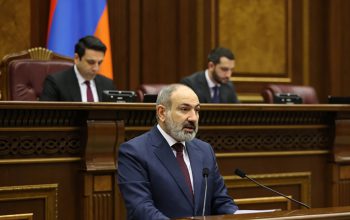
Presenting the bill, Civil Contract deputy Arusyak Julhakyan claimed existing legislation lacks “sufficient and effective” mechanisms to ensure observer neutrality and that the changes are meant to close that gap.
The pro-government majority pushed the draft through a first reading during an extraordinary session conducted under an “urgent procedure” that allows final adoption within 24 hours. The two opposition factions boycotted the brief sitting after the ruling bloc refused to submit the proposed amendments for public discussion before debate.
Artsvik Minasyan of the opposition Hayastan alliance said the Council of Europe’s Venice Commission requires precisely that kind of public consultation before electoral laws are changed in Armenia and other member states.
“This is yet another attempt to put the electoral process under full government control and legitimize election fraud,” Minasyan charged.
Minasyan argued that the new restrictions will be used against watchdog groups that document irregularities benefiting Civil Contract and other pro-government forces. Julhakyan rejected the accusation, countering that Hayastan’s real aim is to allow opposition-linked activists to continue operating under the label of independent observers.
Minasyan responded that the CEC itself cannot be treated as an impartial referee. The commission is chaired by Vahagn Hovakimyan, a longtime associate of Prime Minister Nikol Pashinyan.
Hovakimyan previously worked as a journalist for Pashinyan’s Haykakan Zhamanak daily between 1998 and 2012. After Pashinyan entered parliament in 2012, he hired Hovakimyan as a parliamentary assistant. Hovakimyan later became a senior figure in Pashinyan’s party before taking the post of CEC chairman in October 2022.
Hovakimyan said late last month that he will do his best to ensure the proper conduct of parliamentary elections scheduled for June. Opposition leaders have dismissed those assurances.
Their concerns have been sharpened by election-related assistance that the Armenian government has requested from the European Union. EU foreign policy chief Kaja Kallas said on December 14 that Yerevan is seeking the kind of “help to fight foreign malignant interference” that the EU provided to Moldova ahead of its September 2025 parliamentary elections.
Opposition figures and some commentators argue that Pashinyan is seeking political cover and technical support from Brussels to secure victory in the 2026 vote through fraud or administrative pressure. They warn in particular that the CEC could use expanded powers to disqualify major opposition forces from the race.
In Moldova, two opposition parties described as pro-Russian were barred from participating in the elections ultimately won by the country’s pro-Western leadership. The EU defended the bans by citing alleged Russian interference.