By Levon Baronian
There is something profoundly disturbing about watching the government of Armenia openly discuss changing the country’s Constitution to satisfy the demands of Azerbaijan, while simultaneously pretending that no such demands exist.
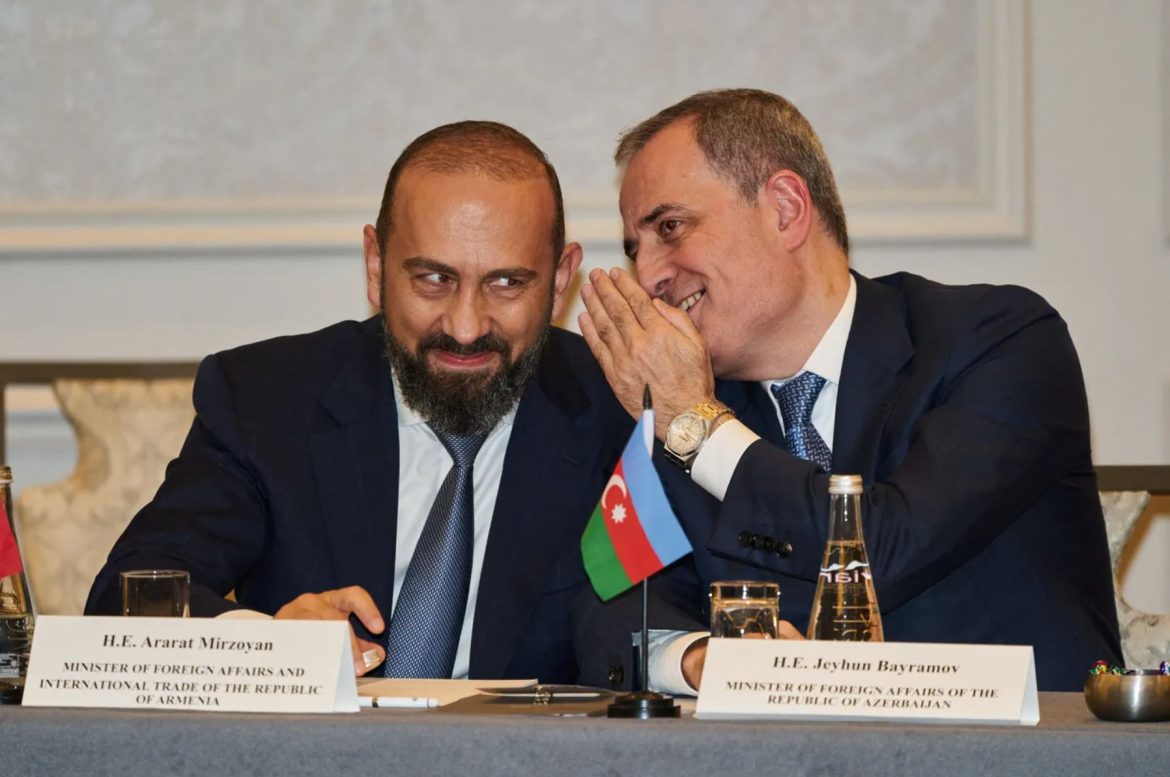
On October 28, Foreign Minister Ararat Mirzoyan provided yet another astonishing demonstration of the Pashinyan regime’s willingness to accommodate Baku.
According to Mirzoyan, Azerbaijan is not demanding that Armenia change its Constitution. It is merely refusing to sign a peace agreement until Armenia does so.
Apparently, the Pashinyan government believes there is a meaningful distinction.
Mirzoyan went further, declaring that Armenia must do everything possible to secure the signing of the agreement. He even challenged the parliamentary opposition to support a new Constitution and put it to a referendum, suggesting that the government would resign if voters rejected it.
Consider the implications. Azerbaijan is effectively dictating the constitutional changes it expects from Armenia, and Armenia’s foreign minister is proposing a political mechanism to facilitate those changes.
This is not diplomacy between equals. It is a dangerous precedent in which a foreign adversary is permitted to influence the foundational law of a sovereign nation.
Baku’s objection centers on the Armenian Constitution’s reference to the Declaration of Independence, which invokes the historical aspirations of the Armenian people concerning Artsakh. Azerbaijan wants that reference removed.
Having already witnessed the forced displacement of Artsakh’s Armenian population, the destruction and endangerment of Armenian cultural heritage, and the continued detention of Armenian prisoners in Baku, Armenians are now being told that their own Constitution must also be revised before Azerbaijan will consider signing a peace agreement.
And what guarantee exists that this will be Azerbaijan’s final demand?
None.
That question was raised in Armenia’s parliament, yet the government offered no concrete assurance that constitutional changes would actually result in a signed and lasting peace.
The pattern is unmistakable: Azerbaijan presents a condition, the Pashinyan government searches for a way to accommodate it, and the Armenian people are told that another concession is necessary for peace.
Peace cannot be built on an endless succession of unilateral concessions. Nor can national sovereignty survive when a government allows another country to determine the acceptable contents of its Constitution.
A constitution belongs to the people whose republic it governs. It is not a bargaining chip to be traded away for the promise of a signature from Ilham Aliyev.
The most alarming aspect of Mirzoyan’s statements is not simply the proposed constitutional referendum. It is the government’s apparent acceptance of the premise that Armenia must change itself to satisfy Azerbaijan before peace can be achieved.
That premise must be rejected.
Armenia’s Constitution must reflect the sovereign will of the Armenian people, not the political demands of Baku.
A government willing to subordinate that principle to Azerbaijan’s approval is not securing Armenia’s future. It is placing the country’s sovereignty itself on the negotiating table.