The Center for Armenian Research and Analysis (CARA) gathers and analyzes critical information on activities occurring in occupied Artsakh by state and non-state actors, and produces a weekly brief, with actionable data, to public and private stakeholders. Keeping Artsakh alive and in the public consciousness is part and parcel of CARA’s mission of providing clear and unfettered research and analysis pertaining to indigenous Armenian rights and cultural survival.
TOP ARTSAKH HEADLINES, SEPTEMBER 28 – OCTOBER 4, 2026
Yerevan Denies Ceding More Land Near Berdavan as Surrender of Armenian Sovereignty Continues along Borders in One-Sided “Delimitation” Gambit
Armenian authorities claim that social media reports of Armenia handing-over five combat positions near Berdavan, in Armenia’sTavush Province, to Azerbaijan during border delimitation are false. The Armenian Defense Ministry called the claim “yet another fabrication,” and local authorities in Noyemberyan and the office of Deputy Prime Minister Mher Grigoryan insisted that “no such territorial concessions” had taken place. Grigoryan and Azerbaijan’s Deputy Prime Minister Shahin Mustafayev, who chair the respective delimitation commissions set up in 2022, made reciprocal border visits in September 2025, billed as a “notable milestone.” The process remains politically contentious in Armenia. The2024 agreements in Tavush raised public security fears and sparked the “Tavush for the Motherland” protest movement.
The 2024 Tavush deals handed land over to Baku while Azeri forces still hold sovereign Armenian territory seized in 2021 and 2022. A “delimitation” that runs one way is a concession process and surrender under another name. (Source: OC Media Article)
Armenian Students Make Legal Case for Artsakh Armenians’ Right of Return
The “Armenian Students for Artsakh” research competition, organized by the ARF Bureau Youth Office, has published five award-winning papers on the right of return for the forcibly displaced, ethnically cleansed indigenous Armenians of Artsakh (Nagorno-Karabakh), expelled after Azerbaijan’s Lachin Corridor blockade and its September 2023 genocidal offensive. Stella Pashyan (first place) argues that Artsakh Armenians are an Indigenous people under the Cobo factors, and that UNDRIP Articles 10 and 26 and the major human rights covenants guarantee their return. Liana Pohanian explains why the right goes unenforced despite the 1951 Refugee Convention, the Pinheiro Principles, and European Court of Human Rights rulings: the absence of a binding UN Security Council mechanism, the dissolution of the OSCE Minsk Group, and an EU that values Azerbaijan as an energy partner. Sofia Aydinyan argues for economic leverage over moral appeals, citing Anglo Asian Mining PLC’s exploitation of occupied Artsakh, and proposing Armenia as a trade and energy hub using a “Syunik corridor” and a diaspora lobbying network. Vika and Erika Kafyan, drawing on the Faro Convention and the Fribourg Declaration, argue that Azerbaijan’s destruction and appropriation of sites such as Shushi’s Ghazanchetsots Cathedral constitute ethnocultural erasure. Tigran Arakelyan applies the UN Guiding Principles on Internal Displacement and the Fourth Geneva Convention, and finds that the economic interests of the EU, France, Iran, the United States, and Russia block return.
The right they defend belongs to the 150,000 indigenous Armenians of Artsakh forced out since September 2020. (Source: Armenian Weekly Article)
At the UN Human Rights Council, Two Geneva Panels Demand Return and the Hostages’ Release
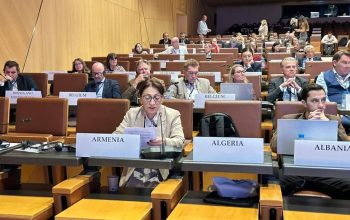
On September 24, during the 63rd session of the UN Human Rights Council, the Armenian Relief Society (ARS) and the Armenian Legal Center for Justice and Human Rights (ALC) held a side event on the forced displacement of Artsakh’s women and children. Moderator Gaiane Khachikian and ARS’s Gassia Nigoghossian said justice requires rights-based solutions, including the collective right to return. Former International Criminal Court President Silvia Fernández de Gurmendi said return “voluntarily, safely, and with dignity” is an established standard of international law. Elisa von Joeden-Forgey of the Lemkin Institute for Genocide Prevention recalled a 128-page report on the genocidal intent of the Aliyev regime, and warned that silence and impunity embolden further atrocities. MEP Marina Mesure faulted EU executive bodies for failing to enforce Parliament’s resolutions on the blockade and called for the release of the Armenian hostages in Baku. Armine Aleksanyan, former Artsakh Deputy Foreign Minister, and Artsakh Human Rights Ombudsman Gegham Stepanyan described refugees’ hardship in Armenia as relief is scaled back. Stepanyan warned that 25,000 displaced Artsakh Armenians have already left Armenia. The event called for UNESCO protection of heritage, property restitution, and enforcement of the ICJ’s provisional measures.
Christian Solidarity International (CSI) and the European Center for Law and Justice (ECLJ) hosted a parallel panel, “Human Rights in Azerbaijan: Three Years Since the Ethnic Cleansing of Nagorno Karabakh,” moderated by CSI’s Dr. Joel Veldkam. Aleksanyan,Lorena Lopez of the European Free Alliance, attorneyKarnig Kerkonian, and ECLJ’s Thibault van den Bossche joined Siranush Sahakyan of the International Comparative Law Center, who described families living in constant uncertainty about the hostages’ health and legal status. She noted that Article 15 of the peace agreement requires both states to withdraw interstate legal complaints within one month, yet has no provision for releasing the Armenian hostages. The panel pointed to the end of the ICRC’s permanent presence in Azerbaijan, which had allowed checks on detention conditions and family contact, and Sahakyan condemned the sham trials that handed down life sentences.
The peace text has Armenia drop its legal claims and says nothing of the men Baku holds. Stepanyan’s 25,000 figure reflects the Pashinyan regime’s withdrawal of support, which is pushing Artsakh’s people out of Armenia. (Sources: Armenian Weekly Article, Asbarez Article)
Armenian Parliament Committee Once Again Talks About Artsakh Refugee Support, But Does Nothing
MP Nazeli Baghdasaryan, chair of the Armenian Parliament’s Committee on Labor and Welfare Affairs, and committee members met civil society representatives to review social protection programs for what Armenia’s current capitulant regime calls “persons displaced from Karabakh,” without ever noting the cause of that displacement–genocidal ethnic-cleansing by the Azeri state and its allies. The meeting was supposedly addressing “operational challenges” in employment, housing, and social assistance for the Artsakh refugee survivors, numbering more than 150,000, and the “effectiveness and targeting” of government measures. It ended with an agreement to “hold continued discussions.”
One week earlier, ruling Civil Contract lawmakers walked out of a hearing on the same refugees, after rent subsidies were shamelessly cut by the increasingly authoritarian Pashinyan led junta. Talk that decides nothing lets the Pashinyan regime appear to act while support is withdrawn and the vice-grip on Artsakh refugees tightens. (Source: Armen Press Article)
Azeri Soldier Penetrates Armenia’s Sovereign Syunik Border Assaulting Children and Shooting their Mother
On October 1, Armenian and Azerbaijani officials confirmed the detention of Azerbaijani soldier Nasimi Musayev, who penetrated 22 km into Armenia’s Syunik province and shot an Armenian civilian in the leg in the village of Shaki. The Armenian National Security Service statement omitted the names of the victim and shooter, the weapon, and the circumstances. Azerbaijan’s State Security Service (DTX) had told Yerevan two days earlier that Musayev “went missing” from his post on September 26, without any public safety announcements being made by Armenian authorities or any protective measures being implemented for Syunik’s vulnerable, at risk civilian population. Both Armenian and Azeri agencies claim to have begun “a joint search” at the time. Azerbaijani media reported on Musayev’s detention, but glaringly omitted the shooting of the Armenian civilian mother and the violent assault on her children. The Azeri interlocutors’ family had appealed to Azeri dictator Ilham Aliyev and Defense Minister Zakir Hasanov after his commanders refused to meet them. His cousin, Akif Musayev, questioned the desertion claim, noting he left without his helmet or 30-kilogram bulletproof vest. The family says four fellow soldiers told the military prosecutor that Musayev had a serious dispute with contract soldiers and a cook, and that the contract soldiers were intoxicated that day.
An armed Azeri soldier shot a resident of a sovereign Armenian village, and Baku’s media erased it. During the Artsakh Self Defense War (First Nagorno-Karabakh War), Azeri special units were notorious for killing, torturing, and disappearing their own. (Sources: OC Media Article, Armenian Report Article, Armen Press Article, Civilnet Article, 1 Lurer Article, Public Radio of Armenia Article, Asbarez Article)
A “Positive Agenda?” Mirzoyan and Bayramov Talk Trade While Baku Claims Armenian Monasteries
On September 25, Armenian Foreign Minister Ararat Mirzoyan and Azeri Foreign Minister Jeyhun Bayramov met at the UN General Assembly and agreed to promote a “positive agenda.” They reviewed what they called “progress” since the 2025 Washington Peace Summit Agreements. The so-called “practical benefits” of this “progress” are Armenian aluminum foil sold to Azerbaijan and Azeri petroleum products sold to Armenia. Tensions rose after Baku claimed that indigenous Armenian monasteries in occupied Artsakh are “Caucasian Albanian,” a widely rejected pseudohistorical claim concocted by Azerbaijan as part of its erasure and appropriation campaign against Armenian indigenous culture and history in Artsakh. Azeri officials, intensifying their ludicrous claims, alleged acts of “looting and vandalism,” as an excuse to postpone a gathering of the so-called Peace Bridge Initiative–a civil society program launched after the sham peace treaty was initialed, but not signed, in August 2025. Former soap opera and soft porn actor turned Armenian Security Council Secretary Alen Simonyan still claims Yerevan is “ready to host” Azerbaijani civil society and that “dialogue and visits will resume.”
Foil and fuel are the “benefits” of a one-sided, Baku-centric peace agreement serving Pan-Turkic, Western, and Israeli interests. Baku claims Armenian monasteries and holds Armenian hostages. Yerevan offers to host more. (Source: Armenian Mirror-Spectator Article)
Iconic Hero’s Memorial Mural Defaced and Erased from the Heart of Yerevan; His Family and the Public Only Learn of the Pashinyan Regime’s “Quiet Desecration” from News Reports
Artak Hovhannisyan, father of heroic icon Albert Hovhannisyan martyred in defense of Armenia and Artsakh during the “44-day war” of 2020, has urged authorities to at least notify families before erasing or changing memorials/public artworks created to honor the fallen heroes of Armenia and Artsakh. A large public portrait of his son was sandblasted, without notice in broad daylight, from a wall at the entrance of Victory Park in Yerevan, he noted at the Yerablur Military Pantheon. Renovation was underway, but officials should have asked whether it would be repainted or covered, rather than leaving the family to learn of it from the media. After talks with Yerevan Municipality spokesperson Julieta Azaryan, the city is considering a sculpture or new portrait, subject to his father’s approval.
Last week, Armenia’s Prime Minister let the war’s sixth anniversary pass in silence. Writing the war’s dead out of national memory continues as Pashinyan and company attempt to erase Armenian national identity of its indigeneity and honor. (Source: Armenian Mirror-Spectator Article)
Babayan Says Baku’s Supreme Court Will Repeat the Abuses, but the Record Must Be Built
Former Artsakh Foreign Minister David Babayan, currently serving an illegally mandated life sentence in a Baku prison, said in an audio recording from the rendition site that lawyers have appealed to Azerbaijan’s Supreme Court for three Armenian hostages, in what he called a trial against the Armenian people, international law, and religious commandments. The 47-volume appellate ruling was unsigned, he said, and 99.9% of it was copied and pasted from the prosecutor’s and military court’s rulings, censored of key defense statements, but keeping the fabricated charges. He was falsely accused of financial misconduct, though he never engaged in business, and of wartime leadership during the first Artsakh self defense war at which time he would have been a tenth-grade student. The 333-page volume was withheld entirely, and lawyers have not been allowed to meet the defendants. Babayan expects the same legal, political, and moral abuses to continue, but said this stage builds a historical record for future legal steps.
These are the sham trials of a genocidal state, and the peace text Yerevan initialed does not require its hostages’ release. (Source: Asbarez Article)
“On the Ground” in Occupied Artsakh
Azeri “Settlers Offensive” on Artsakh Continues to Advance: 44 More Settler Families Deployed, with “Mine Lessons” for Settler Children
On September 30, under Baku’s illegal “Great Return” program, 44 settler families (202 people) were deployed into occupied Artsakh: 9 families (60 people) to Shukurbeyli, in occupied Jrakan (Azeri “Jabrayil”); 17 families (78 people) to the town of occupied Ivanyan (Azeri “Khojaly”); 16 families (55 people) to the town of occupied Martuni (Azeri “Khojavand”); one family (5 people) to Khnatsakh (Azeri “Khanyurdu”), in Ivanyan; and one family (4 people) to Vank (Azeri “Vangli”), in occupied Martakert (Azeri “Aghdara”). With the keys to their new homes came a mine-risk briefing from the Azeri National Agency for Mine Action (ANAMA).
On September 28, an ANAMA-coordinated project run by the Eurasian Regional Development Foundation front group, backed by the Azeri State Support Agency for NGOs, the so-called Karabakh Revival Fund, and the International Eurasia Press Fund (IEPF), held four “mine safety sessions” for children and teenagers at schools in occupied Akna (Azeri “Aghdam”) and Kangarli village, to support what Baku calls the “ongoing relocation process.” Project manager Khudaverdi Guliyev, trainer Kamran Mammadli, and purported mine survivor Vidadi Mammadzade instructed a captive audience on how to recognize booby traps, mines, unexploded ordnance, and hazard markers, and to report suspicious objects to authorities.
The “Settlers Offensive”, which experts say is built on Israeli models and algorithms, fills homes emptied of 150,000 indigenous Armenians in 2023. The same Azeri front groups teach settler children to live among the mines. (Sources: Relocation to Occupied Artsakh, Mine Awareness Training)
Azerbaijan’s “Albanian” Revisionism Moves From Gandzasar to Dadivank and Beyond
On September 28, Azerbaijan’s newly retro-fitted for anti-Armenian propaganda “Albanian-Udi” religious community visited Dadivank Monastery (Azeri “Khudaveng”) in occupied Karvachar (Azeri “Kalbajar”), holding “services” at ancient indigenous Armenian sacred sites in Udi, lighting candles, and praying for “martyrs,” among other religious sacrilege. Deputy chairman Rafig Danakari and member Romen Callati said the community has made “regular pilgrimages” across the occupied territories, including to the Juma Mosque in occupied Akna, every year since 2020. Their ludicrous claims resonate the scripted lines of the Azeri dictatorship’s culture-washing of the continuing genocide of indigenous Armenians through such “PC soundbites” and quotes as “the heritage of Caucasian Albania” is a “shared cultural treasure” of the “Azerbaijani people,” as well as other toxic drivel.
A week after Gandzasar, Baku’s “Albanian” tragic-comedy reaches Dadivank, whose main church, built in 1214 by Princess Arzu Khatun, bears her Armenian inscriptions. Nakhichevan, where the Armenian cemetery at Julfa and all trace of Armenian life were razed, shows where this ends. (Source: Visit to Dadivank)
Baku’s Propaganda Office Counts Its Output and Recruits “Qarabakh University” Influencers
On October 2, the Communications Working Group of Azerbaijan’s Coordination Headquarters met in occupied Stepanakert (Azeri “Khankendi”). Its head, Cavid Musayev of the Presidential Administration, called for “systematic and intensive” communications on “reconstruction,” “mine clearance,” “economic revitalization,” and “sustainable resettlement.” The group’s tally to date: over 1,600 awareness events, 400 media tours, 100 youth and blogger tours, 22 diplomatic visits, over 1,600 press releases, nearly 27,000 social media posts, and numerous promotional videos. The same day it met students of what was Artsakh State University, now bearing the Azeri occupation nomenclature of “Qarabakh University,” and social media influencers living in occupied Artsakh. Officials praised their “success stories,” saying content from personal observation conveys progress in a “natural and sincere manner.”
“Natural and sincere” posts from settlers and so-called “students” in post-war, continuing genocide, and currently Azeri overrun Artsakhn are, mildly put, manufactured authenticity, selling an ethnically cleansed homeland as a revival. Plainly put, it is the genocide you’ve been experiencing for years. (Sources: Working Group Meeting, Working Group Meeting)
Baku Demands Armenian “Historic Responsibility” and Promises Prosecutions Abroad
On September 29, Azeri Prosecutor General Kamran Aliyev claimed that people abroad accused of “grave crimes against Azerbaijan” can be prosecuted through “international legal cooperation,” and that several have “already been brought to justice.” Citing, what he called, the concept of “investigative situations,” he claimed that evidence gathered since the start of the “Karabakh conflict” could be used in court only after Baku’s recent military operations (read: illicit violence and atrocities), and further opined that “suspects” on the wanted list will face accountability. Law enforcement in neighboring countries, he added, has collected substantial evidence of “war crimes,” but lacks the “capacity and conditions” to use in court.
On October 1, at the First CICA Media Forum in Baku, Khalaf Khalafov, special representative of Azeri dictator Ilham Aliyev, in an exalted example of gaslighting, narrative inversion, and blaming the victim, claimed that Armenia and the Armenian people must recognize their “historic responsibility,” and that Azerbaijan “restored its territorial integrity and sovereignty” in line with international law despite “severe hardships.” He claimed Aliyev proposed “durable peace” after what Baku calls the “Second Karabakh War,” and called for relevant UN Security Council resolutions to be implemented.
The state that has been massacring Armenians from the turn of the last century, conducting genocide against the indigenous Armenians of Nakhichevan and anywhere else, pogroms in Baku, Girovabad, and elsewhere, committed war crimes and atrocities against Armenian in Artsakh, blockaded Artsakh for ten months and expelled its people demands Armenian “responsibility.” Its “evidence” waited for military victory, and its “wanted list” now reaches for Armenians abroad who defended their homeland. (Sources: Prosecutor General Comments, Khalafov Comments)
Baku Builds on Blood Stained Lands: Oil Plants in Occupied Akna, Hydropower in Occupied Kovsakan
On October 2, Ağdam Agro Yağ LLC became a resident of the Aghdam Industrial Park, with an AZN 14.2 million (USD 8.3 million) plant for refined and unrefined sunflower, corn, soybean, and cottonseed oils, for domestic sale and export. The 190-hectare park, founded on May 28, 2021, ranks second in Azerbaijan by residents, who receive a 10-year exemption from property, land, income, and profit taxes and a 10-year waiver on VAT and customs duties on imported equipment and raw materials, and social insurance subsidies.
On September 28, Azeri state media reported the commissioning of the 10.5 MW Jahangirbayli Small Hydropower Plant on the Voghji River (Azeri “Okhchuchay”) in occupied Kovsakan (Azeri “Zangilan”). The Azeri Ministry of Energy claims it produced 45.6 million kWh from September 2023 to September 2026, 19.2 million kWh of it in the first eight months of 2026, and markets it as “green energy” that “safeguards the local environment.”
The Voghji flows out of Armenia’s Syunik, and its water now powers the occupation. This buildout buttresses Turkish Azeri military and logistics designs for the region as a whole. (Sources: New Resident at Aghdam Industrial Park, Hydropower Plant)
Foreign Interests and Actions in Occupied Artsakh
EU Council Delegates Tour Occupied Artsakh as Baku’s Guests
On October 2, a delegation of the Council of the European Union’s Working Party on Eastern Europe and Central Asia (COEST) toured occupied Artsakh to observe what Baku unabashedly calls “rebuilding and redevelopment.” Delegates reviewed what the Azeri state describes as the “modern educational infrastructure” of “Qarabakh University” (State University of Artsakh) and were briefed by Aliyev’s deputy special representative Sabukhi Gahramanov on “urban construction” and the “relocation of internally displaced persons,” Azeri code-speak for the nefarious “Settler’s Offensive. The Europeans also visited Victory Park, Victory Square, and Saricali village in occupied Akna. In occupied Shushi (Azeri “Shusha”), Aliyev’s special representative Aydin Karimov described purported damage suffered “during occupation,” Baku’s term for three decades of Armenian democratic self-government, and the city’s “reconstruction,” which is being conducted by first destroying all Armenian buildings, monuments, and historic sites. The delegates visited the Govhar Agha mosques, the “bullet-scarred” statues of Azerbaijani figures, the fortress walls, the Ghazanchetsots Cathedral, which the Azeri source calls the “Gazanchesots Church,” and Shushi’s first residential complex of 23 buildings, opened in May 2024.
EU officials stood at a cathedral Azerbaijan shelled twice in 2020 and has been disfiguring ever since. As Baku reports it, the tour included nothing on the 150,000 indigenous Armenians of Artsakh forced out since September 2020, or their right of return. (Source: EU Visit)
Turkey, Azerbaijan, and Georgia’s Defense Chiefs Sign a Protocol in Occupied Shushi Signaling a Dangerous Confluence
On October 2, the 13th trilateral meeting of the defense ministers of Azerbaijan, Turkey, and Georgia was held in occupied Shushi. Azeri Defense Minister Colonel General Zakir Hasanov, Turkish Minister of National Defense Yaşar Güler, and Georgian Defense Minister Irakli Chikovani closed it by signing a joint trilateral protocol.
A military summit in Shushi, Artsakh’s emptied cultural capital, is a declaration of conquest, and it brought Georgia, Armenia’s main land route to the world, onto ethnically cleansed ground. Such pacts act as fronts for Turkish Azeri colonial aspirations, military expansion, and further Armenian erasure. (Source: Trilateral Meeting)
Slovakia Deepens Its “Strategic Partnership” With Baku, With a Smart Village in Occupied Akna
On September 29, at a Baku event for Slovakia’s Constitution Day, Azeri Parliamentary Speaker Sahiba Gafarova claimed the Azerbaijan-Slovakia strategic partnership has reached an “elevated operational level,” after Aliyev’s December 2025 visit to Slovakia and visits to Baku by President Peter Pellegrini and Prime Minister Robert Fico. Cooperation spans trade, energy, investment, military technologies, and education, with direct flights. Azeri state media singled-out Slovakia’s direct involvement in the so-called “restoration” of occupied Artsakh–complicity in genocide–sealed when Aliyev and Pellegrini met in occupied Shushi in July 2026. A Slovak company is building a “Smart Village” in Bash Garvand, in occupied Akna, and the two presidents launched a joint school project as a “symbol of friendship.” Deputy Prime Minister and Defense Minister Robert Kaliňák is named among those driving the “strategic contacts.”
The “Smart Village” model also serves as a surveillance and command-control hub, said to be deployed by Israeli experts in illegal settlements in occupied Palestine and in occupied Artsakh. An EU member building it on cleared Armenian land is engaged in participation in genocide. (Source: Azerbaijan and Slovakia)
Uzbekistan Prepares to Sign-On to the “Joint Development” of Occupied Artsakh
On October 1, Sodiq Safoyev, First Deputy Chairman of the Senate of Uzbekistan’s Oliy Majlis, announced that President Shavkat Mirziyoyev will soon visit Baku, citing a “strategic partnership” at a “historically high level.” The visit is to produce a package of agreements on economic cooperation and the “joint development of Karabakh.”
Uzbekistan already funds an Azeri Settler School in occupied Artsakh. More money for “joint development” of land cleared of its people is participation in genocide. (Source: Uzbek President Visit)
The Center for Armenian Research and Analysis (CARA) is a trans-national research institute that provides investigative, analytic, and informational resources to public and private entities across the Armenian experiential spectrum.