Something big is happening in Armenia.
An incumbent prime minister who, by the propaganda of his own supporters, should be comfortably cruising toward reelection is suddenly surrounded by a flood of suspicious positive polling narratives, increasingly aggressive campaign rhetoric, foreign intervention, diplomatic spectacle, public endorsements from senior Western figures, and carefully timed demonstrations of military strength. The pace and timing of these developments do not project confidence. They project desperation.
The political atmosphere surrounding Nikol Pashinyan increasingly resembles that of a government attempting to salvage plummeting support rather than one comfortably secure in the public’s confidence.
The central political reality shaping this election is one that many Armenians increasingly feel in daily conversation, on the streets, and across the country: Armenian society appears exhausted with Pashinyan, disillusioned with his leadership, and eager for political change. The election has increasingly taken on the character of a national effort to remove him, expressed through multiple political channels rather than through one single opposition vehicle.
This point matters because many commentators continue to analyze Armenia through the outdated political assumptions of 2021.
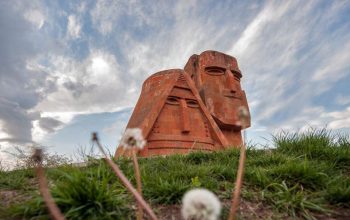
Five years ago, Armenia’s political environment revolved around a binary psychological choice. Many Armenians who were angry at Pashinyan after the 2020 war nevertheless voted for him because they feared a return of the previous order and viewed the election through a narrow emotional framework: Pashinyan or Kocharyan. The atmosphere of 2018 still lingered. Artsakh still existed as an Armenian-populated homeland. The revolutionary image of Pashinyan had not yet fully collapsed under the weight of governance, war, and loss.
That Armenia no longer exists.
Today, opposition energy is emerging from multiple directions simultaneously. Samvel Karapetyan’s Strong Armenia appeals to sectors of society that may never fully identify with Robert Kocharyan. Kocharyan’s Armenia Alliance continues to command voters centered around sovereignty, national security, and statehood concerns. Gagik Tsarukyan’s Prosperous Armenia retains longstanding populist and regional constituencies rooted in economic frustration and social networks. Arman Tatoyan’s Wings of Unity attracts a smaller group that rejects Pashinyan and the other three forces..
These political forces are not simply competing for the same voters. They are drawing dissatisfaction toward multiple destinations at the same time. What some outside observers dismiss as division increasingly resembles political breadth. Rather than funneling dissatisfaction through one narrow electoral lane, Armenia’s opposition landscape is allowing different segments of society to express rejection of Civil Contract in different ways.
The cumulative political effect is powerful.
Whether one looks at polling numbers, public mood, campaign energy, or simple political intuition, the overwhelming impression is not of a country rallying around Nikol Pashinyan, but of a country increasingly searching for ways beyond him.
This is precisely why recent polling narratives have attracted such skepticism.
The MPG/Gallup findings point toward a political landscape in which anti-government forces collectively possess a plausible parliamentary path to replacing Civil Contract. Yet against this backdrop arrived a dramatically more favorable narrative from the International Republican Institute (IRI), portraying a far stronger position for Pashinyan and reinforcing the image of continued political inevitability. At roughly the same time, EVN commentary and analysis increasingly appeared focused on softening perceptions of political decline and reinforcing confidence in Armenia’s current Western trajectory.
Oragark has already explored serious concerns regarding both narratives and the manner in which polling, framing, and political storytelling risk functioning less as neutral analysis than as attempts to shape public expectations.
If Pashinyan’s political position were genuinely secure, Armenians are justified in asking: why does so much effort suddenly seem directed toward convincing the public that he remains inevitable?
And then came the diplomatic theater.
First came public signaling from U.S. Vice President JD Vance emphasizing the importance of continuity around Pashinyan’s geopolitical course. Then came U.S. Secretary of State Marco Rubio’s brief but highly symbolic stop in Armenia immediately before elections, accompanied by agreements reinforcing Armenia’s Western orientation and regional projects linked to the government’s agenda.
Then came something even more extraordinary: an explicit endorsement from U.S. President Donald Trump himself, openly praising Pashinyan and linking his reelection to regional transit arrangements and strategic interests.
The political symbolism of such interventions is impossible to ignore.
For years, Pashinyan and his supporters warned Armenians about alleged Russian influence, Russian agents, Russian interference, and supposed attempts by Moscow to shape Armenia’s political future. Yet as this election unfolds, the most visible foreign political signaling is occurring openly, publicly, and unapologetically from the West.
A U.S. president publicly endorses Armenia’s prime minister days before elections. Senior American officials visit Yerevan at politically consequential moments. Western institutions release highly favorable polling narratives. Diplomatic symbolism increasingly converges around one message: continuity.
Armenians are entitled to ask an obvious question.
If Russia had publicly endorsed Robert Kocharyan, Samvel Karapetyan, or another opposition figure days before an election, if senior Russian officials flew into Yerevan during the campaign while signing symbolic agreements, if Russian-funded institutions published favorable polling portraying opposition inevitability, how would Pashinyan’s political camp describe it?
Would it be dismissed as routine diplomacy?
Or would it immediately be called interference?
The contrast is difficult to ignore.
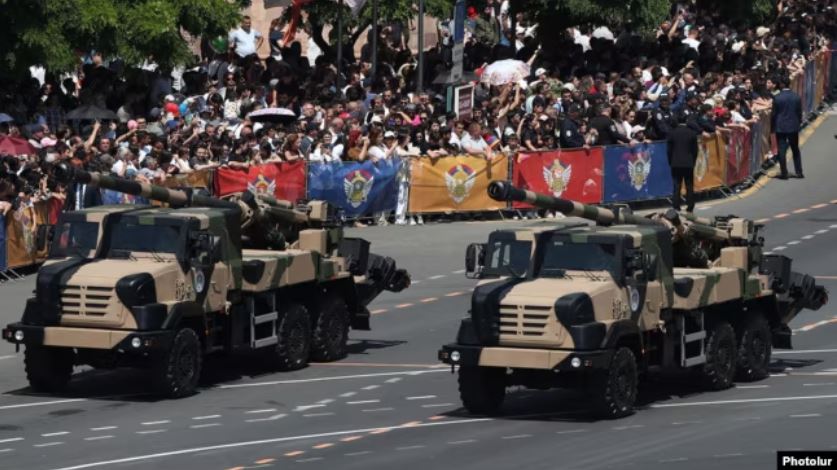
At almost precisely the same moment, Armenia witnessed an unusually timed military parade on Republic Day showcasing newly acquired weapons systems. Critics — including Arman Tatoyan — openly described the event as pre-election political theater designed to project competence, security, and state strength at a politically vulnerable moment. The symbolism again was unmistakable: reassurance, spectacle, and messaging.
None of this proves political confidence.
If anything, it suggests the opposite.
Confident governments campaign on achievements. Confident governments persuade calmly. Confident governments do not suddenly surround themselves with reassuring polling, symbolic diplomatic reinforcement, foreign endorsements, geopolitical validation, and choreographed demonstrations of strength all at once.
Governments under pressure do.
Governments facing political erosion do.
Governments fearful of losing public confidence do.
That is what makes this election feel fundamentally different.
The real political story in Armenia today is not a country rallying behind Nikol Pashinyan. It is a country increasingly moving against him through multiple political pathways at the same time while external voices grow louder in insisting that continuity is necessary.
For many Armenians, the message now feels unmistakable: Pashinyan’s supporters, foreign and domestic alike, increasingly appear worried that the political moment they once believed secure is slipping away.