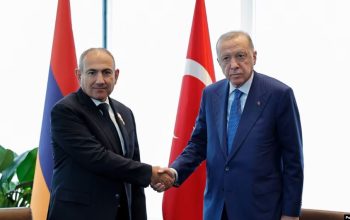
Prime Minister Nikol Pashinyan signaled on Thursday that any effort to end Russia’s management of Armenia’s railway network will be handled cautiously and through negotiations rather than unilateral action.
Speaking to reporters, Pashinyan made clear that he does not favor simply scrapping the 30-year management agreement signed with Russian Railways in 2008.
“Scrapping a contract is always a bad thing,” he said. “We should come to an agreement. Our interstate relations, including our personal relations, do not allow us to go that way. I see no point in doing that. On the contrary, our relations allow us to talk in a friendly, amicable manner.”
His comments appeared to soften the tougher position he voiced on February 13, when he said the contract should be terminated because Russian control of Armenia’s railway system reduces the country’s transit appeal for Turkey and Azerbaijan. Pashinyan argued at the time that the network should instead be managed by another country maintaining “friendly relations with both Russia and Armenia.”
Moscow reacted sharply to those remarks. The Russian Foreign Ministry called Pashinyan’s statement “bizarre” and “not acceptable,” while Security Council Secretary Sergei Shoigu warned that Armenia’s railway network could “collapse overnight” if Yerevan tried to remove Russian management.
On Thursday, Pashinyan downplayed that backlash, saying there is already a “certain understanding” in ongoing Armenian-Russian discussions on the issue.
“There is nothing in what we said that is directed against Russia,” he said. “We simply share with our partners [our view] that in this situation Armenia is losing its competitive advantages. We have no other motivation, and I hope we will be able to reach concrete solutions.”
He did not clarify whether Moscow is prepared in principle to relinquish control of Armenia’s railways, nor did he provide details about the talks he referenced.
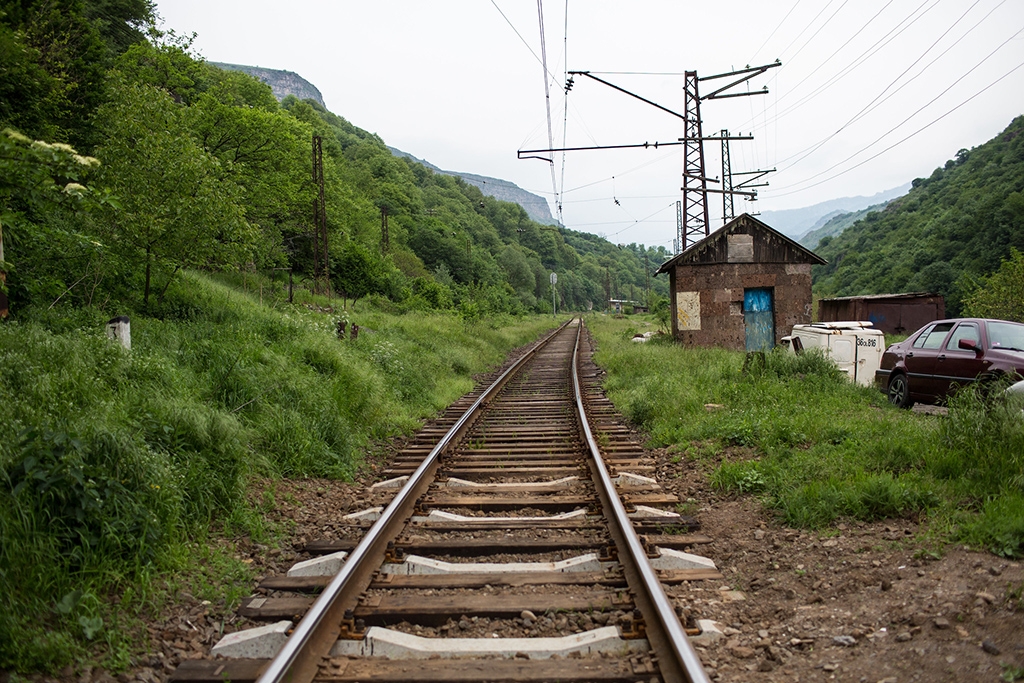
So far, the only publicly reported contacts between the two sides have concerned the restoration of two short railway sections leading to the Azerbaijani and Turkish borders. Pashinyan repeatedly urged Moscow late last year to repair them, and Russian Deputy Prime Minister Alexei Overchuk signaled readiness to do so on February 12.
Late last week in Yerevan, Armenia’s Deputy Minister of Territorial Administration and Infrastructures Armen Simonyan and Russia’s Deputy Transport Minister Dmitry Zverev discussed the repairs. No concrete agreements were announced after the meeting.