Russia insisted on Wednesday that it can build a new nuclear power plant in Armenia more effectively than the United States, responding to a U.S.–Armenian civil nuclear agreement finalized during U.S. Vice President J.D. Vance’s visit to Yerevan earlier this week.
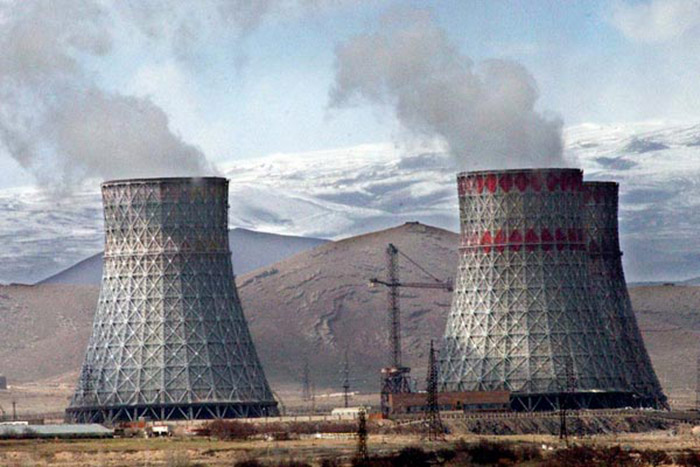
Vance and Prime Minister Nikol Pashinyan signed a joint statement on the completion of negotiations on an agreement for peaceful nuclear cooperation after their talks on Monday. While the statement does not explicitly mention a new power plant, Armenian officials and U.S. statements have portrayed the deal as a pathway for American firms to participate in major civil nuclear projects in Armenia, including a possible replacement for the aging Metsamor plant.
Kremlin spokesman Dmitry Peskov argued that Armenia’s existing nuclear infrastructure is Soviet-designed and said Russia has “greater expertise” and “competitiveness” in the sector. He portrayed Russia as capable of delivering “better quality at a lower cost” over the long term.
Russia’s Deputy Foreign Minister Mikhail Galuzin likewise said Moscow sees no “real alternatives” to a major Russian role in any Armenian nuclear project and stated that Rosatom is ready to begin implementation as soon as Yerevan gives the green light.
At the Yerevan news conference with Pashinyan, Vance said the agreement would “pave the way” for U.S. and Armenian companies to strike civil nuclear deals, citing up to $5 billion in initial U.S. exports and another $4 billion in long-term fuel and maintenance support—figures widely interpreted as relating to a prospective new reactor project.
The sums prompted skepticism from Pashinyan’s domestic critics, who argue a U.S.-led project could be far too costly for Armenia to implement. They also point to the uncertainty around small modular reactors (SMRs), the technology Armenia has signaled interest in for replacing Metsamor, which supplies roughly a third of Armenia’s electricity and is slated for decommissioning in 2036.
Opposition figures have additionally highlighted that the United States still does not have an operating commercial SMR plant, noting that NuScale Power’s planned first U.S. SMR project in Idaho was canceled in 2023 after cost projections rose sharply