Eleven people believed to include the last remaining ethnic Armenian residents of Artsakh were evacuated to Armenia on Friday.
Labor and Social Affairs Minister Arsen Torosyan first reported that 10 Artsakh Armenians and one ethnic Russian woman had arrived. Health Minister Anahit Avanesyan later said they all underwent medical examinations in the southeastern Armenian town of Goris. One of the evacuees was hospitalized, she added in a brief Facebook post.
The Armenian government did not identify the evacuees, leaving relatives of a handful of Artsakh Armenians who remained after Azerbaijan’s September 2023 assault still uncertain about their loved ones’ whereabouts.
Among them is Eleonora Hambardzumyan, who said she failed to persuade her 67-year-old brother, Slavik, to leave for Armenia in 2023. He chose to stay in Khnatsakh, a village located about 15 kilometers east of Stepanakert.
Torosyan said all 11 residents requested transportation to Armenia themselves. Gegham Stepanyan, Artsakh’s exiled human rights ombudsman, challenged that account.
“Not only did they not say they wanted to come [to Armenia], but I also have information that there was a person whose relatives were persuading him at the time to leave, saying that they are ready to organize it through the Red Cross, and the person refused,” Stepanyan told RFE/RL’s Armenian Service.
At the same time, Stepanyan said he does not know what ultimately drove their departure. He suggested there may have been discussions between Armenian and Azerbaijani authorities that resulted in the evacuation.
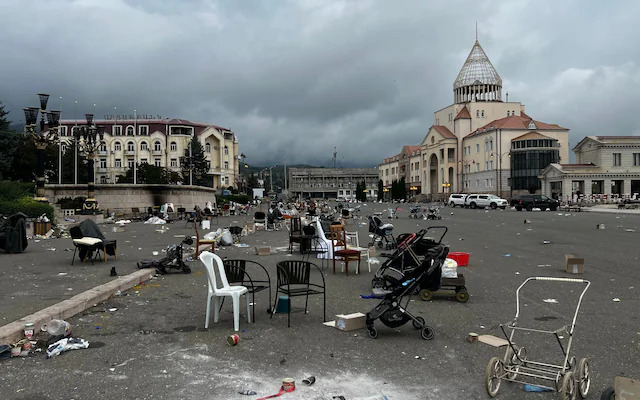
More than 100,000 Artsakh Armenians—virtually the region’s entire Armenian population—fled to Armenia within a week of Azerbaijan’s September 2023 operation. Baku denies that the mass exodus resulted from ethnic cleansing.
The exact number of Armenians who stayed behind in Artsakh was never established. Azerbaijan’s state-controlled media has repeatedly featured some of them for propaganda purposes.
Another Artsakh Armenian, Karen Avanesyan, was arrested by Azerbaijani security services last September on allegations that he plotted a “terrorist” attack on Azerbaijani President Ilham Aliyev. An Azerbaijani court sentenced Avanesyan to 16 years in prison on December 25, concluding proceedings that Armenian human rights lawyers denounced as a sham trial. Citing Artsakh’s former health authorities, they say the 58-year-old man suffers from a serious mental illness and should not have been tried.
Earlier this month, Artsakh’s exiled leadership in Yerevan pledged to continue pursuing the displaced population’s right to return, despite the Armenian government’s refusal to raise that demand internationally. Prime Minister Nikol Pashinyan has repeatedly told refugees to stop hoping to return to Artsakh and to “settle down” in Armenia instead.