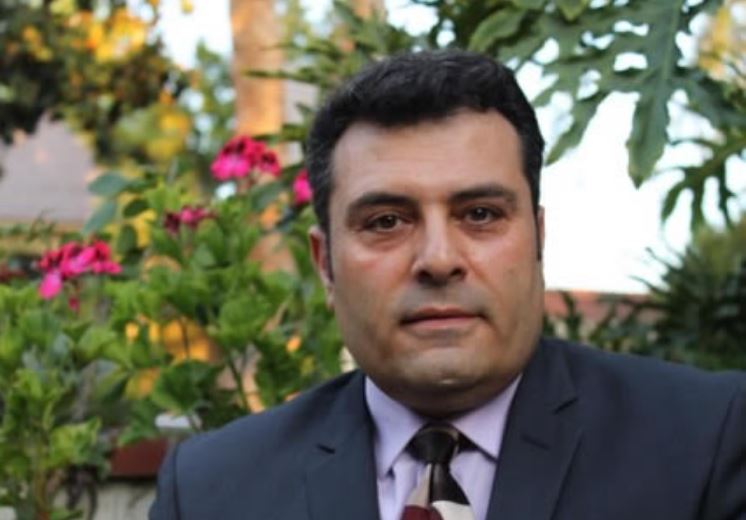
By Dr. Prof. M. Mkhitar Moradian, PhD Bioanalyst
Organizational politics is a universal feature of collective human activity. Wherever people gather around a shared mission, power becomes both a necessity and a temptation. Political philosopher Hannah Arendt distinguishes power—the capacity to act collectively in pursuit of a shared purpose—from disobedience, which emerges when groups abandon legitimacy and seek domination without consent. In organizations, politics becomes the method through which individuals negotiate roles, influence, authority, and the meaning of the mission itself. The success or degradation of an institution depends on whether political behavior reinforces or undermines its foundational purpose.
In this article I explore the philosophical dynamics of organizational politics through the lens of a specific organizational structure composed of three distinct member groups, which I’d like to call: group1, group 2, and group 3. Each group introduces unique political behaviors, motivations, and ethical tensions. Understanding these dynamics is essential for protecting institutional mission and preventing organizational decay.
Group 1: Guardians of the Mission and Organizational Legitimacy
IN most of the organization close to 40% of the membership is made up of loyal, disciplined members whose commitment is anchored in the organization’s mission, bylaws, history, and identity. In political philosophy, this group represents the legitimate sovereign, or what Rousseau would call the general will—the collective, principled commitment that gives the organization its ethical authority. They:
- Uphold the bylaws, norms, and shared history
- Provide organizational continuity
- Resist destabilizing power grabs
- Anchor the institution in long-term mission rather than short-term gain
Within political theory, they function as the custodians of institutional memory and legitimacy. Without them, the organization devolves into competing interest blocs with no unifying purpose. However, group 1 members often face a challenge: their commitment to rules and processes may make them slower to react to subversive political maneuvers by actors unconstrained by the same ethical framework.
Group 2: The Faction Seeking Power At all Cost
A vocal minority, usually with power fueled by financial strength who could care less about the organization’s foundational rules, history, and mission. They seek to capture the institution and reshape it into something fundamentally different—often by making deals behind closed doors without procedural legitimacy. From the perspective of classical political philosophy, this group embodies what Plato and Aristotle described as a faction: a group that aims not at the common good, but at its own agenda. They:
- Reject the legitimacy of existing bylaws
- Seek to rewrite or bypass rules
- Aim for control rather than stewardship
- Often use rhetoric of “reform” to justify a takeover
Such groups frequently frame their actions as modernizing, democratizing, or correcting injustices. But their core distinguishing feature is that they do not accept the shared mission as binding. In Arendt’s framework, this is where this faction seeks domination rather than consent. Left unchecked, group 2 members can destabilize institutions by eroding trust, procedural integrity, and organizational coherence.
Group 3: The Balance of Power and the Ethics of Ambition
The final group consists of opportunists—members who desire leadership roles but lack sufficient support from groups 1 or 2 to secure them. Their political behavior is driven not by mission or ideology, but by personal ambition. As Machiavelli notes, political instability often emerges when actors pursue power without anchoring their actions in institutional purpose. They:
- Could operate loyally, but loyalty does not serve their ambitions
- Do not fundamentally disagree with the organization’s mission
- Are willing to align with group 2 members if it increases their personal gain
- May justify alliances as pragmatic, even when they threaten organizational integrity
Opportunists represent the hinge point of organizational politics. While their number is not enough to control the organization outright, they are enough to swing the balance of power. This makes them somewhat influential—and potentially destructive. Their alliance with group 2 members, even if temporary or tactical, creates a coalition of convenience capable of undermining the mission, legitimacy, and stability of the entire institution.
The Political Philosophy of a Three-Group Organization
This organizational structure creates a political landscape similar to historical republican systems prone to factionalism:
- Loyalists represent legitimate authority
- Disloyal faction represents ideological or anti-institutional insurgency
- Opportunists represent the swing constituency prone to corruption
Here are some philosophical insights:
A. Mission Integrity Requires a Moral Majority
Even though loyal members are the largest group, they are not a majority. A coalition between disloyal and opportunist members creates a destabilizing bloc capable of seizing power, rewriting rules, and dissolving institutional continuity.
B. Power Shifts Occur Not Through Numbers, but Alliances
Political philosophers from Montesquieu to Madison emphasize that political danger emerges not from single factions, but from coalitions between groups with incompatible aims. Here:
- Disloyal members want to capture the organization
- Opportunists want personal advancement
- Their goals temporarily align
This alliance—however unstable—can eclipse the disciplined, mission-centered loyal group.
C. Opportunists Are the Most Philosophically Dangerous Group
Disloyal members are predictable; their goals are transparent. Opportunists, however, hide their intentions, shift alliances fluidly, undermine trust, make disloyal takeovers possible. Institutions rarely collapse due to ideological opposition alone; they collapse when opportunistic actors empower radicals for personal benefit.
D. Leadership Vacuum Amplifies Factionalism
If leadership fails to protect the bylaws, reinforce mission clarity, and cultivate loyalty, opportunistic and disloyal coalitions fill the gap. This is a classic principle in political philosophy: power abhors a vacuum, and factions expand to occupy ungoverned space. Strategies to safeguard factionalism are reflected in Madison’s principle: “You must first enable government to control the governed; and in the next place oblige it to control itself.” In organizations, self-control is expressed through bylaws, mission fidelity, and ethical leadership culture.
Conclusion: Politics as the Test of Organizational Character
In every organization, politics reveals deeper philosophical truths about human motivations, power, loyalty, and legitimacy. In this three-group structure, the institution’s fate rests not merely on the number of loyal members but on the moral clarity and strategic sophistication of its leadership.
Loyal members uphold the organization.
Disloyal members challenge its foundations.
Opportunists decide which side wins.
The central danger arises when ambition detaches from mission. Conversely, the central hope lies in cultivating a leadership culture where power is pursued only in service of the organization’s founding purpose. A healthy organization does not eliminate politics—it philosophically disciplines it, ensuring that the pursuit of power never overshadows the pursuit of mission.
References: Plato’s Republic, Machiavelli’s The Prince, Hobbes’ Leviathan, Locke’s Two Treatises, Rousseau’s Social Contract, and Garrett’s Political Philosophy of James Madison.