By WILLIAM PAPARIAN
“Members of the armed forces must refuse to comply with clearly illegal orders to commit law of war violations.” Law of War Manual 18.3.2
“Take honor from me and my life is done.” William Shakespeare, King Richard II
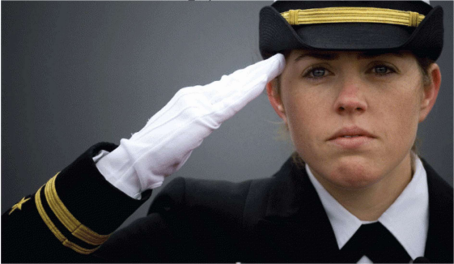
American service members are required to disobey a manifestly illegal order. The obligation that members of the United States armed forces must uphold is what distinguishes military service in our country from a tyranny where blind obedience is the standard.
16 March 1968. Son My Village, South Vietnam. Charlie Company, 1st Battalion, 20th Infantry Regiment, commanded by Lt. William Calley. Hundreds of Vietnamese villagers, including women, children, and the elderly were killed by
American soldiers following orders. Many women and children were gang raped before execution, their bodies mutilated.
A helicopter pilot named Hugh Thompson flying a routine reconnaissance flight witnessed what was happening below. He landed his helicopter between soldiers pursuing civilians and ordered his crew to train their machine guns on fellow Americans, threatening to open fire if the killing continued. Thompson radioed his command post with urgent reports of the massacre leading to a cease-fire order that halted the slaughter. His actions prevented further deaths and marked one of the first instances of a U.S. servicemember defying illegal orders to protect civilians. And in doing so Hugh Thompson set the standard for all American service members to follow.
Less well known is the Chenogne Massacre on Jan.1, 1945, in Belgium, during the Battle of the Bulge when U.S. troops killed approximately 70 German POWs by machine gun fire. It was covered up at the time but is today acknowledged as a war crime.
Another example is the Biscari Massacre, two separate incidents in July and August of 1943 in which U.S. troops executed 76 Italian and German POWs. Two Army sergeants, Horace West and William Bradley, were court martialed and convicted of murder. They were sentenced to life imprisonment, but later quietly released and restored to full duty in 1944.
And there is the Canicatti Massacre on July 14, 1943, in which an American officer murdered civilians in a liberated town. When Lt. Col. George McCaffrey saw that the local population was taking canned goods and pasta from a former Fascist warehouse, he ordered them to stop. When some of the civilians continued taking food, he opened fire with his Thompson submachine gun, killing them, including a young boy and elderly men. Others were wounded, some were shot in the back while trying to flee. McCaffrey was never held accountable for this war crime.
Military service can be an honorable profession, but in these three examples American soldiers lost their honor. Military service is an honorable profession precisely because it uniquely demands that a servicemember be willing to die – and to kill – for something greater than themselves. But that honor is not guaranteed. Military service becomes dishonorable when service members forget that the laws of war exist not only to protect the enemy’s rights but also
their own humanity. The American solder who refuses an illegal order is more honorable than those who win battles but lose their souls in achieving victory.
What makes an order “manifestly illegal”? It is an order that any reasonable person would clearly recognize as unlawful: massacring civilians; torturing prisoners; executing the wounded; using chemical or biological weapons; targeting protected sites such as hospitals and places of worship. There is no debate, no gray area. These are crimes against humanity.
When such an order is given, an American service member stands at a crossroad:
One path is the path of cowardice: “I was just following orders.” The other path is the path of courage: “Not in my name. Not with my hands.”
American service members take an oath not to a person or a political party, or flag, but to the Constitution of the United States against all enemies foreign and domestic. And when given an illegal order, the lowest private to the highest general share the same duty. To refuse. To report. To protect the innocent, even if it means risking court-martial, prison, or worse.
This is not insubordination. This is the highest form of loyalty, loyalty to the oath, to the law, to the moral order that makes American military service honorable. May our service members always have the wisdom to recognize an illegal order. May they always have the courage to refuse it and may they never have to test that courage in the darkness that follows obedience without conscience. Former Pasadena Mayor William Paparian served on active duty in the Marine Corps during the Vietnam War and continues to serve as a Captain (CA) Judge Advocate in the California State Guard and as a Los Angeles County deputy district attorney. The views expressed here are his own and not that of the California Military Department or the District Attorney’s Office.